





HYDERABAD: As the Telangana government likely prepares for a significant administrative reorganization to streamline governance in the Greater Hyderabad Municipal Corporation (GHMC), experts, urban planners, and citizens recommend shifting from traditional, name-based municipal identities to a neutral, direction-based system, as seen in Delhi, Mumbai, and Bengaluru.
Speaking to HyderabadMail Dr. Shiva Kiran, an expert in urban governance and Geographic Information Systems (GIS), has called for a scientific, direction-based naming and numbering system to prevent future administrative confusion and identity issues. He argues that naming new municipal corporations or zones after specific localities is unsustainable. He cites ongoing public debate and protests over the proposed Malkajgiri Municipal Corporation as evidence of the drawbacks of a name-based approach.
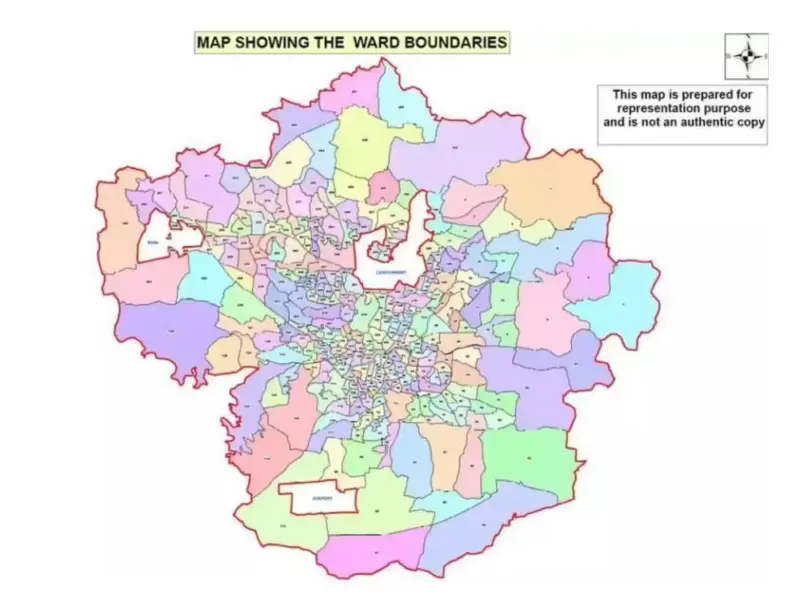
The recent merger of 27 peripheral Urban Local Bodies (ULBs) within and around the Outer Ring Road (ORR) expanded GHMC's jurisdiction to nearly 2,100 sq. km and prompted this overhaul. The current structure of 300 wards, 60 circles, and 12 zones has led to fragmented boundaries, jurisdictional overlaps, and confusion in accessing civic services.
Current proposals suggest dividing the area into corporations named after localities such as Greater Cyberabad, Greater Malkajgiri, and the existing GHMC. Critics, including GIS and urban governance experts like Dr. Shiva Kiran, warn that these names may become outdated.
What's wrong with naming Municipal Corporations after localities?
"Names tied to current economic or geographic markers lose relevance as the city expands. What happens when Cyberabad grows beyond Shamshabad? Do we rename again?" asked Dr. Kiran. He added that name-based divisions can create perceived hierarchies between core and peripheral areas, as demonstrated by Secunderabad residents' resistance to inclusion under the Malkajgiri municipal corporation.
The proposed alternative is a five-corporation model under a single metropolitan apex body, the Greater Hyderabad Metropolitan Corporation (Apex), responsible for regional planning and coordination. The municipal corporations would be direction-based: North, South, East, West, and Central.
"This system is intuitive, neutral, and scalable," explained Dr. Kiran. "Just as wards are numbered, not named, to allow for seamless subdivision, municipal corporations should be direction-oriented. A 'North Hyderabad Municipal Corporation' will remain relevant regardless of how far north the city expands."
The proposal mirrors structures in other major Indian cities. Delhi uses North, South, East, and West Delhi Municipal Corporations, with a separate New Delhi Municipal Corporation (NDMC) for the central area. Mumbai and Chennai also have clear zone-ward hierarchies without intermediate circle layers. Dr. Kiran noted that direction-based systems prevent suburbs or larger areas from losing their identity to a dominant locality's name, as seen with parts of Secunderabad under the Malkajgiri proposal.
He also advocated for a fundamental change at the ward level. "Just as the Census and Planning Commission use numbers, wards should be identified by numbers, not names. Numbers are permanent. As the population grows, new ward numbers can be created without confusion or identity clashes. This approach aligns with national policies and simplifies urban governance and service delivery," he explained.
Dr. Kiran also questioned the relevance of the circle tier between zones and wards within GHMC. "A ward corporator is an elected representative. A circle has no political representation; it is only an administrative layer. Other major cities do not have this structure. Why should Hyderabad? This reorganization is the right time to evaluate its necessity," he said, referring to the Deputy Commissioner-led circles under Zonal Commissioners.
Direction-based naming seen as key to sustainable GHMC reforms
Drawing on his GIS expertise, he emphasized that the reorganization should use clear geographic features, such as the Musi river, as natural boundaries for directional divisions. He expressed concern that current proposals mix central areas like Khairatabad with peripheral names, which he called geographically illogical.
The current 60 circles are considered redundant because they blur accountability and add administrative complexity without improving citizen engagement. The recommended hierarchy is Metropolitan Corporation, then direction-based Municipal Corporations, followed by Zones and Wards. Designating wards as the common spatial unit for all departments, including sanitation, water, and health, would enable integrated GIS dashboards for transparent service delivery and planning.
Direction-based names improve wayfinding and civic literacy. "Complaints can be logged by ward number or zone, eliminating confusion when multiple areas share the same locality name," noted Dr. Kiran.
Dr. Kiran has formally submitted his recommendations to senior government officials, including Special Chief Secretary Jayesh Ranjan. He cautioned, "These things, once done, are difficult to undo. We must implement a system that is sustainable, scalable, and neutral for the next 50 years, not one that creates immediate protests and future administrative headaches."