




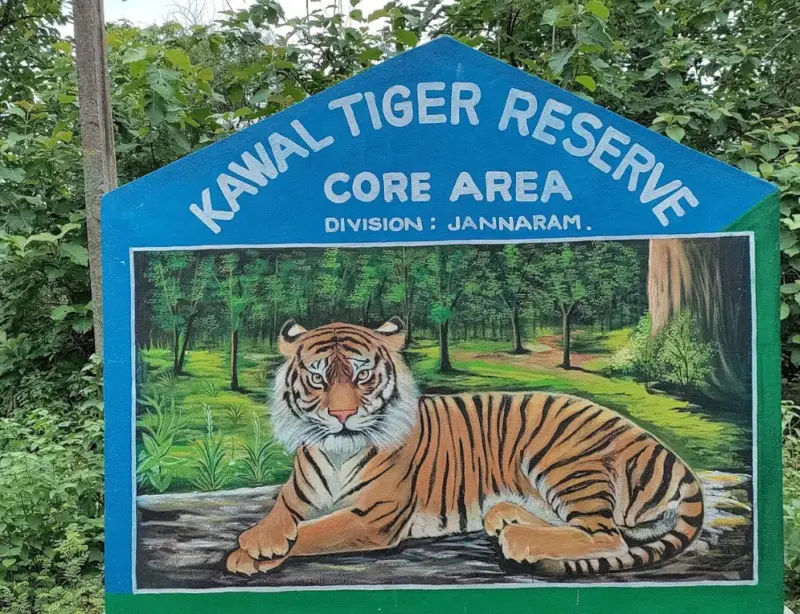

HYDERABAD: Shrinking wildlife corridors, expanding infrastructure and the absence of breeding tigresses are preventing tigers from establishing a stable population in the Kawal Tiger Reserve despite favourable habitat conditions, a 12-year study has found.
The study, conducted by scientists from the Centre for Wildlife Studies and the Hyderabad Tiger Conservation Society under wildlife expert Imran Siddiqui, said the reserve has sufficient prey density to support between 35 and 41 tigers. However, connectivity with neighbouring forests has weakened significantly.
Roads and mines disrupt tiger movement
Researchers found that highways, railway lines, open-cast coal mines and expanding human settlements are obstructing tiger movement from Maharashtra forests, including the Tadoba-Andhari Tiger Reserve, into Kawal.
Man kills wife, daughter and sister-in-law, dies by suicide in Vikarabad
According to the study, nearly 15 tigers entered Kawal Reserve over the last decade, but none established a permanent population. The report said frequent human-animal conflict in villages located within forest areas and grazing activity were discouraging tiger settlement.
The study warned that the shrinking of wildlife corridors connecting Tadoba and Kawal has become a major concern. The presence of nearly 30 villages in the core area, cattle grazing and poaching activities are also affecting the reserve's long-term viability as a tiger habitat.
Researchers said the use of hunting dogs and the possibility of disease transmission from livestock to wildlife pose additional risks.
Reserve records rise in prey population
The study noted that prey density in Kawal forests has improved significantly over the years. Chital population density increased from 1.94 animals per sq km in 2010 to 6.08 animals per sq km in 2022.
Scientists estimated that the 893 sq km core area of the reserve can now support 35 to 41 tigers, compared with an estimated carrying capacity of 24 tigers in 2010.
Despite the increase in prey availability, tiger numbers have not grown because of the absence of a breeding population. Records show that of the 15 tigers that entered Kawal during the last decade, only two were female tigers. The lack of breeding tigresses forced male tigers to move out of the reserve without settling there permanently.
The study said prey species such as chital, sambar, nilgai, chousingha and wild boar are available in adequate numbers within the reserve.
Experts seek stronger conservation measures
Wildlife experts recommended the construction of underpasses and overpasses along highways and railway lines to ensure uninterrupted wildlife movement.
The report also suggested relocating female tigers from other reserves under the supervision of the National Tiger Conservation Authority to establish a breeding population in Kawal.
Researchers called for community participation in conservation efforts and recommended alternative livelihood opportunities for residents of forest-dependent villages. They said strengthening wildlife corridors and preventing poaching were essential for restoring Kawal as a viable tiger habitat.
Imran Siddiqui said conservation on paper alone would not help and stressed the need for ensuring free movement of tigers on the ground. He added that cooperation from tribal and forest communities would be critical for long-term conservation success.