




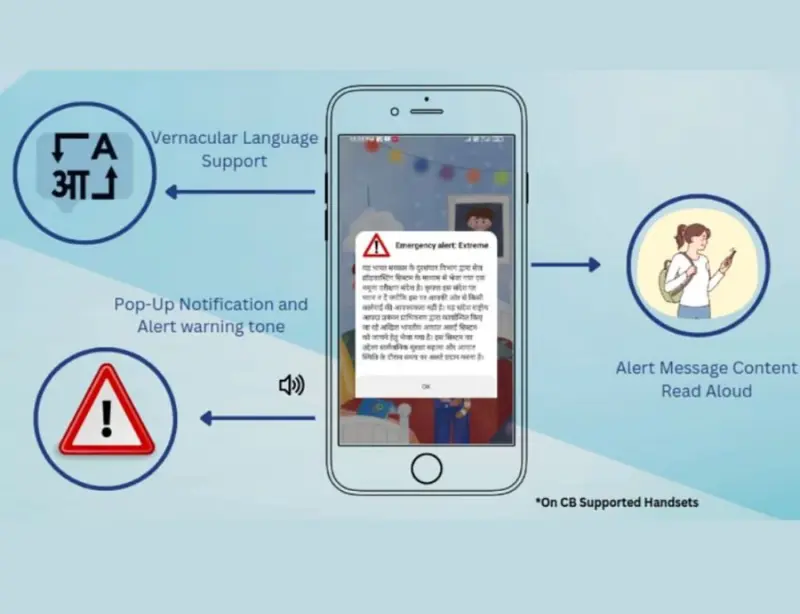

Hyberabad : Mobile users across India, including Hyderabad, who recently received loud alerts or flashing messages on their phones need not worry, as the government is conducting nationwide trials of a new emergency warning system.
The exercise is being carried out by the National Disaster Management Authority (NDMA) in coordination with the Department of Telecommunications under the Ministry of Communications. The system uses Cell Broadcast technology to deliver real-time alerts to all mobile devices within a specific geographic area.
Unlike conventional SMS messages, Cell Broadcast alerts are sent simultaneously to multiple users in a targeted zone without congesting telecom networks. Officials said this makes the system more effective during emergencies when communication networks are often overloaded.
SACHET platform powers indigenous alert system rollout
The alert system is integrated with SACHET, a platform developed by the Centre for Development of Telematics (C-DOT). Authorities said the technology is entirely indigenous and aligns with efforts to strengthen domestic telecom infrastructure.
The system is designed to supplement existing SMS alerts and improve communication during disasters such as earthquakes, tsunamis, lightning strikes, gas leaks, and other emergencies.
As part of ongoing trials, users may receive test alerts in English, Hindi, and regional languages. Authorities clarified that multiple alerts may be delivered as different mobile towers and networks are evaluated.
"No response is required from the public," officials said, adding that these are routine tests to assess system performance and reliability before formal rollout.
Public advised not to react to test alerts
Test messages will only be received on devices where Cell Broadcast test alerts are enabled. Users can manage these settings through their phone's safety and emergency alert options.
Officials emphasised that the alerts are part of a planned exercise and do not indicate any real emergency. Similar simulations have been conducted earlier, including a test in Bengaluru in 2023.
Once trials conclude, the system will be activated for real emergencies, enabling authorities to reach citizens in affected areas within seconds.