




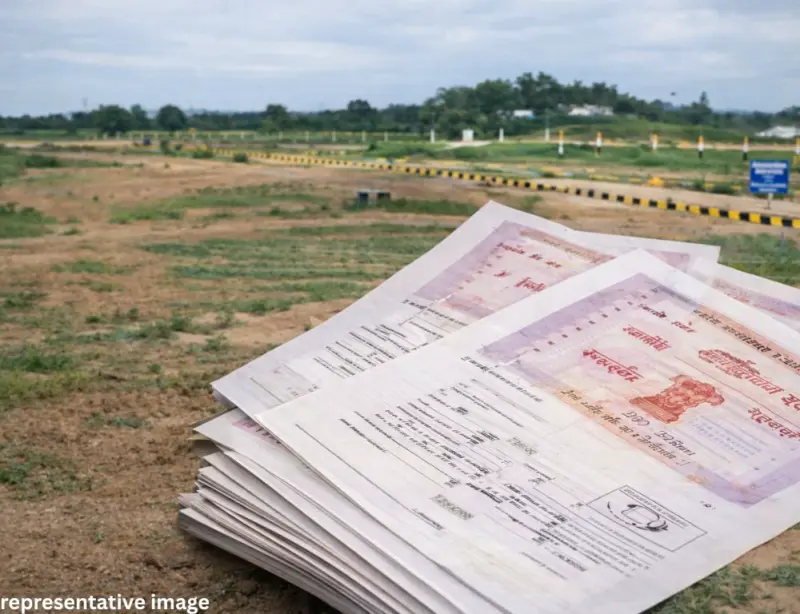

Telangana: Allegations of illegal land registrations without link documents or pattadar passbooks have surfaced in Warangal and Karimnagar , raising concerns over large-scale land fraud involving sub-registrars and revenue officials.
Officials are allegedly registering properties in the names of unrelated persons by merely mentioning them as "absolute owners" in sale deeds, without verifying link documents, encumbrance certificates or ownership records. Based on these registrations, tahsildars are allegedly carrying out mutations in violation of rules, enabling illegal transfer of properties worth crores of rupees.
Registrations done without mandatory ownership records
Under registration rules, link documents and pattadar passbooks are mandatory for land transactions. Details of previous ownership must be mentioned in sale deeds, and sub-registrars are required to verify title ownership, encumbrance certificates and records under Section 22A before approving registrations.
Advocate Gummi Raj Kumar Reddy of the High Court said registrations carried out without link documents were illegal. He said sub-registrars must verify ownership records, pattadar passbooks and encumbrance certificates before registering any property.
However, allegations have emerged that some officials ignored these checks and registered properties in exchange for bribes. In several cases, sale deeds reportedly mentioned sellers only as "absolute owners" without disclosing how they acquired the land.
Mutation irregularities emerge in Warangal land case
One such case surfaced in Khila Warangal involving land located along the Inner Ring Road. Revenue records between 2009 and 2019 showed 5.32 acres in Survey No. 683 in the name of Chinna Mallaiah, while adjoining lands in other survey numbers were recorded in the names of Billa Rajamallu, Billa Ailaiah and Billa Hanmanthu.
Officials said no local records existed for Chinna Mallaiah, and no pattadar passbook was issued during land records purification. Despite this, a group of 22 persons jointly registered 7.01 acres in 2019 through a sale deed, claiming ownership as "absolute owners".
Eight buyers later approached the tahsildar seeking mutation and issuance of passbooks. The then tahsildar reportedly refused mutation after finding discrepancies between revenue records and names mentioned in the registration document. However, after multiple officials kept the file pending, a later tahsildar allegedly approved the mutation and issued passbooks.
Revenue officials also allegedly mutated 5.25 acres in favour of five buyers, though the registration document reportedly entitled them to only 2.39 acres. The issue came to light after disputes arose among the purchasers.
Karimnagar plots allegedly registered using fabricated links
In Karimnagar district, a group allegedly identified vacant plots in Chintakunta village and registered nearly 40 plots without valid ownership records.
According to allegations, members of the group repeatedly transferred the plots among themselves through sale deeds to create multiple link documents before selling them to others or securing bank loans.
Officials allegedly ignored the absence of original ownership documents and registered the properties by merely describing sellers as "absolute owners".
Rules tightened after land records digitisation
After land records were digitised through Webland in 2012, agricultural land registrations required verification of online pahani records. Following the land records purification exercise in 2018, new pattadar passbooks became mandatory for agricultural land registrations.
After the launch of the Dharani portal in 2021, registration and mutation processes for agricultural lands shifted to tahsildar offices, while sub-registrar offices were restricted mainly to non-agricultural property registrations.
However, questions have now arisen over how registrations involving valuable agricultural land were approved in 2019 without valid passbooks or updated pahani records, and why mutations were cleared several years later.
Police recently arrested some members of the alleged fraud network after complaints from pattadars brought the matter to light.