





West Bengal has historically been one of India's intellectual and academic centres, producing globally respected scientists, economists, writers, educators, and reformers.
However, over the past few decades, the state's education ecosystem has faced structural challenges including politicisation, declining institutional quality in many sectors, teacher recruitment controversies, infrastructure gaps, low employability, and widening rural-urban inequality.
To restore West Bengal's educational leadership, reforms must move beyond short-term political measures and focus on long-term institutional rebuilding, technological modernisation, teacher quality, and industry alignment.
This proposed roadmap outlines a comprehensive reform framework for school, higher, technical, vocational, and digital education in West Bengal.
The reform model should aim to create:
Educational institutions should function independently from political party influence.
The school recruitment controversy severely damaged public trust.
One major gap affecting employability is poor spoken English and communication skills.
Enable students from Bengali-medium backgrounds to compete globally without losing linguistic identity.
West Bengal must align education with the future economy.
Many state universities face:
Transform Kolkata into an Eastern India research and innovation hub.
Every school should receive:
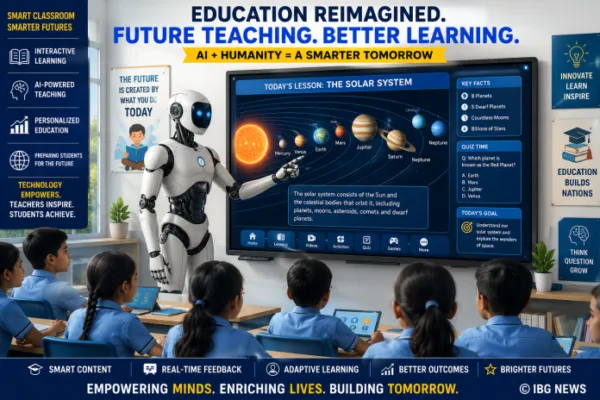
West Bengal should become a leader in AI-assisted public education.
Current systems overly reward rote memorisation.
Modernisation should not weaken Bengal's cultural foundations.
Create globally capable students rooted in Bengali civilization and heritage.
The state alone cannot finance complete transformation.
West Bengal loses many talented students to:
Modern education must include emotional resilience.
Education should not focus only on examinations.
West Bengal can become a creative economy powerhouse.
Independent oversight body for:
| Phase | Duration | Priority |
|---|---|---|
| Phase 1 | 1-2 Years | Recruitment transparency, infrastructure repair, digital systems |
| Phase 2 | 3-5 Years | AI integration, curriculum reform, vocational expansion |
| Phase 3 | 5-10 Years | Global university partnerships, innovation economy, research leadership |
If implemented effectively, West Bengal could achieve:
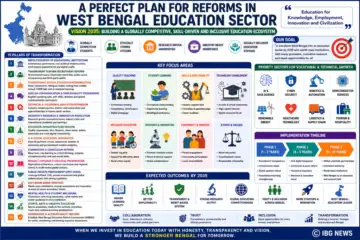 Future of West Bengal Education Sector for reform
West Bengal's educational legacy remains one of the strongest intellectual foundations in India. However, restoring that legacy requires structural reform, political will, technological adaptation, and institutional transparency.
The future of Bengal's economy, social harmony, innovation capacity, and global competitiveness will depend heavily on whether its education system can successfully transition from outdated, examination-centric structures toward a modern, skill-driven, research-oriented and ethically governed ecosystem.
Education reform is no longer merely a policy issue for West Bengal-it is a civilizational necessity.