





Hidden in Plain Sight: Scientists Discover New Cockroach Species in India Using Landmark DNA Technology
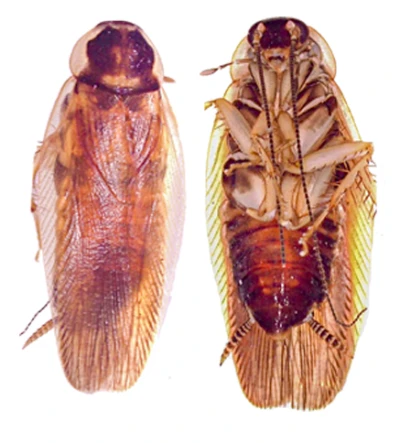
Kolkata, March 23, 2026: In a breakthrough for Indian entomology, researchers have discovered a new species of cockroach, Neoloboptera peninsularis , lurking within the agricultural landscapes of the Deccan Peninsula.
This discovery, centered around Nathachiwadi, Daund (Pune), marks a historic shift in how India documents its biodiversity.
While nearly 5,000 cockroach species exist globally, they are often unfairly maligned. This study highlights the ecological importance of these insects while introducing cutting-edge genetic tools to Indian taxonomy.
A Landmark in Indian Science
For the first time since cockroach studies began in India in 1758, a new species has been described using an Integrative Taxonomic Approach. Moving beyond traditional physical descriptions, the team combined:
"This study stands as a landmark in the history of Indian cockroach taxonomy," stated Dr. Dhriti Banerjee, Director of the Zoological Survey of India (ZSI). "It sets a new benchmark for systematic studies in the country."
Meet Neoloboptera peninsularis
The species name, peninsularis, reflects its distribution across Peninsular India. Before this discovery, India was known to host only two species within this genus, described in 1865 and 1995. This find brings the total number of documented cockroach species in India to 190-representing approximately 3.8% of global diversity.
Key findings regarding India's cockroach population include:
The Future of Taxonomy
The study was a collaborative effort between the Zoological Survey of India (Pune and Chennai) and Prof. Ramkrishna More Arts, Commerce and Science College, Pune.
Dr. Basudev Tripathy, Head of ZSI Pune, noted that this is just the beginning. The Western Regional Centre is prepared to publish over 100 additional DNA barcodes in the near future, promising a wave of new evolutionary insights. Lead author Ms. Shabnam Ansari and Dr. K.P. Dinesh emphasized that modern science can no longer rely on appearance alone; the future of biodiversity documentation is inseparable from robust genetic data.
 N peninsularis habitat
About the Publication
The full study, authored by A. Shabnam, M. Senraj, Sahil Shikalgar, Rashmi Morey, and K. P. Dinesh, is published in the Records of the Zoological Survey of India.
Read the full paper here: https://recordsofzsi.com/index.php/zsoi/article/view/173026