





"Kala Nidhi Division: Preserving India's Knowledge, Inspiring Future Generations"- Shri J. Nandkumar
"Kala Nidhi Division is the Heart of IGNCA" - Dr. Sachidanand Joshi
· Kala Nidhi Division of IGNCA Celebrates Its 37th Foundation Day
27th January, New Delhi: The Indira Gandhi National Centre for the Arts (IGNCA), an autonomous institution under the Ministry of Culture, Government of India, observed the Kalānidhi Foundation Day with a formal academic and cultural programme at the Samvet Auditorium, Janpath Building, New Delhi. The event was graced by Shri J. Nandakumar, National Organising Secretary, Prajna Pravah, as the Chief Guest. The programme was further distinguished by the presence of Prof. Prateek Sharma, Vice-Chancellor, Delhi Technological University (DTU), as the Special Guest, and Vaidya Rajesh Kotecha, Secretary, Ministry of AYUSH, Government of India, as the Distinguished Guest.
The session was chaired by Shri Ram Bahadur Rai, President, IGNCA Trust. Dr. Sachchidanand Joshi, Member Secretary, IGNCA, delivered the Opening Address, while Prof. (Dr.) Ramesh C. Gaur, Director and Head, Kalānidhi Division, IGNCA, and Dean, IGNCA, extended the Welcome Address. Dr. Sunita Reddy, Associate Professor, JNU and Chairperson, Anthropos Foundation, was also present on the occasion.
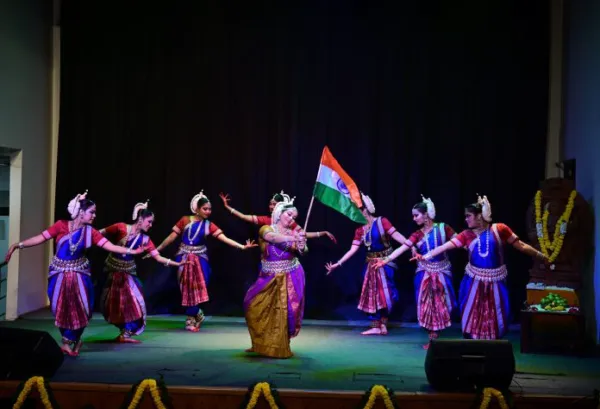
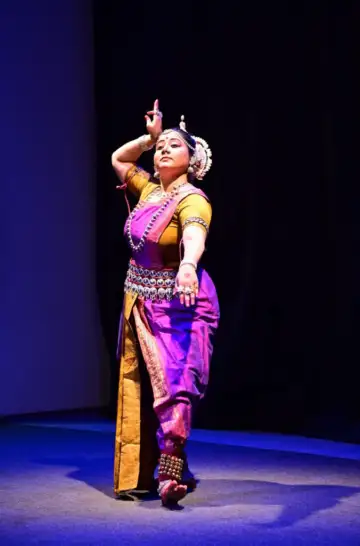
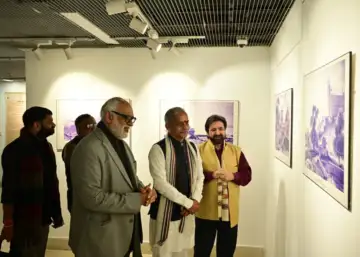
As part of the Kalānidhi Foundation Day celebrations, IGNCA released notable publications including Green Wisdom: Manipur, Roots of Wisdom: Sikkim, and Whispers of the Forest: Arunachal Pradesh, authored by Dr. Sunita Reddy, Prof. (Dr.) Ramesh C. Gaur, and others. The occasion also saw the release of the Illustrated Catalogue of Digitised Manuscripts, Volumes 8-13 (Parts 1-12), edited by Prof. (Dr.) Ramesh C. Gaur and team, along with Kalākalp : IGNCA Journal - Vasant Panchmi Issue 2026. An exhibition titled "Crowning Jewels: The Illustrated Rare Books" was inaugurated, and the programme concluded with a cultural presentation marking Vasant Utsav, reflecting IGNCA's integrated approach to scholarship and living traditions.
On this occasion, Shri J. Nandakumar congratulated the Indira Gandhi National Centre for the Arts, particularly the Kala Nidhi Division, on its Foundation Day. He highlighted that the division has long been an intellectual pillar of IGNCA, preserving, interpreting, and promoting India's civilizational knowledge. Beyond documentation and research, it nurtures a living scholar ecosystem shaped by and for researchers, thinkers, and practitioners, while IGNCA itself serves as a colloquium for the nation's scholars and practitioners. He noted that the Centre's work aligns with the Bharat-centric National Education Policy, emphasizing that India's intellectual centre of gravity, which has historically leaned toward the West, must shift back to India. Manuscripts, cultural heritage, and oral traditions-including scientifically validated herbal healing practices from Assam, Meghalaya, and Nagaland-are carefully preserved and made accessible. The recent launch of three volumes on North-East traditional healing practices accentuates how documenting knowledge with care and community respect ensures it survives and inspires future generations, engaging scholars, practitioners, and policymakers with integrity, responsibility, and cultural awareness.
Shri Ram Bahadur Rai noted that the Foundation Day of the Kala Nidhi Division was originally celebrated at a time when the practice of Saraswati Puja was very limited. He observed that devotion, knowledge, and action come together in practice, and this combination continues to influence society. Furthermore, healers and indigenous practitioners in remote regions play a crucial role in preserving traditional knowledge, ensuring it remains secure and accessible for future generations. Shri Rai emphasised that such individuals deserve protection, recognition, and a scientific framework to safeguard their knowledge and make it available for research. He also highlighted the importance of fostering new words and forms in our languages, as the creation of new knowledge and expressions is essential to the journey of creativity. On this occasion, he invoked the strength and resolve of Goddess Saraswati to protect this knowledge and to inspire the generation of new ideas and forms for its enrichment.
Shri Vaidya Rajesh Kotecha noted that after years of experience in a particular field, we often perceive things through habitual lenses, rarely exploring alternative perspectives. This can lead to viewing knowledge through a colonial or externally imposed framework, rather than appreciating its indigenous depth. He emphasised the importance of examining multiple perspectives, particularly in Sanskrit studies, highlighting how a single source of wisdom can yield diverse insights when approached holistically. Shri Kotecha expressed his gratitude to all participants and reiterated the value of preserving, interpreting, and understanding India's living knowledge traditions.
Prof. Prateek Sharma stated that in Indian society, knowledge was traditionally compartmentalized, and we lost touch with the integrated mental, physical, and spiritual training of the guru-shishya tradition. Swami Vivekananda and the Ramakrishna Mission helped restore our self-pride and renewed interest in these traditions. Unlike Western thought, which experiments on the external world, Indian knowledge explores the inner experiential domain, connecting action, mind, and consciousness. Our sages codified art, music, dance, architecture, and rituals orally, but documentation was limited, leading to partial loss over time. The Kala Nidhi Division plays a vital role in unraveling and demystifying these systems, using technology to make them accessible. Sanskrit texts, classical arts, and rituals contain mathematics, science, and complex frameworks-each layer revealing deeper connections between language, art, music, and knowledge. The National Education Policy emphasises de-compartmentalising knowledge and linking disciplines.
Dr. Sunita Reddy stated that the research is significant due to the limited written documentation on non-codified healers, whose knowledge is largely transmitted through oral traditions and remains outside formal academic and university frameworks. She emphasised that studies based on qualitative methods and empirical research are crucial for documenting such living knowledge systems. Dr. Reddy further underscored the need to establish knowledge huts at the Panchayat level and advocated for village-level policies to integrate traditional knowledge into local governance, enabling its systematic preservation, particularly within the AYUSH framework.
Dr. Sachidanand Joshi noted that the Foundation Day of the Kala Nidhi Division, usually celebrated on Vasant Panchami, was observed today, 23rd January, due to Republic Day rehearsals. He described the division as the heart of IGNCA and a vital source of knowledge, supporting publications and book discussions that may be unique in the country. Dr. Joshi acknowledged the presence of scholars and distinguished guests, highlighted the division's contributions to UNESCO initiatives-including the 2025 recognition of the Shrimad Bhagavad Gita and Natyashastra under the Memory of the World programme-and congratulated its leadership and collaborators, expressing hope that it would continue to inspire and guide the scholarly community.
Prof. R. C. Gaur stated that on the occasion of the 37th Foundation Day of the Kala Nidhi Division, he expressed appreciation for the sustained efforts of the division. He highlighted that the Kala Nidhi Division was the first division established at IGNCA, intended not merely as a library but as a resource centre elevating Indian heritage for IGNCA, India, and the world. The division initiated the preservation, conservation, digitization, and cataloguing of manuscripts in India, which later expanded into the National Mission for Manuscripts, now launched under the vision of the Hon'ble Prime Minister as 'Gyanbharatam.' Under this mission, the Descriptive Catalogue documents 292,000 manuscripts, providing scholars and researchers access to subjects such as the Vedas, mathematics, astronomy, Ayurveda, and many other fields. In 2018, it was decided to develop a separate descriptive catalogue for each subject.
A formal vote of thanks was extended by Shweta Singh. The programme was attended by scholars, researchers, and people from various walks of life.
 Cultural Performance IGNCA
 Kala Nidhi Division of IGNCA Celebrates Its 37th Foundation Day
 Kala Nidhi Division of IGNCA Celebrates Its 37th Foundation DayCultural Performance IGNCAKala Nidhi Division of IGNCA Celebrates Its 37th Foundation DayKala Nidhi Division of IGNCA Celebrates Its 37th Foundation Day