

By Suman Munshi
Kolkata has long been celebrated as the intellectual and cultural heart of India-synonymous with literature, politics, and artistic thought.
Yet, beyond this familiar identity lies a lesser-discussed but equally fascinating chapter of its past: its vibrant nightlife and, in particular, its cabaret culture.
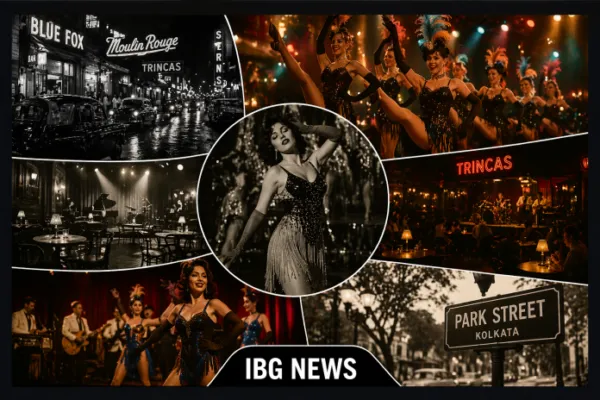
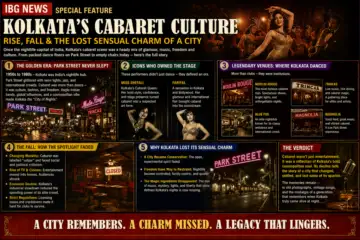
From the 1950s through the 1980s, Kolkata evolved into a city where nightlife was not merely entertainment-it was an expression of urban sophistication. Cabaret culture emerged as a dynamic space where Indian, Anglo-Indian, and Western influences blended seamlessly. It was not just about dance or music; it was about cosmopolitanism, freedom, and a bold urban identity that placed Kolkata alongside global cultural capitals.
During the 1960s and 1970s, Park Street became the epicenter of Kolkata's nightlife. As evening fell, the street came alive with neon lights, live music spilling onto pavements, and a steady flow of patrons ranging from industrialists and artists to foreign sailors and expatriates.
Cabaret, in this context, was not just a performance-it was a social ritual. Live jazz bands, Western pop influences, choreographed dance routines, and an atmosphere of refined indulgence created an immersive experience. The city began to project itself as not just a cultural capital of India, but as a global urban space with a distinct night identity.
What made this era unique was its openness. It transcended rigid social divisions, allowing different communities and cultures to interact in shared spaces. Kolkata, during this time, embodied a rare blend of Eastern sensibility and Western modernity.
At the heart of this cultural phenomenon were performers who elevated cabaret from mere entertainment to an art form.
Miss Shefali emerged as the undisputed "Cabaret Queen" of Kolkata. Her performances were marked by confidence, elegance, and theatrical finesse. She challenged societal perceptions and brought legitimacy to cabaret as a form of performance art rather than a scandalous display.
Similarly, Fariyal bridged the worlds of Kolkata nightlife and Bollywood. Her international style, combined with Indian sensibilities, expanded the appeal of cabaret beyond elite urban circles.
In addition, numerous Anglo-Indian and foreign performers contributed to the scene, making Kolkata's cabaret culture truly international. These artists were not just entertainers; they were cultural ambassadors of a new urban lifestyle.
The cabaret culture of Kolkata was anchored in iconic venues that have since become part of the city's folklore.
Moulin Rouge stood as the most celebrated cabaret destination, known for its elaborate shows and electrifying ambiance. It was a space where spectacle met sophistication.
Trincas served as a hub for live music and intimate performances, fostering a deep connection between artists and audiences.
Blue Fox and Magnolia catered to the city's elite, offering a blend of fine dining, music, and cabaret.
Together, these venues formed a cultural ecosystem, transforming Park Street into a symbol of Kolkata's nightlife sophistication.
The decline of cabaret culture in Kolkata was gradual but inevitable, shaped by multiple intersecting factors.
Social attitudes began to shift, with cabaret increasingly viewed as inappropriate or morally questionable. This changing perception eroded its mainstream acceptance.
Simultaneously, the rise of cinema and television transformed entertainment consumption. Audiences no longer needed to step out for leisure; entertainment entered their homes.
Economic decline further compounded the problem. As industries in Kolkata weakened, the affluent clientele that sustained nightlife dwindled. Additionally, stricter licensing regulations made it difficult for such establishments to operate profitably.
What had once been a thriving cultural scene slowly faded into obscurity.
 Kolkata Cabaret Timeline
The disappearance of cabaret culture reflects more than just the decline of an entertainment form-it signifies a deeper transformation in the city's psyche.
Kolkata of the past was open, experimental, and unafraid of cultural fusion. Nightlife symbolized freedom, expression, and a certain mystery. Over time, however, the city became more restrained, more regulated, and increasingly family-oriented.
The "sensual charm" that once defined Kolkata was not merely about performance-it was about:
As these elements faded, so did the city's distinctive nocturnal identity.
Modern Kolkata still retains pockets of nightlife, but it lacks the scale, diversity, and international character of its past. Cafés, lounges, and limited club culture have replaced the grand cabaret era.
The city today is quieter at night, more regulated, and less experimental. While it continues to thrive culturally in other ways, its once-vibrant nightlife remains a memory rather than a reality.
Kolkata's cabaret culture was more than entertainment-it was a reflection of a city at its most confident, open, and cosmopolitan.
Today, it survives only in stories, music, and fading photographs. Yet its legacy continues to shape how the city is remembered.
👉 The question that lingers is this:
Can Kolkata ever reclaim that bold, vibrant nightlife identity? Or has that chapter closed forever, preserved only in nostalgia?
© IBG NEWS - Cultural Investigative Feature