
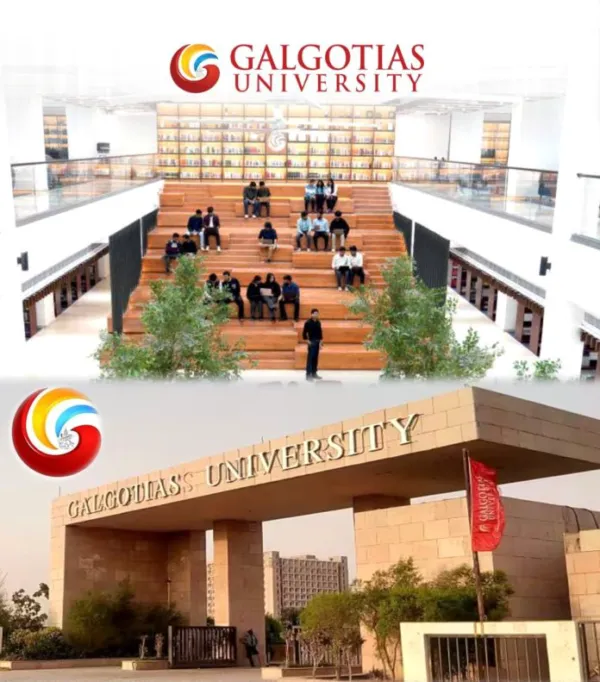

Media Trial or Misjudgement? Why Galgotias University Deserves Fair Evaluation
Beyond the AI Summit Controversy: Recognising Galgotias University's Role in Rashtra Nirman
Why Galgotias University Remains Vital to Viksit Bharat 2047
- Prof. Jasim Mohammad
The AI summit scandal has put Galgotias University through a severe public relations ordeal. What could have been only a modest institutional clarification became a fully developed media extravaganza. In the current hyper-digital context, even minor gaps in communication are turned into nationwide discussions. It therefore requires one to reflect on whether the magnitude of the reaction was commensurate with the actual issue.
Media trials operate on speed as opposed to depth - therefore, the opportunity for nuance to be expressed is lost in the race to publish headlines. Institutions are complexly interrelated ecosystems encompassing thousands of students, faculty, researchers, and staff members. What happened at the summit cannot be the sole basis for defining the identity of this institution; it is an inequitable characterization.
Since its beginnings, Galgotias University has positioned itself as the leader in providing professional education and innovation for all. The University has provided skills, employability, entrepreneurship, and research into new areas of development. Therefore, universities play a vital role in winning the larger vision of a developed India by providing the skilled workforce that will contribute to the country's GDP growth. This also cannot be overlooked or ignored because of a controversy that centered primarily around representation and communication. The reaction to how media ecosystems currently work reflects an underlying issue of how they function. Outrage through social media can lead to new cycles of traditional media, as well as memes superseding thoughtful debate or thorough explanations of an event, making it difficult to establish a narrative once it has been established for public consumption, and becoming nearly impossible for any action by an institution to get space again to explain. The same phenomenon has been seen around the world.
Democracy depends upon public scrutiny, so universities must also be held accountable. However, holding universities accountable cannot descend into shaming. When discourse changes from questioning the facts to putting down a university and its students directly, it is going too far. All of the students enrolled at Galgotias University (thousands of people) suddenly have to deal with people mocking them because of something that they had no control over, and that is an example of collateral damage, which should not be lost on anyone. Additionally, higher education institutions are working within a rapidly changing technological environment. Universities are working with AI, robotics, and digital tools in various types of research/partnerships/collaboration/prototypes, making it easy for the communication regarding the nature of a demonstration to go awry.
As far as how responsive Galgotias University was during this situation goes, the process of issuing clarifications, apologising and taking administrative action is exactly what should happen within an institution's facility - demonstrating accountability by acknowledging the issues referenced rather than denying them. Institutions become stronger for having learned from the experience of having been placed under scrutiny. The university will continue educating students in a wide variety of subjects, such as engineering, management, law, media, health sciences, etc., and producing thousands of graduates who enter the workforce each year to help grow India's economy. At the same time, part of the foundations of Rashtra Nirman and improving job creation and skill development are, therefore, universities such as Galgotias are all a part of this structure.
In many instances, there are proportional concerns. India has over 1,000 universities that each have faced their own challenges, audits, and/or controversies at some time. To take a single event and turn that into a representation of the entire institution is excessive and demonstrates that constructive engagement involves the processes for reviews, communication protocol improvements, and standards of conduct for events held in public.
Finally, further ethical debate exists surrounding the issue of how reputational damage can expand in this digital age. When issues stem from negative narratives that become supporters of trends, they will be archived. Students seeking experience through internship opportunities, alumni seeking job opportunities, and faculty participating in collaboratives may experience an indirect impact. An education-oriented culture must be careful prior to allowing an institution to be defined by trial-by-headline.
As India moves toward Viksit Bharat 2047, it will require strong, self-assured universities willing to engage on both national and international stages. Institutions should not be afraid of taking risks in innovation for fear of public backlash - any instance in which they may have acted inappropriately should serve as a teaching moment, rather than permanently branding them with an 'institutional failure' label. To not do so - to allow a lack of academic courage to lead to a lack of institutional confidence - will hamper progress toward achieving Viksit Bharat.
Galgotias University has made a significant impact on the overall educational landscape in the National Capital Region, specifically in Uttar Pradesh. With the expansion of private higher education opportunities (due to the growth of quality university institutions) for those students who may not gain entry into limited (public) institutions, the expansion of private higher education plays a pivotal role in supporting India's demographic dividend.
In addition to this, the media must also take time to examine their own role within this framework. While investigative journalism and accountability reporting are both critically important, sensationalistic framing of an issue often has the potential to drown out a resourcefully balanced assessment of a situation. A responsible journalism effort would present a balanced view that outlines both the negative implications of any controversy and what corrective action the institution has taken since, and the institution's broader accomplishments as an academic institution.
Education, by its very nature, represents transformative change for literally thousands of families from within the Galgotias University family. Families place an enormous amount of faith in Galgotias University as an institution and hope their child(ren) will develop into responsible members of society and successful career professionals. The faith families have placed in Galgotias University have developed over a sustained period of time through efforts related to teaching, mentoring students, and developing the institutional infrastructure, not just via a single public relations event.
Institutions leave their legacy through their impact on the future. The journey of Galgotias University is representative of a larger trend of growing universities across India, where these institutions are characterized by ambition, experimentation, some setbacks, and a commitment to continuous development. Institutions will be better able to work towards the national objective of Rashtra Nirman and the shared vision of a developed India by supporting these colleges through constructive conversations rather than subjecting them to negative media coverage.
 Prof Jasim Mohammad