





By Suman Munshi
Kolkata,11 May 2026
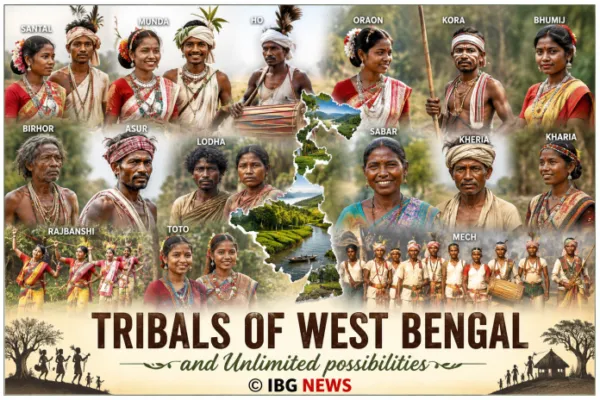
From the red soil villages of Purulia and Jhargram to the Himalayan tribal belts of Kalimpong and Darjeeling, the tribal settlements of West Bengal preserve one of South Asia's oldest living cultural civilizations.
For decades, these communities were viewed primarily through the lens of poverty and underdevelopment. Today, however, global trends in sustainable living, handmade products, indigenous storytelling, ethical fashion, eco-tourism, and cultural heritage are transforming tribal culture into a major international economic opportunity.
West Bengal's tribal heritage is no longer only a cultural asset - it is emerging as a powerful creative economy with export, tourism, media, and global branding potential.
West Bengal is home to several major indigenous communities, including:
These tribal settlements maintain distinct identities through language, music, festivals, rituals, architecture, agriculture, and craft traditions.
Many villages still follow environmentally sustainable lifestyles:
In an era increasingly dominated by industrialized culture, tribal Bengal represents authenticity - a commodity now in high demand globally.
The tribal regions of Bengal are rich in rhythmic folk traditions involving:
These art forms are increasingly attractive to:
Among Bengal's most globally recognized tribal crafts is Dokra Art - an ancient lost-wax metal casting tradition dating back nearly 4,000 years.
The craft survives in regions such as:
The products include:
Global buyers increasingly value Dokra because of its:
Research and market reports indicate that international demand for handmade tribal metal craft is rising, particularly in Europe and the United States.
West Bengal has already begun developing a structured creative ecosystem around indigenous crafts through initiatives linked with UNESCO-supported rural craft hubs.
The state's Rural Craft and Cultural Hubs initiative reportedly expanded from:
The project helped:
The success of Bengal's handicraft ecosystem is also visible through platforms such as Biswa Bangla, which promotes thousands of traditional products from across the state.
India's handicraft export sector has grown dramatically over the decades, with traditional handmade products gaining strong international demand.
West Bengal's tribal products fit directly into high-growth international segments such as:
Potential high-demand regions include:
These markets increasingly prioritize:
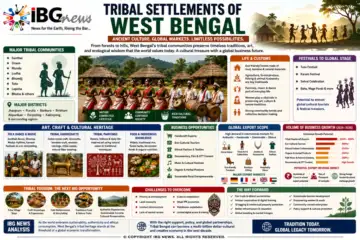 Tribals Industry Scope of West Bengal
Experts in India's rural craft economy believe Bengal's tribal and folk craft sector could experience major expansion through:
| Sector | Estimated Growth Potential |
|---|---|
| Tribal handicraft exports | 200%-400% |
| Eco-cultural tourism | 300%+ |
| Documentary & OTT storytelling | High-growth emerging sector |
| Ethical fashion collaborations | Rapid international expansion |
| Organic tribal products | Strong premium market demand |
| Folk music & festival economy | Expanding global niche market |
Industry observations suggest that if properly organized through:
West Bengal's tribal cultural economy could potentially generate:
Luxury lifestyle brands worldwide are increasingly moving toward:
This creates a rare opportunity for tribal Bengal.
Global travelers are increasingly seeking:
West Bengal's tribal settlements could become internationally recognized tourism destinations through:
Countries such as Thailand, Peru, Indonesia, and parts of Africa have already transformed indigenous culture into billion-dollar tourism ecosystems. Bengal possesses similar long-term potential if developed responsibly.
Global luxury markets are increasingly shifting away from machine-made mass products toward:
This global trend directly benefits tribal craftsmanship from Bengal.
International interior designers, boutique hotels, collectors, and luxury retailers are actively sourcing:
The demand for "human-made luxury" is expected to rise further in the AI-driven industrial age.
Despite enormous potential, tribal communities still face:
Without safeguards, global commercialization may exploit tribal artists rather than empower them.
Experts stress the need for:
The tribal settlements of West Bengal are no longer isolated cultural zones hidden from the global economy. They represent one of India's most underutilized creative assets.
As the world moves toward sustainable consumption, ethical fashion, indigenous tourism, handmade luxury, and cultural authenticity, Bengal's tribal heritage may evolve into a major export-driven cultural economy over the next decade.
The future of tribal Bengal may not depend on abandoning tradition - but on transforming tradition into a dignified global enterprise.
 Suman Munshi
Suman Munshi is an Indian media entrepreneur, technology professional, and digital publisher serving as the Chief Editor & CEO of IBG NEWS. With over two decades of experience across journalism, information technology, digital publishing, laboratory automation systems, and enterprise management, he leads IBG NEWS as an emerging independent digital media platform focused on global affairs, governance, culture, and public-interest journalism.
Reuters Digital Journalism Certification (USA),Global Certificate in Data Science & Machine Learning - Accredian, Scrum Master Certification 2025 (USA), GxP & LIMS Certifications (GSK London, Mincom Australia, Novartis Research Lab MIT USA), Leadership, Communication, Diversity & Inclusion Certifications - LinkedIn Learning,
His multidisciplinary background spans journalism, anthropology, technology management, data science, cybersecurity, and enterprise systems, contributing to his work in digital journalism and independent media leadership. He is the founder of the Digital Media industry concept in Eastern India.