




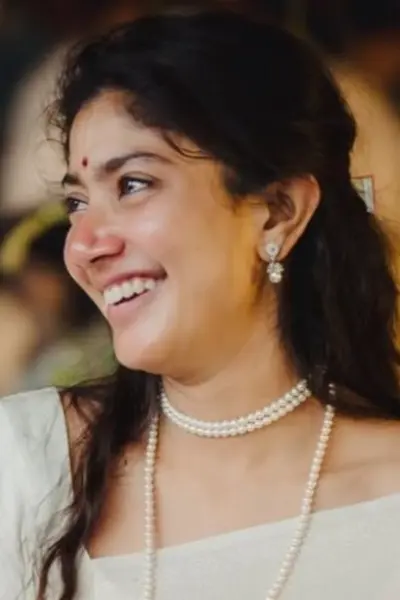

Do you remember that one girl who never came to class without eyeliner? Not for Annual Day. Not for picture day. Not for a regular day.
Or the one who had six to twelve tic tac clips stuck to her hair?
Every school had a girl who etched herself into our memory simply by always looking "presentable."
Years later, the same pattern followed many of us into college: the friend who refused to attend an 8 a.m. lecture without concealer, the classmate who deleted a photo because her acne was visible, or the girl who apologised for looking tired when she was simply bare-faced.
Most women know these moments because they've lived them. For a long time, beauty wasn't just about looking good. It was about looking like you had made an effort. Looking polished. Looking put together. Looking as though you'd earned the right to be seen.
The rise of the "real face" trend
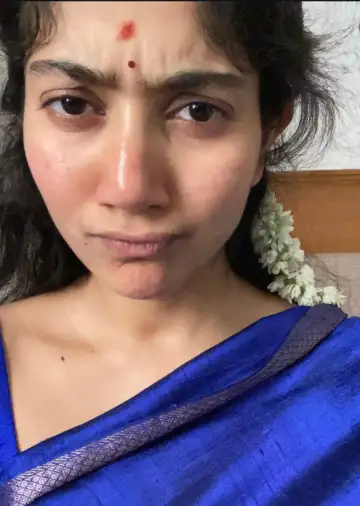 Instagram/Sai Pallavi
Open Instagram today and you will find countless videos of women removing their makeup in front of millions of viewers. A creator smiles at the camera, wipes away her foundation, removes her lashes, and reveals the face underneath. The surprising part isn't the transformation. It's the comments.
"You're prettier without makeup."
"I love your freckles."
"You look so much more real."
A decade ago, such comments would have been unusual. Because the one with the most makeup was the most followed. Today, things have changed.
Perfection became repetitive
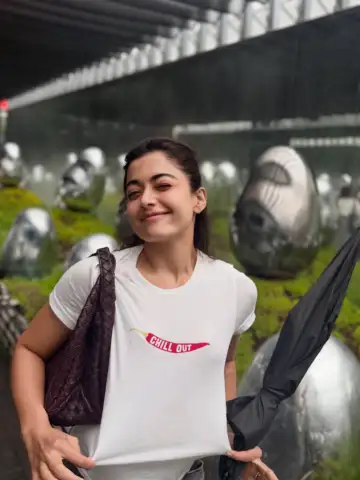 Instagram/Rashmika Mandanna
The answer to "why the change?" has less to do with beauty and more to do with exhaustion.
For years, women were surrounded by the same message: fix your skin, fix your hair, fix your body, fix whatever makes you different. Social media amplified that pressure through filters, editing apps, and carefully curated feeds.
Plastic surgeons intensified the process of looking perfect by cutting every other actor and model's face to the traditional Golden ratio (Φ ≈ 1.618).
Faces became smoother, skin became flawless, and beauty standards became increasingly uniform. At first, it felt aspirational. Then it became repetitive. Scroll through social media long enough, watch enough movies and everything starts to look the same. The same makeup, the same poses, the same edited perfection. Ironically, perfection became so common that it stopped being interesting. That's when authenticity started to stand out.
Celebrities challenging beauty standards
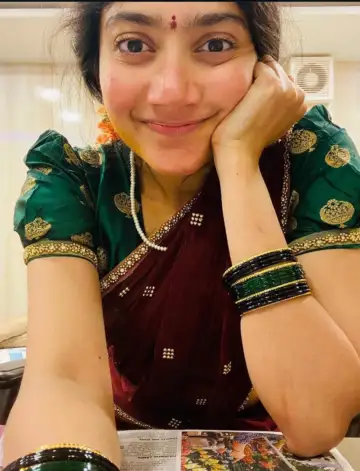 Instagram/Sai Pallavi
The same shift can be seen among celebrities and social media creators. Actress Sai Pallavi has become known for embracing a natural appearance in an industry often associated with heavy makeup and glamour. Speaking about beauty standards, she once said, "I have never used makeup in my life. I'm not fond of it at all. I love myself the way I am."
Her approach resonated with audiences who appreciate seeing someone comfortable in their natural skin.
Internationally, Pamela Anderson sparked headlines when she began attending major fashion events without makeup. Rather than treating fine lines, ageing skin and wrinkles as something to hide, she openly embraced them. In an Instagram post shared during Paris Fashion Week, she wrote, "There is beauty in self-acceptance, imperfection and love."
The post quickly gained attention because it reflected a growing sentiment online: beauty, confidence and authenticity must move in parallel.
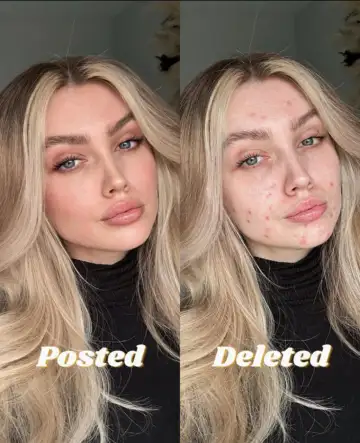 Instagram/Elizabeth Kaye Turner
This shift is also visible among influencers. Creator Elizabeth Kaye Turner, known for posting "Instagram vs Reality" content, shared her experience of constantly editing her photos. In one post, she admitted, "I used to edit my photos so much because I was addicted to it. I never felt pretty enough without a filter or a slight edit here and there." She went on to explain that while edited photos made her feel good on a screen, they left her feeling insecure in real life. Today, she chooses not to edit her pictures and openly shares her acne and skin texture, reminding followers that "having skin texture is normal and it doesn't make you or me any less beautiful."
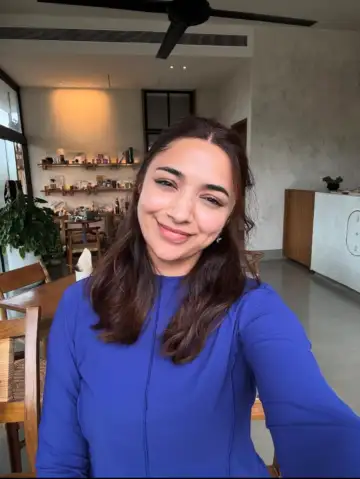 Instagram/Jiya Shankar
Indian actress and influencer Jiya Shankar has also embraced the trend toward authenticity. In a recent makeup-free post, she simply captioned her photo: "No make up but a good lighting and a happy girl." The simplicity of the statement reflects a larger cultural shift. Instead of presenting perfection, more creators are choosing to present reality.
These women are not rejecting beauty. They are challenging the idea that beauty requires constant correction. Their popularity suggests that audiences are becoming less interested in flawless appearances and more interested in honesty, individuality, and self-acceptance.
Why this newfound confidence is attractive
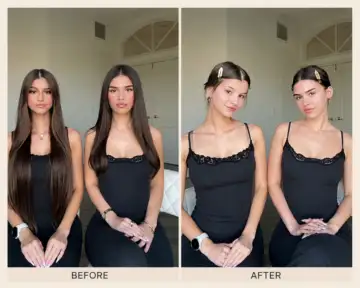 Instagram/Brooke Monk
Perhaps that's why audiences connect so strongly with people who show their acne scars, textured skin, dark circles, or natural hair. They are doing something many women have spent years avoiding: allowing themselves to be seen exactly as they are.
Research supports this shift. Studies in psychology have found that authenticity and self-acceptance positively influence how people perceive confidence and trustworthiness. In other words, people are often drawn to those who appear genuine rather than overly curated. That confidence is attractive not because someone suddenly became more beautiful, but because they got comfortable in their own skin.
A new definition of beauty
Makeup isn't disappearing. Most women still enjoy it, and beauty products aren't going anywhere. The difference is that more people are questioning whether they wear makeup because they want to or because they feel they have to.
Perhaps imperfections haven't suddenly become attractive. Perhaps people are simply tired of pretending they don't exist. And in a world full of filters, flawless edits, and carefully crafted online identities, being real has become refreshingly hip.
Lead Image Credit:Instagram/Sai Pallavi