
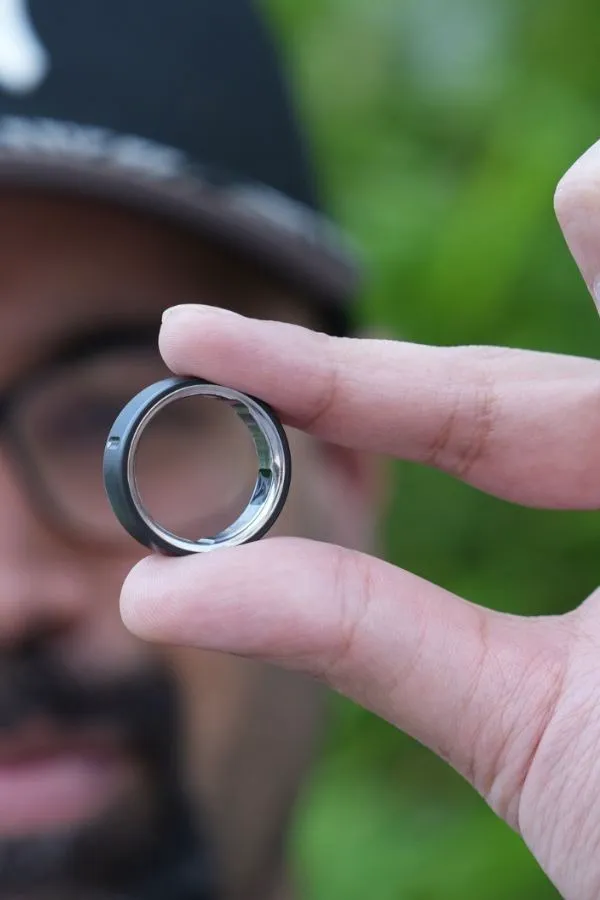

Sleep tracking feels simple on the surface, but the deeper you go, the more layered it gets. That's exactly the space the Oura Ring Gen 4 steps into.
This is not a flashy wearable trying to compete with your smartwatch. It stays subtle, works quietly in the background, and focuses on building a clearer picture of your sleep, recovery, and daily habits over time. Instead of overwhelming you with data upfront, it gradually reveals patterns that actually start to change how you understand rest.
 Hook.Online
That said, getting in isn't exactly cheap. In India, pricing starts at ₹28,900 for the Black and Silver variants, while premium finishes like Gold, Rose Gold, and Stealth Black go up to ₹39,900. There's also a ₹599 monthly subscription if you want the full analytics experience.
So this isn't just a one-time buy. It feels more like committing to a long-term data companion. The real question then becomes, is paying this for such a commitment actually worth it?.
Oura Ring 4 review: How comfortable is it to wear all day and night?
The Oura Ring Gen 4 is not the kind of product that wins you over instantly. What matters more is how it behaves after a few days of wearing it non-stop. That is where it either becomes part of your routine or starts to feel like an inconvenience. In my case, it blended in faster than expected.
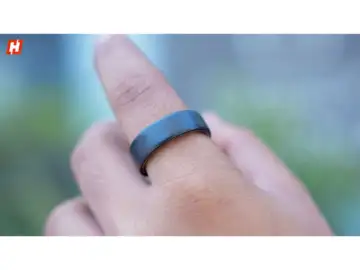
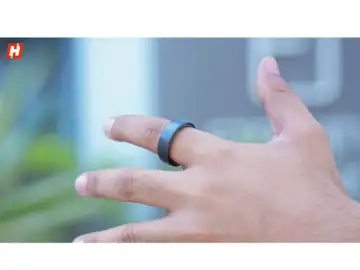
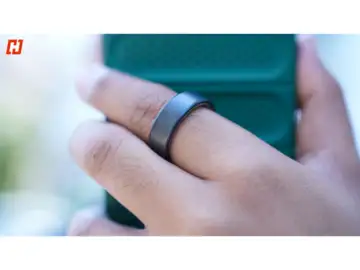
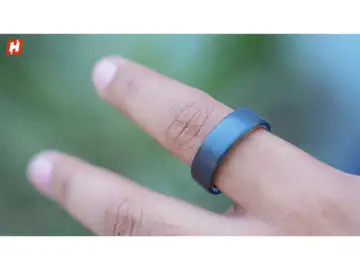
You get six finish options in India, including Black, Silver, Gold, Stealth Black, Rose Gold, and Brushed Silver. I picked Stealth Black, mainly because it keeps things subtle. It does not call attention to itself and works across different situations without looking like a piece of tech sitting on your finger.
The construction feels reassuring. It uses titanium, has water resistance, and is built to stay on. Over roughly a month of use, it picked up a minor scuff, but considering how often it brushed against surfaces, it has held up without any real concern. I never found myself babying it.
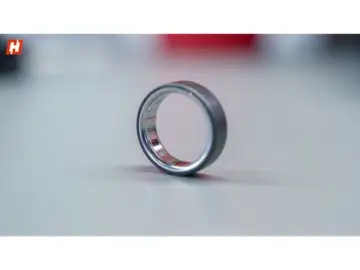 Hook.Online
What really matters here is comfort. This was my first time using a smart ring, so it did feel unusual in the beginning. That phase, however, passed quickly. After a couple of days, it stopped feeling like something new and started feeling like something that just belonged there.
Sleep is where the difference compared to a smartwatch becomes obvious. There is nothing strapped to your wrist, no weight, and no pressure points. You can move freely without being aware of it, which makes wearing it overnight far more natural.
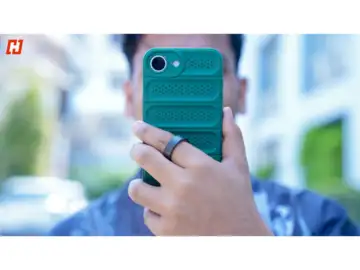
I alternated between the index and middle finger during my time with it. While the index finger is recommended for better readings and does feel more secure, I found the middle finger easier to live with daily. It stayed in place without constant adjustment and felt less noticeable overall.
Sizing plays a huge role in this experience, and Oura gets that right. The brand sends a sizing kit before purchase, which costs ₹999 but is adjusted later. I ended up with size 12, and once that was locked in, everything else just worked. Even a slightly off size could have changed the experience entirely.
 Hook.Online
There are also a few thoughtful touches. A small indentation helps you position the ring correctly when wearing it or placing it on the charger. It is something you notice early on, but quickly becomes second nature. Even if the ring shifts slightly during the day, it compensates using Smart Sensing, adjusting to maintain consistent tracking without needing your input.
That is really the key here. It is not just about how the ring feels when you put it on, but whether you eventually stop noticing it altogether. And with the Oura Ring Gen 4, that is exactly what happens.
Oura Ring 4 review: How the app turns raw data into something useful
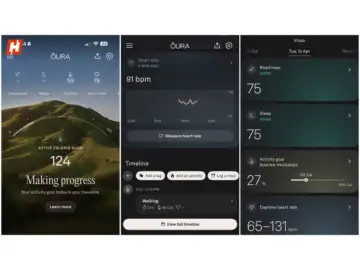
The real work of the Oura Ring 4 happens out of sight. Inside that small frame, there are temperature sensors, optical sensors tracking heart rate and blood oxygen, and an accelerometer monitoring movement throughout the day. You do not feel any of this while wearing it, but it is constantly collecting signals and stitching together a clearer view of how your body is functioning beyond just perception.
 Hook.Online
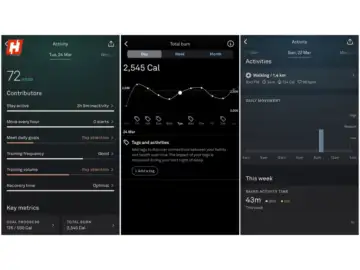
All of that data lands in the app, and that is where things start to make sense. Each morning begins with three key scores: Sleep, Readiness, and Activity, all rated out of 100. It is a simple snapshot that tells you how you slept, how active you have been, and how prepared your body is for the day ahead.
These scores are not just surface-level numbers. They are built using detailed inputs like REM and deep sleep stages, heart rate variability, resting heart rate, and even slight temperature changes during the night. The depth is there if you want to explore it, but it never feels overwhelming at a glance.
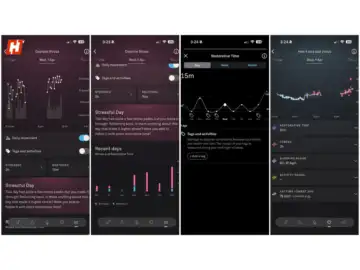
Beyond that, the app layers in more context over time. You get insights into daily stress levels, a resilience metric that reflects how well your body is recovering across days, and additional tools like cycle tracking if you choose to use them.
What stood out to me most, though, was how the app handles trends. Instead of focusing only on daily highs and lows, it gradually builds a longer narrative. You start noticing stretches where stress builds up quietly, phases where recovery drops, and moments where everything feels aligned.
 Hook.Online
The Timeline feature adds another layer to this. I would log things casually, like a late dinner, a workout session, or a particularly hectic part of the day. Over time, these entries started to connect with changes in sleep and readiness in ways that were surprisingly clear.
Meal logging is another feature I used occasionally. It is simple, you take a photo, and the app identifies the food fairly accurately. It is less about strict tracking and more about nudging you toward better balance.
There is also the AI-powered Oura Advisor, which still feels like a work in progress. The idea, though, is promising. Instead of manually going through charts, the app begins to explain your data in a more conversational way.
Individually, none of these features feel critical. But together, they shape an experience that feels more tailored and personal over time.
Oura Ring 4 review: Does it explain your sleep or just track it?
If there is one area where the Oura Ring Gen 4 clearly focuses, it is sleep. Everything else feels like an extension, but this is the core experience it is built around.
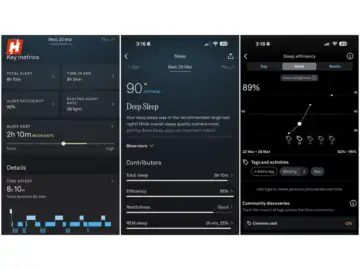
While you are asleep, the ring continuously monitors multiple signals. It tracks when you fall asleep, how you move through light, deep, and REM stages, how your heart rate settles, how your breathing changes, and even subtle shifts in body temperature. None of this is something you can realistically observe yourself, which is what makes the data so valuable.
 Hook.Online
By morning, all of that information is translated into something far easier to understand. You get a Sleep Score out of 100, but the number is only part of the story. What matters more is the context behind it. It shows not just how long you slept, but how effective that sleep actually was.
In my case, most nights landed in the low to mid-80s. On paper, that looks consistent, but the experience tells a different story. An 82 after a stressful day does not feel the same as an 86 after a calmer one.
What stood out most is how it reshapes your understanding of rest. Patterns start to emerge. Late meals reflect in restless sleep. Stress shows up in your heart rate. Even short daytime naps are picked up and factored in.
That is really the point. It does not overanalyse or dramatise anything. It simply records what is happening, and over time, that record becomes something you can actually learn from.
Oura Ring 4 review: Does the readiness score actually mean anything?
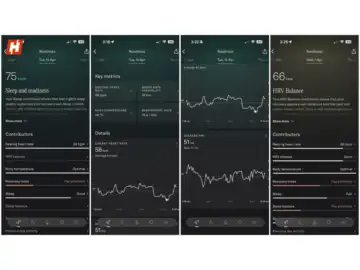
Alongside sleep, the readiness score quickly became the number I paid the most attention to. At first, it feels vague. A number like 75 does not immediately tell you what to do. But after a few days, it starts to make sense.
It is essentially a measure of how well your body has recovered. The score pulls from sleep quality, resting heart rate, heart rate variability, and temperature trends. On their own, these are just metrics, but the app adds context through stress tracking and resilience insights, which show how your body is coping over time.
 Hook.Online
One day in particular made this very clear. Someone close to me had to be admitted to the hospital. It was a long, draining day, but I felt like I was holding up fine. The data suggested otherwise. My heart rate stayed elevated, stress spikes were flagged repeatedly, and the readiness score kept dropping. By evening, the fatigue hit, and looking back, it all lined up.
I have seen smaller versions of this as well. Busy days, tight deadlines, constant calls. The buildup shows up in the data even when it is easy to ignore.
That is where the readiness score becomes useful. It is not a rule, but it does give perspective.
Oura Ring 4 review: Is it built for fitness tracking or just general activity?
The Oura Ring 4 can log workouts, but it takes a very different approach compared to traditional fitness wearables. It focuses on capturing heart rate across different activities and gives you a general sense of effort and intensity, rather than diving deep into performance data.
 Hook.Online
If you are someone who tracks pace, distance splits, cadence, or power output, this will feel limited. Those metrics are simply not part of the experience here. For that kind of detail, a smartwatch still makes more sense. In my case, it never replaced the Apple Watch. Instead, it sits alongside it, leaning more toward recovery, sleep, and overall wellness.
 Hook.Online
There are a few compromises as well. You need your phone to start a workout, and there is no real-time feedback while you are exercising. For activities like weight training or contact sports, you will likely end up taking it off anyway.
 Hook.Online
Workout detection is not always perfect either, and sometimes needs manual correction. That said, it plays nicely with Apple Health, Google Health Connect, and Strava, so it fits into an existing setup rather than trying to take over.
Oura Ring 4 review: Charging habits you barely notice
What I liked most about the Oura Ring 4 is that battery anxiety never really enters the picture. You don't find yourself checking percentages or planning your day around charging.
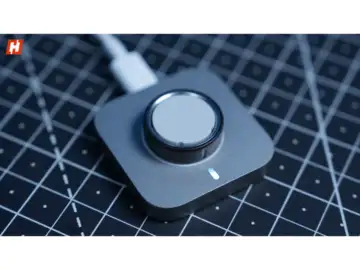
In actual use, I was getting about five to six days on a full charge, even with everything turned on. That's lower than the claimed eight days, but still long enough to feel effortless.
 Hook.Online
When it does need power, the process is quick and fuss-free. The magnetic dock snaps into place easily, and even short top-ups during a morning routine keep it going.
It fits into your day, instead of interrupting it.
Oura Ring 4 review: Where the experience starts to feel limited
If there is one thing that holds the Oura Ring 4 back, it is the subscription. The ₹599 monthly fee is what unlocks the deeper insights, and without it, the experience feels stripped down. You still get the basic scores and raw data, but the real value sits behind that paywall. Over time, that recurring cost starts to add up, especially when other wearables offer similar tracking without an ongoing fee.
 Hook.Online
That said, the app itself deserves credit. It is clean, easy to navigate, and refreshingly free from ads or clutter, which does make the experience feel more premium.
Fitness tracking is another area where the limitations show. It is not designed for performance-focused users, and in some cases, like weight training, you will likely take it off altogether. There are also moments where tracking needs manual correction.
 Hook.Online
Individually, these are not major issues. But together, they clearly define what this device is built for, and what it is not.
Oura Ring 4 review verdict: Who is this really for?
The easiest way to understand the Oura Ring Gen 4 is to look at what it chooses not to do. It does not chase perfection in performance tracking, it does not flood you with notifications, and it does not try to replace a smartwatch. That restraint is intentional, and it shapes the entire experience.
 Hook.Online
What you get instead is a quieter kind of value. Over time, the ring builds a running log of how your body responds to your habits. Sleep, recovery, stress, all of it starts to connect. Not in a way that feels overwhelming, but in a way that gradually shifts how you make decisions. You start recognising patterns without actively looking for them.
Living with it feels easy. The ring itself disappears on your finger, the app stays clean, and the insights, once unlocked, are genuinely useful. It never feels demanding, which is a big part of why it works.
 Hook.Online
The catch is the subscription. The ₹599 monthly fee is not hard to justify if you are actively using the insights, but it does turn the ring into an ongoing commitment rather than a one-time buy.
So this comes down to intent. If you want something to push you through workouts or track performance in detail, this is not it. But if you are trying to understand your body better, without adding friction to your routine, the Oura Ring 4 fits that role very well.
Credit for all images: Hook.Online