





It is getting pretty hard to find a truly premium phone without spending nearly six figures. Every year, flagships get more expensive, and features we used to get for around ₹60,000 are now trapped in the ₹80,000 to ₹1 lakh bracket.
That is why the Xiaomi 17T caught my eye. For ₹59,999, it actually offers the kind of hardware you expect from ultra-expensive devices. You get a high-end design, a great screen, a massive 6,500mAh battery, and solid everyday performance. But the real headline is the Leica-tuned camera setup, which includes a proper 50MP 5X periscope zoom lens.
I moved into the Xiaomi 17T as my primary device for two weeks, and it is obvious that Xiaomi did not just chase benchmark points or try to tick off every single box on a spec sheet. Instead, they built a hardware experience focused entirely on photography. The big test now is whether doubling down on the camera is enough to make it worth your money.
Xiaomi 17T Pricing: Aggressively priced and hard to ignore
I genuinely think Xiaomi hit the bullseye with the pricing this time around. In a world where phone prices keep skyrocketing with every single launch, this one actually makes a lot of sense for what you get.
 Hook.Online
Let's talk numbers. The base model I spent time with packs 12GB of RAM and 256GB of storage for ₹59,999. However, if you grab the current launch deals, you can walk away paying an effective price of ₹54,999. Need more space? The 12GB + 512GB version sits at ₹64,999, but that one also drops right down to ₹59,999 with the introductory offers.
When you look at everything bundled into the box, from the Leica cameras and that brilliant 5X telephoto lens to the flagship power and massive battery life, the pricing is incredibly aggressive. Once you factor in those early-bird discounts, it becomes a remarkably easy phone to recommend to anyone looking to upgrade.
Hands-on with the Xiaomi 17T: A Lesson in Understated Design
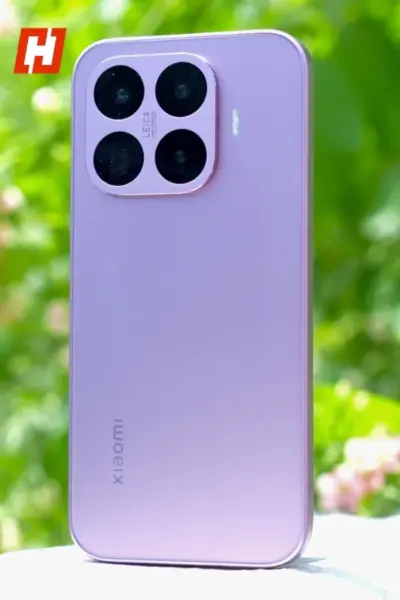
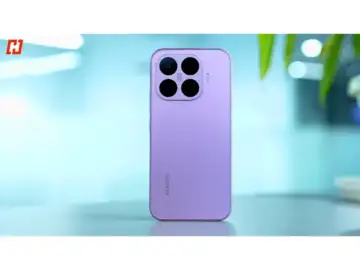
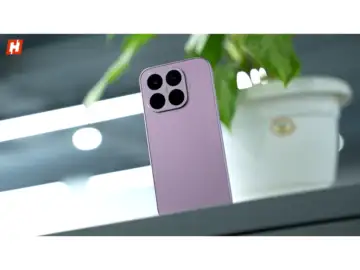
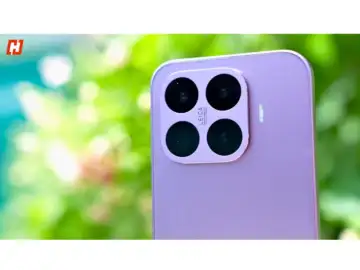
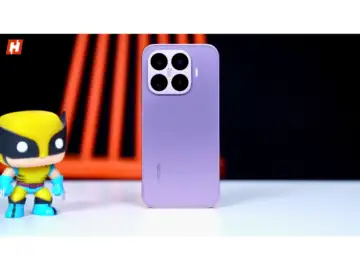
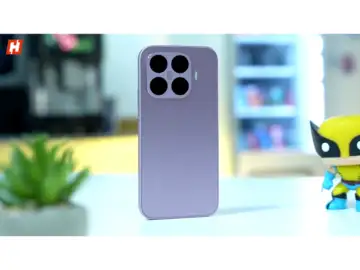
I fell for the look of the Xiaomi 17T almost the moment I unboxed it. While every other brand seems stuck in a phase of putting giant, aggressive circular camera bumps on their phones, Xiaomi took a step back. They went with a clean, squarish camera island that looks incredibly modern and high-end without being obnoxious about it.
 Hook.Online
The violet version I have been using looks great, keeping things minimal and classy. Around the back, they used a matte polycarbonate panel. Even though some people might complain that competitors offer glass at this price, this back panel is excellent at keeping oily smudges and fingerprints away. Paired with a flat frame and slightly curved corners, the phone sits naturally in your palm.
 Hook.Online
At 8.2mm thick and 200 grams, it hits a great middle ground. It has enough weight to feel solid and reliable, but it never made my wrists ache during long gaming marathons or full days out shooting photos.
Xiaomi did not skip out on the ruggedness either. The body is rated IP68 against water and dust, and the front screen gets Gorilla Glass 7i protection to handle keys in your pocket or a clumsy drop. I also like the subtle touch of the metallic camera housing, which gives it a tiny bit of character without looking gaudy.
On the feature side, everything you actually need is present. It packs an IR blaster, NFC, Wi-Fi 6E, Bluetooth 6.0, eSIM support, and a standard USB 2.0 port. The optical fingerprint sensor sits right under the glass, and it was snappy and consistent the entire two weeks I used it. Ultimately, Xiaomi nailed the basics here, giving us a phone that is beautifully built and great to live with.
Xiaomi 17T Display: A fantastic panel for work and play
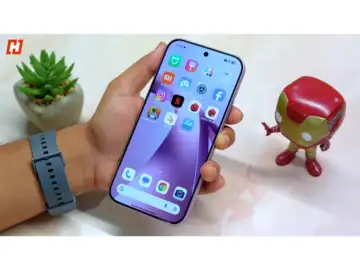
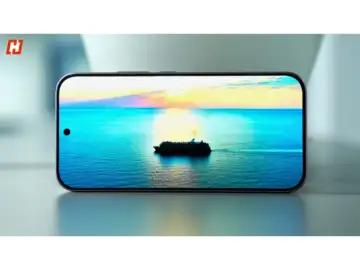
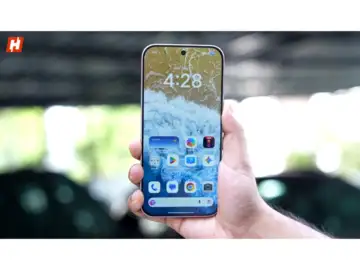
The 6.59-inch 1.5K AMOLED display on the Xiaomi 17T is easily one of the best things about this entire phone. It hits a pixel density of around 460ppi, which basically means everything looks incredibly sharp. Articles are crisp to read, images show off fine details, and even just browsing through your social feeds feels premium.
 Hook.Online
The 120Hz refresh rate keeps the whole interface feeling fluid. Whether I was gaming, tweaking photos, streaming a quick video, or just bouncing between apps, the animations stayed perfectly smooth, and the screen caught every quick tap without hesitation.
The way this panel handles colour is what really blew me away. It is a 12-bit screen capable of pushing out over 68 billion colours. You actually notice that depth when you are looking at high-res photos or HDR footage. The colour gradients are remarkably smooth, giving everything a vibrant yet natural look instead of looking fake and oversaturated. Since I spend hours evaluating camera samples for a living, that kind of accuracy is a massive deal.
 Hook.Online
It supports Dolby Vision and HDR10+ too, making it an absolute powerhouse for streaming. The contrast is deep, highlights pop beautifully, and catching up on the latest season of From on Prime Video looked phenomenal.
Outdoors, the panel claims a peak HDR brightness of 3,500 nits. In the real world, that means you can easily read a text or frame a shot under blinding afternoon sunlight without having to squint or shield the glass with your hand.
You also get a bunch of TUV Rheinland certifications for things like low blue light, flicker-free viewing, and circadian rhythm safety. They might sound like boring bullet points on a spec sheet, but your eyes will definitely thank you during late-night scrolling sessions.
The stereo speakers are perfectly fine, but make no mistake, the screen steals the show here. For the price, it is easily one of the finest displays I have tested all year. My only real complaint is that it is an LTPS panel. At this price point, Xiaomi really should have given us an LTPO display instead.
Xiaomi 17T Camera Evaluation: The Zoom Lens is a True Game Changer
If you are trying to decide whether to buy the Xiaomi 17T over its competitors, the camera setup is the absolute clincher. Specifically, it comes down to the 50MP 5X periscope telephoto shooter. While other brands in this price bracket rely on digital cropping and AI algorithms to fake their zoom capabilities, Xiaomi packed in actual, high-quality hardware. The difference hits you straight away.
 Hook.Online
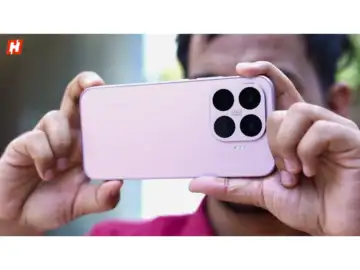
The full rear assembly brings together a 50MP primary sensor, a 12MP ultrawide camera, and that 50MP 5X periscope zoom lens, all fine-tuned in partnership with Leica. The main camera holds its own beautifully, but the telephoto lens is what gives this phone its actual personality.
 Hook.Online
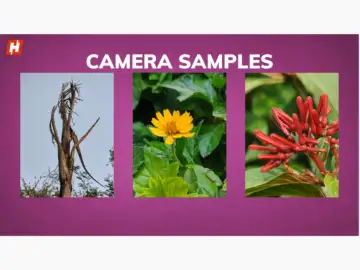
Offering a 115mm equivalent focal length along with optical image stabilisation, the 5X lens delivers great photos time after time. Xiaomi pulls in In-Sensor Zoom tech to stretch this to a 10X optical-grade lossless zoom, and their AI Ultra Zoom can theoretically push things all the way to 120X. From my testing, the sweet spot sits firmly between 5X and 10X, where the image quality stays genuinely impressive.
Daylight shooting is a breeze with this setup. Photos turn out incredibly detailed, the dynamic range handles tough lighting well, and colours look lifelike without appearing washed out. You can clearly see Leica's philosophy at play here. Instead of churning out heavily sharpened, artificially vibrant photos designed to look good on social media, the 17T takes a step back. Skin tones look real, highlights are kept under tight control, and the final look feels closer to a dedicated camera.
 Hook.Online
The telephoto quickly turned into my favourite lens on this device. At 5X, the frames are remarkably sharp, holding onto great texture and fine details. Even zooming into 10X, I was shocked by how much real information the sensor managed to save. Whether I was shooting faraway architecture, snapping street photography, or pulling a subject out of a messy background, the results were excellent.
 Hook.Online
Portraits are another massive win for the 17T. Xiaomi gives you six different focal lengths spanning from 23mm to 115mm, providing plenty of creative freedom. Combined with the specialised Leica portrait tuning, the phone creates portraits with clean subject isolation, accurate skin tones, and a beautifully natural background blur. The shots wind up looking cinematic without that annoying, overly digital processing look.
 Hook.Online
The 12MP ultrawide camera might not get a ton of attention, but it actually punches above its weight class. Detail levels naturally drop compared to the primary 50MP sensor, but the colour matching remains consistent across the lenses, and the final images are completely respectable.
One capability that caught me off guard was the telemacro feature. Thanks to the design of the periscope lens, you can focus on a subject from as close as 30cm. This lets you snap tight macro shots that have gorgeous, genuine depth separation. It looks miles better than those cheap, low-res macro cameras that brands normally slap onto mid-range phones.
 Hook.Online
Behind the scenes, Xiaomi uses its AISP imaging engine to run the processing pipeline, utilising systems named FusionLM, ToneLM, PortraitLM, and ColorLM. Mercifully, the software optimisation is light-handed. It enhances the frames where necessary but avoids making the final image look fake.
I also found Stage Mode to be genuinely practical. Intended for live concerts, it triggers automatically via scene detection and tunes the camera specifically for 5X and 10X zoom shots. In environments where chaotic stage lights usually ruin smartphone photos, it managed to deliver much cleaner, usable images.
Video capability is perfectly solid, too. The 17T tops out at 4K resolution at 60fps with full HDR10+ support, and the Leica Live Moment features lend a movie-like feel to your clips. Up front, a 32MP selfie camera takes dependable photos and handles video calls easily, though it is capped at 4K at 30fps when shooting video.
When the sun goes down, the camera system sticks to its core philosophy. Rather than aggressively boosting the exposure to turn night into day, Xiaomi works to keep the actual mood intact, controlling digital noise while retaining authentic colours. The night shots might not look as bright or artificial as what you get from rivals, but I preferred this approach because it feels honest. That realistic rendering, combined with a stellar 5X telephoto lens, makes the Xiaomi 17T a joy to shoot with.
Real-World Performance: The Xiaomi 17T Power Check
The Xiaomi 17T runs on MediaTek's 4nm Dimensity 8500-Ultra chip, which comes paired with 12GB of LPDDR5X RAM and snappy UFS 4.1 storage. These specs are pretty much par for the course in this price bracket, and the actual user experience is just as fluid as the numbers imply.
 Hook.Online
I put this phone through its paces for two weeks, and it never felt sluggish. Apps fire up without delay, multitasking is completely effortless, and random stutters just aren't a thing here. It handles everything comfortably, from heavy photo editing and video recording to jumping between a dozen open tabs or mindlessly scrolling through social feeds late at night.
For those who care about benchmarks, it managed to breach the 2.02 million mark in AnTuTu. Yes, you can find other phones at this price point that score higher or pack beefier processors. But the thing is, Xiaomi isn't marketing the 17T to hardcore mobile gamers. This is a premium camera phone that simply ensures it doesn't lag behind more powerful rivals when you are going about your day.
 Hook.Online
A lot of that sustained smoothness comes down to how it manages heat. Xiaomi threw in a 3D IceLoop cooling setup that does a great job of keeping temperatures low. The body stayed surprisingly composed even when I pushed it with extended gaming, non-stop camera use, or long 4K video recording sessions.
Gaming holds up well too. BGMI currently runs at up to 90fps. Honestly, considering what this chipset is capable of, I expect we will see a future game patch or software update unlock 120fps support down the line.
At the end of the day, benchmark graphs don't tell you much about real life. What really counts is whether a phone stays fast after weeks of heavy daily use, and the 17T is quick, smooth, and dependable. It has more than enough power to keep things running smoothly for years to come.
HyperOS 3 on the Xiaomi 17T: A Welcome Step Forward
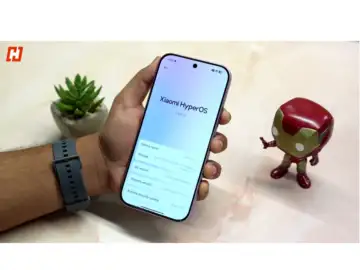
The Xiaomi 17T ships with HyperOS 3, and living with it proves that Xiaomi's software approach has grown up quite a bit. The entire skin feels noticeably cleaner and better organised than older versions, yet it still lets you customise things to your heart's content.
 Hook.Online
A couple of features really stood out during my time with the phone. First is HyperIsland, which handles background tasks and quick alerts in a way that feels incredibly natural. Then there is HyperConnect. If you already own other Xiaomi gear like tablets or wearables, this feature is genuinely useful because it lets everything sync up seamlessly.
Of course, smart tools are a massive talking point here. Xiaomi integrated its HyperAI suite right alongside Google's Gemini to offer a solid mix of productivity tricks. The camera setup gets plenty of software help too, utilising AI Scene Recognition, AI Ultra Zoom, and the brand's AISP imaging engine to quietly polish up your shots.
 Hook.Online
Day-to-day navigation feels quick, stable, and completely fluid. It is packed with features, but the interface avoids feeling cluttered or annoying. On the updates front, Xiaomi is committing to four years of major Android version upgrades and six years of security patches. Some brands promise a bit more, but this is still a solid window that ensures the 17T stays completely usable for years down the line.
Living with the Xiaomi 17T Battery: Big Capacity, Quick Top-ups
Battery performance turned out to be a massive highlight during my time reviewing the Xiaomi 17T. The device runs on a 6,500mAh Silicon Carbon cell. To be fair, it is not the single largest battery capacity on the market right now, especially with several competitors pushing past the 7,000mAh mark.
 Hook.Online
Even so, I rarely had to stress about finding a plug point before bed. On heavy days packed with navigation maps, scrolling social feeds, gaming, and taking tons of photos, the 17T sailed from morning until late at night without breaking a sweat. When I toned down my usage, it easily stretched deep into day two. Pulling six to seven hours of actual screen-on time was a regular occurrence.
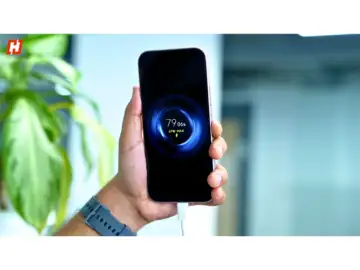
When the power does run out, the bundled 67W HyperCharge adapter takes it from zero to a hundred per cent in under an hour, which works perfectly fine. You also get 22.5W reverse wired charging, which is great if you need to juice up your wireless earbuds or a friend's dying phone in a pinch.
The Final Verdict: Is the Xiaomi 17T Worth Your Money?
The Xiaomi 17T is easily one of the most focused phones I have used lately. Instead of trying to please absolutely everyone, it concentrates heavily on delivering a true high-end camera experience, and it succeeds beautifully.
 Hook.Online
That 50MP 5X periscope zoom lens is a massive win. It completely alters how you shoot by giving you real optical focal length instead of relying on blurry digital crops. Pair that with Leica's natural image processing, and you get authentic photos with genuine character. Looking at your shots on that stellar display is incredibly satisfying, and the 6,500mAh battery easily survives a full day of heavy shooting.
Sure, you have to accept some trade-offs. BGMI hits a ceiling at 90fps right now, wireless charging is missing, the 12MP ultrawide lens is a bit average, and the update policy is not the longest out there.
Even so, if your focus is smartphone photography, the Xiaomi 17T is a seriously compelling package.
Lead Image Credit: Hook.Online