

The ongoing conflict in West Asia is impacting energy supplies. The availability of LPG gas has been affected in several countries, and a rise in prices is also being observed.
India, too, is feeling the pressure on its gas supply. Consequently, people in many areas have increasingly started using induction cookers for cooking. However, along with this shift, various doubts and misconceptions regarding induction cookers persist in people's minds. Here, we address and dispel some common misconceptions associated with induction stoves.
Does using an induction cooker lead to higher electricity bills?
It is often assumed that using an induction cooker significantly increases electricity costs. However, technically speaking, an induction cooker heats the bottom of the cookware directly. This minimizes energy wastage; therefore, in many instances, it can prove to be more economical than a traditional gas stove.
Can you not cook using just any type of cookware?
This notion is partially true. Induction cookers work only with cookware that has a magnetic base-such as vessels made of iron or stainless steel. Nowadays, most cookware available in the market is induction-friendly.
What happens if water spills on it?
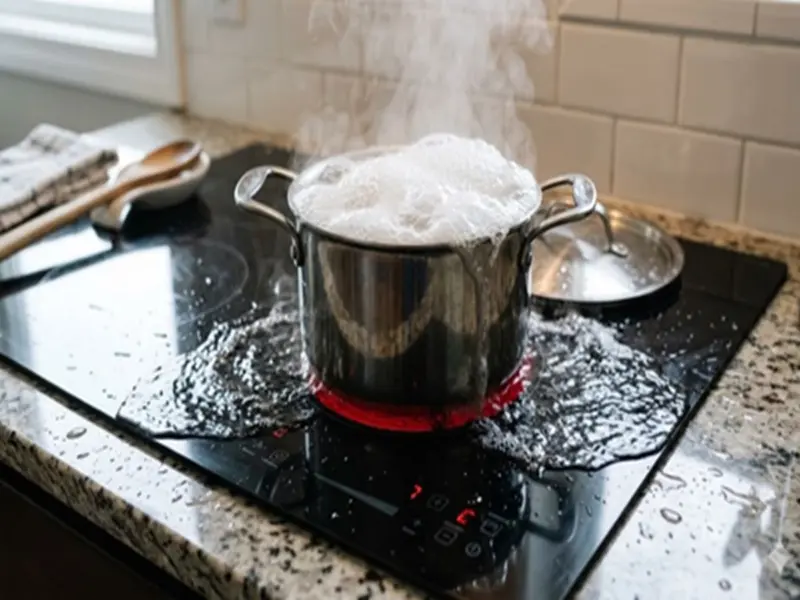
If a small amount of water or food spills onto the induction cooker while cooking, there is generally no risk of an electric shock. However, if a large quantity of water seeps inside the unit, it can damage the internal circuitry and cause the appliance to malfunction. Therefore, it is always best to keep the cooker clean and dry.
Is there a risk of electric shock?
Many people worry that they might receive an electric shock while using an induction cooker. In reality, the surface of most induction cookers is made of tempered glass or ceramic, neither of which conducts electricity. While cooking, only the cookware heats up, whereas the surface of the cooker remains relatively safe to touch. Therefore, under normal operating conditions, the likelihood of receiving an electric shock is extremely low.
Disclaimer: This content has been sourced and edited from Amar Ujala. While we have made modifications for clarity and presentation, the original content belongs to its respective authors and website. We do not claim ownership of the content.