




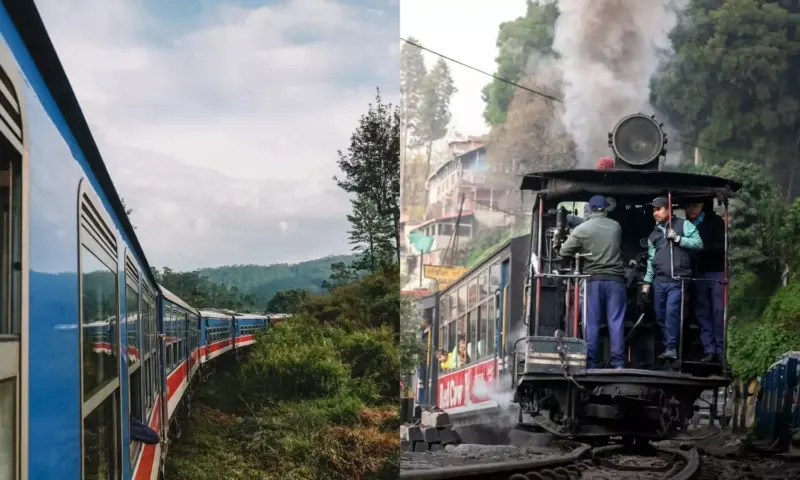

There is a distinct charm to travelling by train, unlike any other mode of transport. The gentle rocking of a carriage. The smell of simple meals wafted from another compartment.
The picturesque views outside your window.
Growing up, train journeys meant card games with family, sharing snacks with strangers, biting into iconic railway cutlets, and slurping that unmistakable orange-red tomato soup. There was no rush to reach. A gentle ease in travel. A sense of living in the moment.
Even today, when air travel has made connectivity faster and more efficient, many travellers still choose trains because the journey itself becomes part of the holiday. Rail travel has often been romanticised in European countries, especially Switzerland's cinematic landscapes (thank you, Mr Yash Chopra). But Asia offers equally compelling experiences. From mountain views to coastal stretches, and in some cases high-speed precision, these are some of the most iconic train journeys to experience.
Mumbai to Goa, India
For many Mumbaikars, the city's beaches hold no charm. For a sunny beachside holiday, Goa is the next best bet. With its laid back pace and susegad lifestyle, it is the ideal lazy vacation. Getting there by train is part of the appeal.
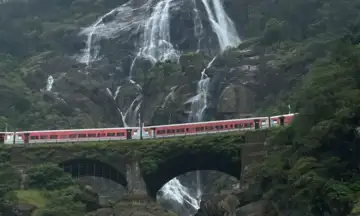
The journey along the Konkan Railway is considered one of India's prettiest, especially during the monsoon when the Western Ghats turn into lush green carpets. The train ride takes roughly eight to ten hours, depending on the train, and the landscape constantly shifts outside your window. You pass through tunnels carved into mountains, cross rivers and bridges, and glide past small coastal villages.
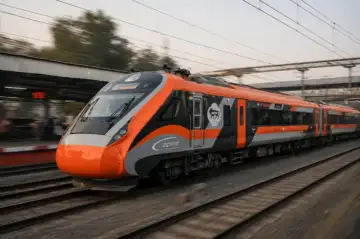
Several trains operate on this route, but the Shatabdi Express, departing from Dadar early in the morning and reaching Madgaon by early afternoon, is a popular choice. The Vande Bharat Express offers a more modern experience with comfortable seating, large windows, and onboard catering, giving the ride a slightly more international feel. Either way, it is a relaxed and scenic start to a Goan holiday.
Kolkata to Darjeeling, IndiaThere is no single train that runs directly from Kolkata to Darjeeling, but that is part of the charm of visiting this hill station. Since this is a long journey of nearly 10 to 12 hours, most travellers take an overnight trip from Howrah to New Jalpaiguri (NJP) aboard trains such as the Darjeeling Mail or Padatik Express. The train tumbles past West Bengal's countryside with views of paddy fields and quaint villages.
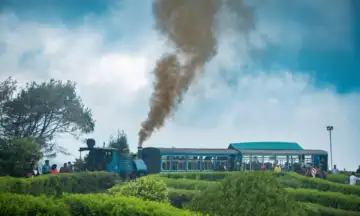
From New Jalpaiguri, the experience transforms completely. This is where travellers hop onto the legendary toy train of the Darjeeling Himalayan Railway and begin the slow climb into the hills. The narrow-gauge train winds through tea gardens, forested slopes, and a canopy of green, often sharing space with roads and pedestrians.
Do not be fooled by the name. It is not a toy but a heritage train, awarded UNESCO World Heritage status. It is a steam train with a pull chain, exactly like a train from the British era. The train tumbles at a leisurely pace across the tracks, with children waving from homes and beautiful views all along the way.
Hanoi to Ho Chi Minh City, Vietnam
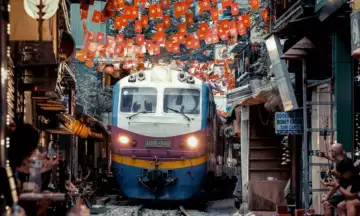
One of the best ways to explore Vietnam is aboard the Reunification Express, which runs between Hanoi and Ho Chi Minh City. Rather than a single luxury experience, this is a working railway that connects the country from north to south, making it both practical and scenic.
The entire journey takes around thirty hours, though many travellers choose to break it up with stops in Hue, Da Nang, or Nha Trang. The train rumbles through coastlines, passes rice paddies, and cuts through mountain passes, offering views of ever-changing landscapes. One of the most beautiful stretches is between Hue and Da Nang, where the tracks run along cliffs overlooking the sea.
The train itself is simple, with sleeper berths and basic dining cars. Travellers can choose between bare basic hard seats (inexpensive and affordable for shorter stops) or upgrade to first class, more comfortable seating with cushioned seats or berths (recommended for longer journeys). Vendors move through compartments selling local snacks, instant noodles, and Vietnamese coffee. It is a slow, immersive way to experience the country and enjoy its landscapes.
Colombo to Kandy, Sri Lanka
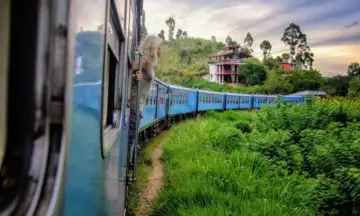
Almost every traveller visiting Sri Lanka makes time for at least one train ride, and the route from Colombo to Kandy is among the most popular. Often nicknamed the "blue train" because of its colour, this train climbs gradually from the coastal capital into the hill country. (Fun fact: not all trains on this route are blue. You might find some red ones that make for equally pretty pictures.)
The journey takes about three hours and is a visual treat throughout. The train passes lush forests, tea plantations, waterfalls, and small hillside villages. It winds through tunnels and crosses narrow bridges, with views that seem almost cinematic.
While the train itself is no frills, first-class tickets offer air conditioning and reserved seating, making the ride more comfortable. Many travellers, however, prefer open windows in non-air-conditioned coaches to photograph the stunning views. Several express and intercity trains are commonly used by travellers, including the Ella Odyssey, Distance, and Colombo Commuter.
Delhi to Jammu, India
Up until last year, Jammu was the very last railway stop in North India. For kids who grew up in the 1990s, the station at Jammu was the gateway to a Kashmiri vacation. The train journey from Delhi to Jammu takes anywhere from six to ten hours, offering pretty views through Delhi, Punjab, and finally Jammu.
Several trains operate on this route, including the Jammu Rajdhani, Shri Shakti Express, and Vande Bharat Express, each offering a long but comfortable journey. Mustard fields in the winter, wheat swaying in the summer, and small towns across Punjab are just part of this scenic ride. Soon, the terrain begins to undulate, and distant hills hint at the Himalayas ahead.
An essential part of this ten-hour journey is the food. That quintessential Indian railway menu of tomato soup, vegetable cutlets, paneer curry, dal, rice, and soft rotis. Platform vendors bring aloo parathas, bread omelettes, samosas, and endless cups of steaming chai. For many Indian travellers, this iconic route is pure nostalgia of vacationing with family.
Tokyo to Kyoto, Japan
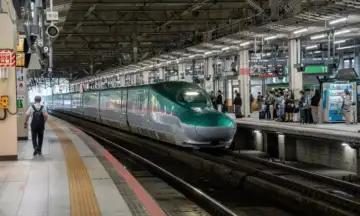
Japan's high-speed train journey between Tokyo and Kyoto offers a completely different kind of rail experience than those in India or most other Asian countries. It is defined by precision, comfort, and quiet efficiency. The Tokaido Shinkansen connects the two cities in about two hours and fifteen minutes on the fastest Nozomi service, with Hikari and Kodama trains taking slightly longer. Departures are frequent and famously punctual.
Soon after leaving Tokyo, the dense skyline gives way to suburbs, then rice paddies, rivers, and low mountains. On a clear day, about forty minutes into the journey, travellers get a chance to admire Mount Fuji in all its glory, which is the real highlight of this entire train ride.
Food is an essential part of the train experience. Travellers often purchase a bento box containing sushi, grilled fish, rice, and pickles. Onboard carts sell green tea, coffee, and snacks, including Japan's famously creamy mochi ice cream.
This ride is widely considered one of Asia's most iconic train journeys, not just for the high-speed bullet train experience but for the scenic, postcard-perfect views of Mount Fuji.
The Last Stop
From the slow, steam-powered climb to Darjeeling to the silent precision of Japan's Shinkansen. From sharing chai with strangers on the Konkan coast to a bento box with a view of Mount Fuji. Asia's train journeys are not all the same. That is precisely what makes them worth taking.
Each one offers a different pace, a different flavour, a different way of seeing the land and its people. Some are about nostalgia. Some are about efficiency. All of them remind you that the journey, not just the destination, is where the memory lives.