
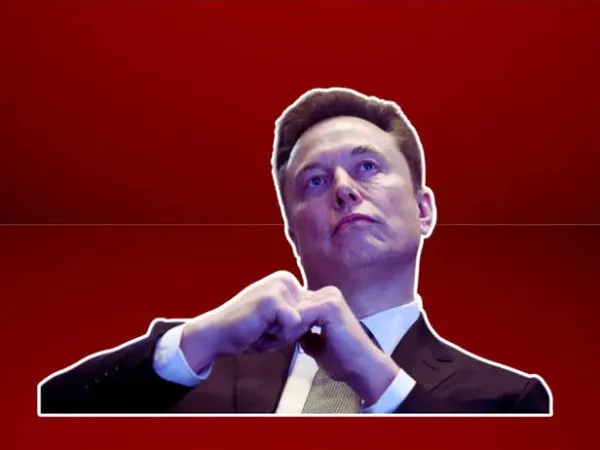

The ongoing legal dispute between Elon Musk and Sam Altman has brought new details to light as testimony continues in a California courtroom.
Admission on AI model distillation
During testimony, Musk acknowledged that his company xAI had, to some degree, used a process known as distillation involving OpenAI's models. Distillation refers to using a more advanced model to generate synthetic data that helps train another system. While this approach is common in artificial intelligence, it has faced increasing scrutiny.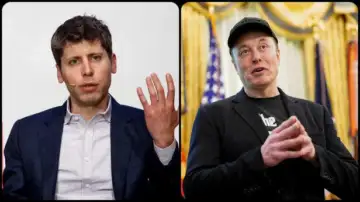 Elon Musk testifies Sam Altman was not honest about OpenAIs nonprofit mission The issue has drawn attention globally, with the United States previously accusing China of industrial espionage for similar practices. Several open-source Chinese AI models have been reported to rely on American systems for distillation. Musk's statement raises the possibility that this topic could remain part of the legal discussion going forward.
 Musk has argued in the lawsuit that OpenAI's direction changed after its early years and has suggested that he feels justified in his actions, given his role in founding the organisation.
Concerns over OpenAI's structural shift
Musk told the court that he believed OpenAI's approach shifted after his departure in early 2018, although he continued contributing financially and remained informed about developments. He was aware that Altman was working to build a for-profit structure and secure investment from Microsoft, but initially did not see it as a major issue due to limits placed on investor returns. Musk acknowledged that his company xAI had His concerns increased in early 2023 after Microsoft invested $10 billion in OpenAI, following the rapid growth of ChatGPT. Musk said he contacted Altman, asking, "What the hell is going on?" and described the situation as a "bait and switch."
 He told the court that the organisation had effectively transitioned into a company valued at $20 billion. After the investment, OpenAI offered Musk equity, which he declined, stating, "Frankly, it felt like a bribe."
Cross-examination and courtroom tension
The cross-examination phase introduced further friction. OpenAI's legal representative, William Savitt, questioned Musk's statements about his financial contributions. Musk testified that he donated $38 million, but earlier deposition records indicated a figure of $100 million.The exchange became strained, with Musk accusing the lawyer of posing misleading questions. He argued that yes-or-no questions can oversimplify complex issues and used an example to make his point. The presiding judge, Yvonne Gonzales Rogers, intervened and halted that line of response.
Emails and funding timeline
Emails presented in court shed light on discussions from September 2017 involving Musk, Altman, Greg Brockman, and Ilya Sutskever about establishing a for-profit arm within OpenAI. These communications were used to demonstrate that such plans were under consideration earlier than Musk has suggested.Financial records showed that Musk had committed to a $1 billion pledge and had been contributing $5 million quarterly since 2016. However, those payments stopped in spring 2017. In an August 2017 email exchange, Musk confirmed that the remaining funds should continue to be held.
In October 2017, after losing influence within the organisation, Musk discussed hiring OpenAI staff with executives from Tesla and Neuralink while still serving on OpenAI's board. When questioned, he stated that preventing such hiring would have been unlawful. He said, "It's illegal to restrict employment. It would be illegal to say you can't employ people from OpenAI."
Another email from 2018 showed Shivon Zilis asking whether she should remain connected to OpenAI and keep Musk informed. Musk responded that she should stay "close and friendly."
Legal arguments and what is at stake
Earlier in the trial, Musk's legal team argued that he had long expressed concerns about the risks posed by advanced artificial intelligence and had advocated for regulation. This concern was part of the motivation behind founding OpenAI as a nonprofit organisation.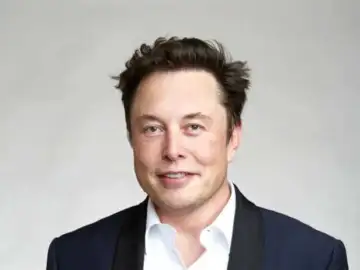 Musk has argued in the lawsuit that OpenAIs direction changed after its early years As the company expanded, leadership agreed to introduce a limited for-profit structure to secure funding. Musk's legal argument centres on the claim that this transition went beyond what was originally intended, particularly after Microsoft's major investment.
 OpenAI's legal team countered that the organisation never guaranteed it would remain a nonprofit or make all its work open-source. They also argued that Musk did not fulfil his full funding commitment, stating that his contributions totalled about $38 million rather than the pledged $1 billion.
The lawsuit names Altman and Greg Brockman and focuses on whether OpenAI departed from its founding principles. The trial began with jury selection on Monday, and Musk was the first witness to testify on Tuesday. The outcome could influence OpenAI's structure, funding arrangements, and its partnership with Microsoft.
The trial continues to examine funding, governance, and AI practices, with potential implications for OpenAI's future structure and its partnerships.