




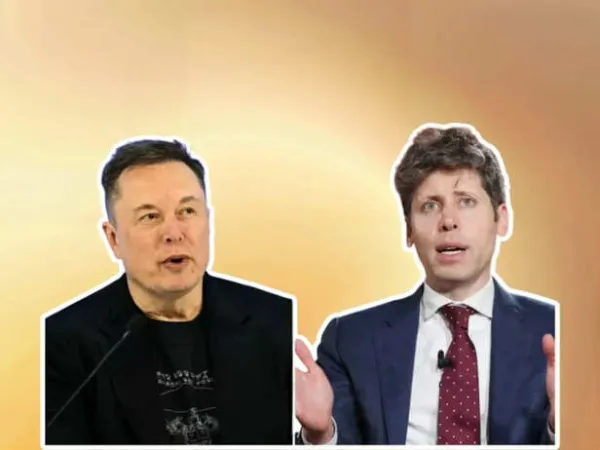

In December 2015, Elon Musk and Sam Altman appeared together at the Vanity Fair New Establishment Summit in San Francisco to publicly discuss their new artificial intelligence initiative.
At the time, the two were close collaborators leading OpenAI, a nonprofit research organization created to develop artificial intelligence while preventing Google from dominating the technology sector.
Musk had already become a billionaire through Tesla, which went public five years earlier, while Altman was serving as the head of startup accelerator Y Combinator. Together, they positioned OpenAI as a nonprofit effort focused on advancing AI in a way that would benefit the public.
Nearly a decade later, that partnership has turned into a major courtroom battle in Oakland, California. Over the past three weeks, a trial involving Musk, Altman, and OpenAI has focused on allegations that the company abandoned its original nonprofit mission. Musk filed the lawsuit in 2024, accusing OpenAI and its leadership of violating commitments made during the company's founding.
The origins of OpenAI date back to May 2015, when Altman emailed Musk about the possibility of creating what he described as a "Manhattan Project for AI." Musk responded that the idea was "probably worth a conversation."
OpenAI officially launched in December 2015. Musk pledged to provide up to $1 billion in funding for the nonprofit initiative.
Emails later disclosed during the trial showed Musk expressing strong confidence in the early team. In one November 2015 message to Altman, Musk wrote, "I'm super impressed with everyone so far. This is a great team."
The organization initially focused on research and development while promoting openness and collaboration in artificial intelligence.
However, internal disagreements began emerging by 2017.
 The origins of OpenAI date back to May 2015,
Court filings showed Musk pushed OpenAI leadership to evaluate staff performance aggressively. He reportedly asked Altman and co-founders Greg Brockman and Ilya Sutskever to identify employees who were not making sufficient contributions and remove them.
At the same time, OpenAI faced increasing financial pressure because of growing computing costs tied to AI development.
As OpenAI searched for more funding, discussions started around creating a for-profit structure. A major issue quickly became who would control the company.
According to court documents, Musk wanted as much as 90% ownership in a future for-profit version of OpenAI.
Altman and other co-founders rejected the proposal. They argued that no individual or small group should have complete control over artificial general intelligence, technology that could eventually surpass human intelligence.
Musk had already become a billionaire through Tesla, which went public five years earlier, while Altman was serving as the head of startup accelerator Y Combinator. Together, they positioned OpenAI as a nonprofit effort focused on advancing AI in a way that would benefit the public.
Nearly a decade later, that partnership has turned into a major courtroom battle in Oakland, California. Over the past three weeks, a trial involving Musk, Altman, and OpenAI has focused on allegations that the company abandoned its original nonprofit mission. Musk filed the lawsuit in 2024, accusing OpenAI and its leadership of violating commitments made during the company's founding.
How OpenAI started and why Musk backed it
The origins of OpenAI date back to May 2015, when Altman emailed Musk about the possibility of creating what he described as a "Manhattan Project for AI." Musk responded that the idea was "probably worth a conversation."
OpenAI officially launched in December 2015. Musk pledged to provide up to $1 billion in funding for the nonprofit initiative.
Emails later disclosed during the trial showed Musk expressing strong confidence in the early team. In one November 2015 message to Altman, Musk wrote, "I'm super impressed with everyone so far. This is a great team."
The organization initially focused on research and development while promoting openness and collaboration in artificial intelligence.
However, internal disagreements began emerging by 2017.
The origins of OpenAI date back to May 2015, Court filings showed Musk pushed OpenAI leadership to evaluate staff performance aggressively. He reportedly asked Altman and co-founders Greg Brockman and Ilya Sutskever to identify employees who were not making sufficient contributions and remove them.
At the same time, OpenAI faced increasing financial pressure because of growing computing costs tied to AI development.
The fight over control and corporate structure
As OpenAI searched for more funding, discussions started around creating a for-profit structure. A major issue quickly became who would control the company.
According to court documents, Musk wanted as much as 90% ownership in a future for-profit version of OpenAI.
Altman and other co-founders rejected the proposal. They argued that no individual or small group should have complete control over artificial general intelligence, technology that could eventually surpass human intelligence.
During testimony, Altman stated that Musk strongly preferred having total authority over OpenAI because he did not trust others to make key decisions.
"I was extremely uncomfortable with it," Altman said regarding Musk's efforts to gain control.
 Court filings showed Elon Musk pushed OpenAI leadership
 Tensions increased further in June 2017 after Tesla hired AI researcher Andrej Karpathy away from OpenAI. Internal text messages presented during discovery showed Musk's team celebrating the recruitment.
Shivon Zilis, an OpenAI board member at the time and later the mother of four of Musk's children, testified earlier this month about conversations surrounding OpenAI's structure and Tesla's recruitment efforts.
After reviewing messages during testimony, Zilis acknowledged that Musk had approached Karpathy first.
Brockman later testified that Musk eventually offered what he described as "an apology and a confession" to OpenAI's co-founders.
Musk threatened to walk away from OpenAI
Despite internal disputes, OpenAI continued making technological progress. By August 2017, the company had developed systems capable of defeating top professional players in the multiplayer video game Dota 2.
Musk publicly praised the achievement on Twitter, writing that OpenAI was the first organization to defeat the world's top esports players.
However, the disagreements around leadership and ownership continued growing.
In September 2017, Musk informed OpenAI leadership that he had "had enough." According to emails revealed in court filings, Musk warned that if he could not gain control over OpenAI, he was prepared to stop supporting the organization financially.
"Either go do something on your own or continue with OpenAI as a nonprofit," Musk wrote. "I will no longer fund OpenAI until you have made a firm commitment to stay or I'm just being a fool who is essentially providing free funding for you to create a startup."
Although Musk had originally committed up to $1 billion, testimony showed his total contributions reached roughly $38 million before funding stopped.
Tesla merger talks and Musk's departure
With OpenAI facing financial difficulties, Musk, Zilis, and project director Sam Teller made another attempt to place the organization under Musk's influence by proposing a merger with Tesla.
Altman was invited to tour a Tesla factory and offered a Tesla board seat as part of discussions.
Altman later testified that he opposed the idea because he believed OpenAI's nonprofit mission would effectively disappear inside Tesla.
"Tesla is a car company, and it does not have the mission of OpenAI," Altman said in court.
After merger discussions failed, Musk sent another email in December 2018 arguing that OpenAI had little chance of remaining competitive against Google's DeepMind without major operational changes.
Musk left OpenAI's board in 2018. OpenAI later stated in a blog post that the move was intended to avoid future conflicts as Tesla increased its own AI efforts.
ChatGPT changed everything between Musk and OpenAI
For several years after leaving OpenAI, Musk rarely publicly criticized the organization. Altman even continued praising Musk online, writing in 2019 that "betting against Elon is historically a mistake."
In October 2022, Altman also posted that Musk was "a reminder of just how much one person can do."
That dynamic changed after OpenAI launched ChatGPT in November 2022. The rapid growth of generative AI triggered massive investment across the sector.
In January 2023, Microsoft invested $10 billion into OpenAI, further accelerating the company's commercial expansion through its existing for-profit subsidiary.
Musk then began criticizing OpenAI publicly on Twitter, later renamed X after Musk acquired the platform.
In a February 2023 post, Musk wrote that OpenAI had shifted from being an open-source nonprofit counterweight to Google into a "closed source, maximum-profit company effectively controlled by Microsoft."
Altman responded privately in a text message later revealed in court filings.
"I am tremendously thankful for everything you've done to help-I don't think OpenAI would have happened without you," Altman wrote. "And it really f---ing hurts when you publicly attack OpenAI."
 In 2023 Elon Musk began criticizing OpenAI publicly on Twitter
 The legal battle now facing OpenAI
In March 2023, Musk founded xAI as a direct competitor to OpenAI and began recruiting employees from the company. Around the same period, Zilis resigned from OpenAI's board.
Since filing his lawsuit in 2024, Musk has repeatedly escalated criticism of Altman and Brockman on X, referring to them as "Scam Altman" and "Greg Stockman."
As the trial opened, Musk posted that he could have created OpenAI as a for-profit company from the beginning but instead chose to build it for public benefit.
"Then they stole the charity," Musk wrote.
Lawyers for both sides completed closing arguments after three weeks of testimony. A jury is expected to begin deliberations on whether OpenAI, Altman, and Brockman should be held liable for breach of charitable trust and unjust enrichment.
University of California at Berkeley Law School professor Stavros Gadinis said the public may ultimately view the dispute as a fight between two powerful billionaires competing over influence in artificial intelligence rather than a clear battle between right and wrong.