
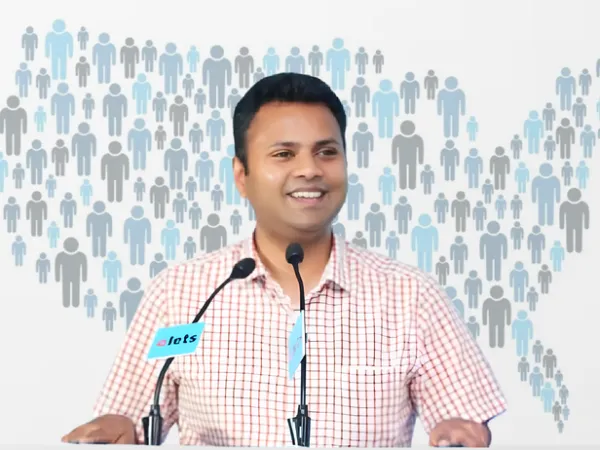

Overseeing this complex operation is Dr. Lalit Jain, IAS (2011 batch), Director of Census Operations, who is playing a key role in implementing the exercise on the ground. With a stronger emphasis on digital processes, improved data accuracy, and newer methods like self-enumeration, this Census marks a significant shift in how population data is collected and understood.
In this exclusive interaction with Indiatimes, Dr. Lalit Jain explains what the Census really represents today. From its role in policymaking to the systems in place to ensure accuracy and data privacy, and how it is evolving to reflect a changing India.
 AI generated via ChatGPT | As the latest round begins, it arrives at a time when India is undergoing rapid transformation - from urban expansion and digital adoption to shifting household structures and lifestyles.
 1. What is the Census, why does it matter, and how does it help in shaping policies and development?
The Census is often understood simply as a population count, but according to Dr Lalit Jain, the Director of Census Operations, its scope goes much further.He said, "the Census is the most comprehensive demographic exercise undertaken by the Government, aimed at counting every individual and household in the country. It provides an authentic snapshot of our population, housing conditions, socio-economic characteristics, and access to basic amenities.
Its importance lies in the fact that it forms the foundation for evidence-based policymaking. Whether it is planning schools, hospitals, roads, public transport, water supply, welfare schemes, or urban infrastructure, Census data helps governments allocate resources where they are needed most. In many ways, the Census is the statistical backbone of national development planning."
2. The Census is happening at a time when India is changing quite fast. How do you see this exercise helping capture that shift?
"India is undergoing rapid transformation - urbanisation, digital adoption, migration, changing family structures, and improvements in living standards are reshaping society. The Census provides a once-in-a-decade opportunity to systematically capture these transitions at the grassroots level.3. What was the thinking behind starting this phase with cities like Gurgaon, Faridabad and Sonipat?
"These cities represent some of the fastest-growing urban and peri-urban regions in the country. They have witnessed significant population growth, migration, infrastructure expansion, and socio-economic change over the past decade.Beginning in such dynamic urban centres allows the Census machinery to capture complex patterns of urbanisation and test processes in areas where demographic shifts are particularly pronounced."
4. Since this is one of the first large Census efforts after the pandemic, how did that phase influence your planning this time?
"The pandemic reinforced the importance of flexibility, digital preparedness, and robust field protocols in large-scale public exercises. We incorporated learnings related to training methodologies, digital tools, field logistics, and contingency planning.It also highlighted the value of accurate demographic data in public health planning, disaster response, and targeted welfare delivery - making the Census even more relevant today."
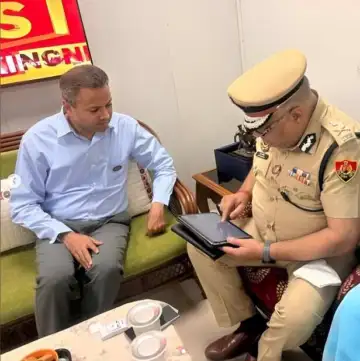 Instagram/dcoharyana | At the centre of this exercise is Lalit Jain, IAS (2011 batch), Director of Census Operations, who is overseeing its implementation on the ground.
 5. With such a large number of enumerators on the ground, how do you make sure the data collected stays accurate and consistent?
Dr Lalit Jain said, "ensuring data quality is one of our highest priorities. We have adopted a multi-layered approach involving rigorous training, detailed instruction manuals, supervisory checks, digital validation systems, and structured monitoring mechanisms.Enumerators undergo extensive orientation to ensure uniform understanding of definitions and procedures. Supervisors conduct random verifications, and digital tools help flag inconsistencies in real time. The Census has evolved robust quality-control mechanisms over decades."
6. How will this Census show what has changed in people's lives in India?
"The Census captures not just population numbers but also living conditions and socio-economic indicators. By comparing present data with previous Census rounds, we can observe how households have progressed in areas such as housing quality, sanitation, electricity access, education, digital connectivity, and household assets.This helps provide a measurable picture of developmental progress and changing standards of living across regions and communities."
7. For someone who might not be familiar, what does the 30-day door-to-door process actually look like on a day-to-day basis?
"During the door-to-door enumeration period, trained enumerators visit every household in their assigned area and collect information through structured schedules.Their day typically involves visiting households, conducting interviews, recording responses, verifying information where necessary, and ensuring complete coverage of every structure and family in their jurisdiction. Supervisors simultaneously monitor progress to ensure no household is missed."
8. The Census is covering things like internet access, housing and sanitation. How were these areas finalised?
"The Census schedule evolves with the country's developmental priorities and changing socio-economic realities. Variables such as internet access, sanitation, housing quality, and basic amenities are included because they are increasingly important indicators of quality of life and developmental status.These parameters help governments assess infrastructure gaps and track progress on key national priorities."
9. The self-enumeration phase saw good participation. Do you think this could become a bigger part of future Census exercises?
"The encouraging response to self-enumeration reflects growing digital awareness and citizen willingness to engage with governance through technology.While door-to-door enumeration remains the backbone of Census operations to ensure universal coverage, self-enumeration has demonstrated strong potential as a complementary mechanism. Its future role will depend on continued digital penetration and policy decisions, but it certainly represents an important innovation in Census methodology."
10. A lot of people are concerned about data privacy today. What would you like to tell them about how their information is being handled?
Data privacy remains a major concern for many citizens, something Dr Lalit Jain, the Director of Census Operations, directly addressed."Citizens can be assured that Census data is collected and handled with the highest standards of confidentiality and legal protection.
Individual information provided during the Census is used strictly for statistical purposes and is never disclosed in a personally identifiable form. The Census is governed by robust legal safeguards, and confidentiality of respondent data is a fundamental principle of the entire exercise."
As India continues to evolve at a rapid pace, exercises like the Census become even more significant, not just as a statistical requirement, but as a way to understand the lived realities of its people. From mapping access to basic amenities to tracking shifts in lifestyle and infrastructure, the data collected forms the foundation of how the country plans its future.
 AI generated via ChatGPT | Indias Census captures real lives, supports policymaking, and reflects a rapidly changing nation.
 What emerges clearly is that the Census today is no longer just about numbers. It is about capturing change, across cities and towns, across households, and across generations. With newer digital tools, improved processes, and growing citizen participation, it is also becoming more responsive to the way India functions in the present day.
In that sense, the ongoing Census is not just documenting the country as it is, but quietly shaping how it moves forward.