


What began as a piece of internet humour has rapidly escalated into a cultural and political storm, drawing in figures from comedy, conservative circles and even the White House.
At the centre of the controversy is Druski, whose viral parody has sparked fierce debate about satire, sensitivity and the limits of online entertainment.
 X| Viral skit triggers debate over comedy and limits
The sketch, titled How Conservative Women in America Act, features Druski in an exaggerated portrayal widely believed to reference Erika Kirk. Complete with prosthetics, a wig and heightened mannerisms, the video quickly gained traction, amassing hundreds of millions of views across social media platforms. While many viewers found the performance humorous, others criticised it as overly pointed and poorly timed.
The situation intensified after Donald Trump weighed in publicly. Speaking at a White House event, he encouraged Kirk to consider legal action, suggesting she "should sue". Although he did not explicitly name Druski, the timing of his remarks firmly linked them to the ongoing controversy, amplifying speculation and fuelling further online discussion.
X| Viral skit triggers debate over comedy and limits The sketch, titled How Conservative Women in America Act, features Druski in an exaggerated portrayal widely believed to reference Erika Kirk. Complete with prosthetics, a wig and heightened mannerisms, the video quickly gained traction, amassing hundreds of millions of views across social media platforms. While many viewers found the performance humorous, others criticised it as overly pointed and poorly timed.
When a viral joke sparks a national debate
The situation intensified after Donald Trump weighed in publicly. Speaking at a White House event, he encouraged Kirk to consider legal action, suggesting she "should sue". Although he did not explicitly name Druski, the timing of his remarks firmly linked them to the ongoing controversy, amplifying speculation and fuelling further online discussion.
Despite the surge in rumours, representatives for Druski have denied that any legal notice has been issued, and there is no confirmed evidence of a lawsuit. Yet, the absence of formal action has done little to quiet the conversation. Instead, the focus has shifted to the broader implications of the parody and its reception.
Part of the backlash stems from deeply personal circumstances. Kirk is reportedly still coping with the loss of her husband, Charlie Kirk, who was killed in 2025. For many observers, this context has made the timing of the parody feel particularly insensitive, transforming what might have been a fleeting joke into a far more contentious moment.
Experts suggest that audience reactions are shaped as much by context as by content. In an era where viral clips are endlessly reshared and reframed, humour can quickly take on new meanings depending on who is watching and why. What some interpret as satire, others perceive as mockery, especially when personal grief intersects with public visibility.
Where comedy meets culture and consequence
The debate has since expanded beyond the original video, drawing in wider questions about the nature of comedy itself. In a digital landscape driven by algorithms, parody no longer fades quietly. Instead, it multiplies, reaching diverse audiences with differing sensitivities and expectations.
This dynamic has also inspired reactions from other public figures, further blurring the line between entertainment and commentary. The controversy highlights a growing divide in how humour is understood, particularly when it touches on politics, identity and personal circumstances.
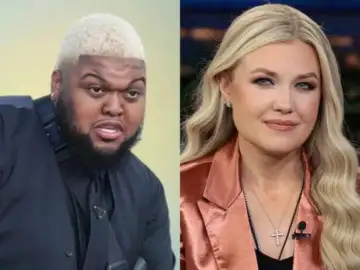 X| Druski and Erika Kirk clash after viral parody
 Ultimately, the Druski and Erika Kirk episode reflects a broader cultural moment. It underscores how quickly online content can move from light-hearted entertainment to a point of serious contention. It also raises a difficult question for creators and audiences alike. Where should the line be drawn between creative freedom and responsibility?
As the conversation continues, one thing remains clear. In today's hyperconnected world, even a joke can carry consequences far beyond its original intent, shaping narratives that extend well outside the realm of comedy.