
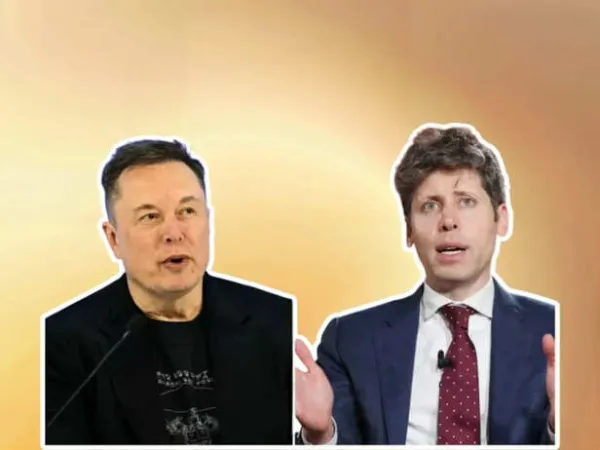

Elon Musk's legal dispute with OpenAI took another major turn as CEO Sam Altman testified in court about the company's early internal struggles and Musk's alleged efforts to gain control over the artificial intelligence organization.
The case, being heard in Oakland, California, has brought several leading technology figures into court as the legal battle examines OpenAI's transition from a nonprofit research group into one of the most valuable AI companies in the world. Musk, who co-founded OpenAI, has challenged the company's move toward a for-profit structure and accused its leadership of abandoning the original mission.
 Elon Musks legal fight against OpenAI entered a critical stage According to Altman, Musk suggested at one stage that he should receive 90 percent of the company's equity. Altman said the proposal later changed, but Musk continued seeking majority control over the organization.
Altman told the jury that Musk's reluctance to formally agree to arrangements limiting his long-term authority raised concerns among OpenAI's leadership. He explained that OpenAI was originally created with the belief that artificial general intelligence, or AGI, should not fall under the control of a single individual.
The testimony focused heavily on disagreements that emerged between Musk and OpenAI's leadership team in 2017 while discussions were taking place around the formation of a commercial subsidiary.
Sam Altman says Musk wanted majority control
During his testimony on Tuesday, Altman claimed Musk repeatedly pushed for a dominant position inside OpenAI as discussions about restructuring the company progressed. Elon Musks legal fight against OpenAI entered a critical stage According to Altman, Musk suggested at one stage that he should receive 90 percent of the company's equity. Altman said the proposal later changed, but Musk continued seeking majority control over the organization. Altman told the jury that Musk's reluctance to formally agree to arrangements limiting his long-term authority raised concerns among OpenAI's leadership. He explained that OpenAI was originally created with the belief that artificial general intelligence, or AGI, should not fall under the control of a single individual.
The testimony focused heavily on disagreements that emerged between Musk and OpenAI's leadership team in 2017 while discussions were taking place around the formation of a commercial subsidiary.
OpenAI defends shift to for-profit structure
Musk's lawsuit argues that OpenAI improperly used the $38 million he contributed to help establish the organization as a nonprofit research lab focused on developing AI for public benefit.However, Altman rejected claims that OpenAI's leadership effectively "stole" a charity. Speaking in court, he said the accusation did not match the actual developments inside the company.
OpenAI was originally founded as a nonprofit in 2015. In 2019, the company launched a for-profit subsidiary as competition in artificial intelligence intensified.
 Elon Musks legal dispute with OpenAI took another major turn Altman and other executives have argued that this transition became necessary because of the enormous costs tied to AI development. They said attracting major investors, including Microsoft, was essential for OpenAI to remain competitive in the global AI race.
 Musk's lawsuit is seeking to force OpenAI back into nonprofit status. Such a decision could significantly affect the company's standing against rivals including Anthropic, Google and China's Deepseek.
OpenAI claims Musk acted after losing influence
OpenAI's legal team has argued that Musk's actions are motivated by frustration after failing to gain control over the commercial side of the business.According to Altman's testimony, tensions escalated after OpenAI leaders rejected Musk's demands for dominance within the organization. Altman said Musk eventually left the company entirely and predicted the venture would fail without him.
Altman recalled Musk telling the team they had "zero percent" chance of succeeding after his departure. He described that moment as something that stayed strongly in his memory.
The courtroom exchange later became tense when Musk's attorney, Steven Molo, questioned Altman about honesty and credibility. Molo directly asked Altman whether he always tells the truth. Altman responded that he believed he was a truthful person before the lawyer pressed him further.
Trial highlights massive AI investments
The trial has also drawn attention to the extraordinary amounts of money now surrounding artificial intelligence companies.Court proceedings revealed that OpenAI co-founder Greg Brockman holds a stake reportedly valued at $30 billion in the company.
 Altman claimed Musk repeatedly pushed for a dominant position inside OpenAI Microsoft CEO Satya Nadella also testified earlier in the trial and described the company's investment in OpenAI as something he was "very proud" of. According to testimony, Microsoft's initial $13 billion investment has increased in value more than tenfold within just a few years.
 Altman's testimony is expected to continue into Wednesday as the case moves forward.
An advisory jury is expected to decide during the week of May 18 whether any wrongdoing occurred. After reviewing the jury's findings, Judge Yvonne Gonzalez Rogers will make the final ruling on liability and possible remedies. She has indicated that she is likely to follow the jury's recommendation.