
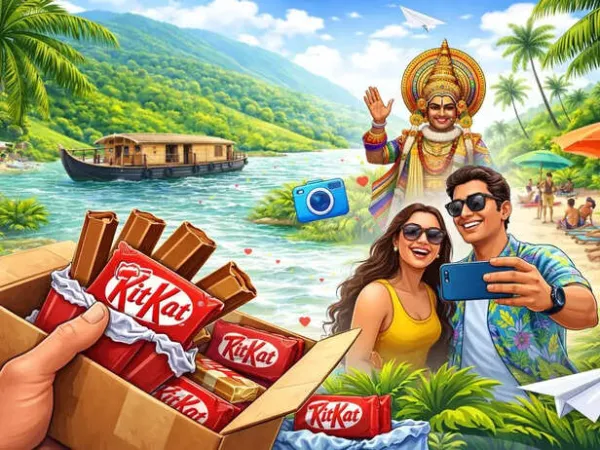

What started as a bizarre chocolate theft in Europe somehow turned into global content gold, and India didn't just watch; it jumped right in.
And Kerala tourism? It understood the assignment.
Kerala didn't just sell a destination; it sold a vibe
Instead of dropping another "visit our beaches" post, Kerala flipped the narrative. The message wasn't "Come here." It was basically, "If you are looking for a break...then maybe skip the chocolate and take a real one."That shift matters.
Because Gen Z isn't really failing for polished travel ads anymore. You are more likely to trust a funny post, a meme that feels in-the-moment and content that doesn't feel like it's trying too hard.
Kerala didn't advertise. It participated. And that's exactly why it worked.
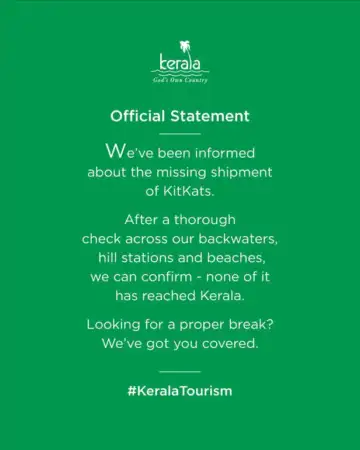 X | @KeralaTourism | A Chocolate Theft, A Viral Joke, And Keralas Big Win
 This is actually moment marketing, but what's that?
Let's be real here; brands most of the time jump on trends. Most of them? Cringe.You have seen it: brands forcing memes 3 days too late, awkward "how do you do, fellow kids?" energy or trying to sound relatable and completely missing.
But when it clicks, like this? It doesn't feel like marketing at all. It just feels like the brand is just...online. And that's the sweet spot.
The real shift: From selling places to being part of the timeline
Travel marketing always used to look like perfect sunsets, drone shots, slow music, and zero personality. But now it looks like reacting to chaos, joining trending conversations and being funny, fast and culturally aware.Because attention today doesn't come from perfection, it comes from relevance. Similarly, Kerala didn't go viral because it's beautiful (it is), and it went viral because it was in on the joke.
 Pexels | The KitKat Heist That Became a Case Study in How Brands Win Online
 Now, it's the internet that decides what gets seen
This moment says a lot more than "brands are getting creative".It shows that visibility is no longer controlled by big campaigns, and it's controlled by timing, tone and internet awareness. And we don't just consume content; it filters instantly.
If it feels forced, we generally ignore it, and if it feels real, we share it. So brands are also adapting to this, not by shouting louder, but by blending in smarter.
 Pexels | From Viral Chaos to Smart Marketing
 When memes do the marketing: How showing up beats selling every time
A missing chocolate shipment turned into a global meme; a tourism board turned it into an invitation. And just like that marketing stopped looking like marketing. Because right now, the brands winning online aren't the ones trying hardest to sell.They are the ones that know how to show up.