
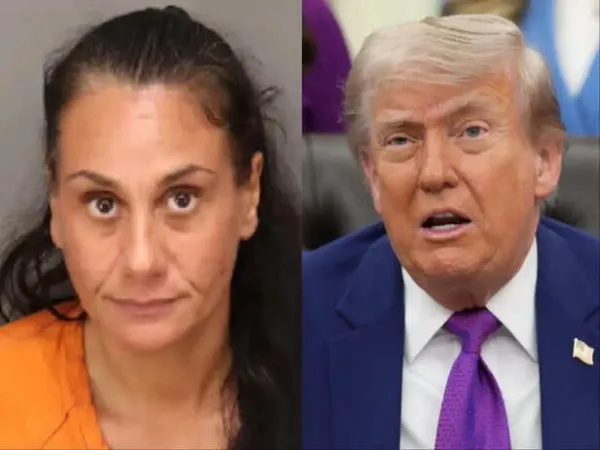

Desiree Segari was largely unknown before her TikTok videos pushed her into one of America's most heated political and legal debates.
The Sarasota, Florida resident became the face of a major federal case after posting violent anti MAGA rhetoric online in 2025.
Her conviction and prison sentence transformed her from an ordinary social media user into a controversial national figure, raising urgent questions about political speech, online radicalisation, and the legal consequences of threatening rhetoric in an increasingly divided America.
Her conviction and prison sentence transformed her from an ordinary social media user into a controversial national figure, raising urgent questions about political speech, online radicalisation, and the legal consequences of threatening rhetoric in an increasingly divided America.
Who is Desiree Segari?
Desiree Doreen Segari is a Florida woman from Sarasota who had little public profile before her sudden rise to national attention. Public records suggest she lived a relatively private life and was not widely known for activism, celebrity, or major political involvement. Her online presence mainly existed through TikTok, where she reportedly used usernames such as "missmamadez." That anonymity vanished in August 2025 when two highly inflammatory videos thrust her into federal scrutiny and nationwide headlines.
What happened in the viral TikTok videos?
Segari's legal troubles began when she posted videos calling for violence against supporters of Donald Trump and the MAGA movement. In the clips, she allegedly encouraged viewers to use firearms against individuals wearing MAGA hats while making gun gesture motions and repeatedly using "pew pew" language. Prosecutors argued her words went beyond political anger and entered dangerous territory by openly promoting violence against a political group.Authorities said the language, paired with explicit calls for armed action, created a credible threat rather than mere online venting. The videos quickly spread online, drawing backlash, FBI attention, and eventually criminal charges.
Federal charges and conviction
Following an investigation, Segari was indicted on charges related to interstate communication of threats under federal law. During trial proceedings, prosecutors argued her statements were reckless, intentional, and designed to inspire fear among Trump supporters. Her legal team maintained the videos were political hyperbole protected by the First Amendment.A federal jury ultimately rejected that defence, convicting Segari after brief deliberations. The court ruled her rhetoric crossed legal boundaries into punishable threats. She was later sentenced to 14 months in federal prison, a punishment many considered significant despite being below the statutory maximum.
Segari's conviction quickly became larger than one individual. For conservatives and many Trump supporters, the sentence was seen as overdue accountability for violent political rhetoric often perceived as ignored when directed at right wing groups. Viral reactions celebrated the verdict, with many social media users posting comments like, "Actions have consequences," and "This is what happens when online hate goes too far."
One user on X said, "She thought TikTok was real life until federal prison proved otherwise." Others argued the case raised troubling concerns about free speech protections. Legal commentators questioned whether broad political statements, however offensive, should result in prison absent direct operational threats.
Some defenders, however, warned that criminal prosecutions for online rhetoric could create dangerous precedents. One user on X wrote, "If speech laws expand too far, today's target could become anyone tomorrow." Despite differing political views, the case highlighted growing fears about social media's power to amplify radical language into real legal consequences.
The bigger issue of online political violence
Public reaction was overwhelmingly harsh. Across TikTok, X, and political commentary platforms, Segari became a symbol of reckless digital extremism. Critics mocked her online persona and contrasted it with her courtroom reality. Many users argued her case should serve as a warning to others who use social media platforms to promote violence.Some defenders, however, warned that criminal prosecutions for online rhetoric could create dangerous precedents. One user on X wrote, "If speech laws expand too far, today's target could become anyone tomorrow." Despite differing political views, the case highlighted growing fears about social media's power to amplify radical language into real legal consequences.
Segari's story reflects a wider societal problem. As social media increasingly fuels political outrage, courts are being forced to define where free expression ends and criminal threats begin. Her case is now frequently referenced in discussions about political radicalisation, TikTok's influence, and the legal risks of inflammatory online speech. For many Americans, Segari's downfall represents a warning that online platforms are no longer consequence free spaces for extreme rhetoric.
Desiree Segari's journey from obscure TikTok creator to convicted federal inmate underscores how rapidly social media behaviour can escalate into national controversy when politics, threats, and public outrage collide.
Where is Desiree Segari now?
Following her sentencing, Segari has largely disappeared from public view. Her case remains politically charged, especially among commentators focused on online extremism and speech law. Whether appeals or further legal debates emerge remains uncertain, but her story has already cemented itself as a major example of how digital speech can lead to serious real world punishment.Desiree Segari's journey from obscure TikTok creator to convicted federal inmate underscores how rapidly social media behaviour can escalate into national controversy when politics, threats, and public outrage collide.