
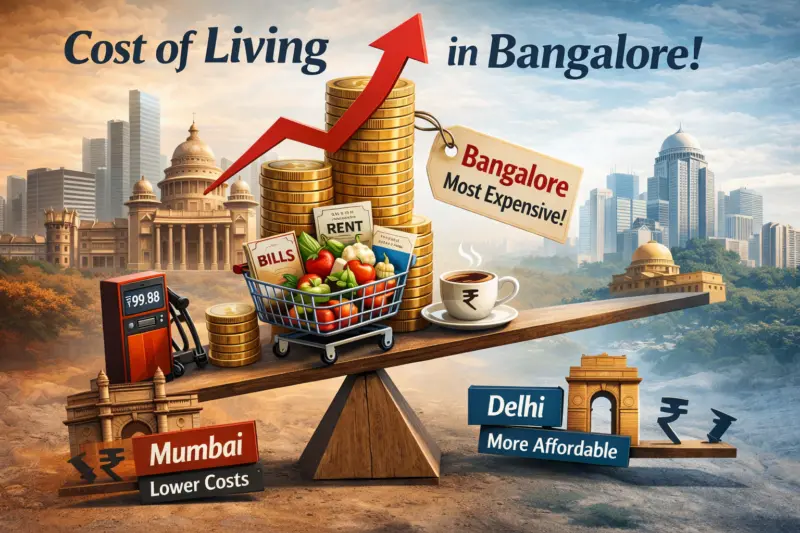

The cost of living in Bangalore in 2026 remains among the highest in India, mainly due to rising rental demand in major IT corridors and strong employment growth.
Property market reports from platforms such as Magicbricks and 99acres indicate consistent rental increases in areas like Whitefield, HSR Layout and Indiranagar over the past two years. While Bangalore continues to offer strong salary growth in technology and startup sectors, monthly expenses vary widely depending on housing choice, commute distance and lifestyle habits. This guide provides a realistic breakdown of rent, groceries, transport, utilities and the salary typically required for a comfortable life in India’s technology capital.
Rental Costs in Bangalore
Rent is the single largest expense for most residents. Bangalore’s rental market is heavily influenced by proximity to IT parks, metro connectivity and availability of gated communities.
Based on aggregated rental listings and market trend reports:
- 1BHK in outer areas (Kengeri, parts of Electronic City outskirts): ₹12,000–₹20,000
- 1BHK in established tech corridors (HSR Layout, Whitefield, Indiranagar): ₹25,000–₹35,000
- 2BHK in mid-range residential neighbourhoods: ₹30,000–₹55,000
- 3BHK in premium gated communities: ₹60,000 and above
Security deposits typically range between three to six months’ rent, although enforcement varies depending on landlord practices.
Knight Frank India’s residential outlook reports have highlighted rising demand in Bengaluru driven by tech sector hiring recovery. Limited supply in central localities further contributes to higher rents.
Choosing a home slightly away from core IT zones can significantly reduce monthly expenses without sacrificing connectivity.
Grocery and Food Expenses
Food costs depend on whether residents cook at home or rely heavily on restaurants and delivery platforms.
Typical monthly grocery estimates:
- Single professional cooking at home: ₹4,000–₹8,000
- Couple or small family: ₹10,000–₹18,000
Dining costs vary:
- Mid-range restaurant meal: ₹250–₹500 per person
- Café beverages in urban areas: ₹200–₹350
- Online food delivery 3–4 times a week: can add ₹4,000–₹8,000 monthly
Reserve Bank of India household consumption data consistently shows food as one of the primary components of urban monthly expenditure.
While Bangalore has a wide range of affordable local eateries, frequent dining out can significantly raise total monthly spending.
Transport and Commuting Costs
Bangalore’s traffic congestion impacts both time and fuel consumption. However, metro expansion has improved connectivity across several key routes.
Common transport options include:
- Namma Metro
- BMTC buses
- Ride-hailing services
- Two-wheelers and private cars
Estimated monthly transport costs:
- Public transport user: ₹1,500–₹3,000
- Two-wheeler owner: ₹3,000–₹5,000 (fuel + basic maintenance)
- Car owner: ₹7,000–₹12,000 including fuel and upkeep
Living closer to office locations reduces both fuel cost and commuting stress. Metro-linked areas often see higher rent but lower transport spending.
Utilities and Recurring Bills
Utility bills vary depending on usage patterns and season.
Estimated monthly costs:
- Electricity: ₹1,500–₹3,500 (higher with air conditioning use)
- Broadband internet: ₹700–₹1,200
- Mobile plan: ₹500–₹800
- Cooking gas cylinder: market-regulated pricing
During summer months, electricity usage increases, especially in apartments with multiple air conditioners.
Overall, utilities typically account for ₹2,000–₹4,000 for a single person and ₹3,000–₹6,000 for a family.
Lifestyle and Discretionary Spending
Lifestyle spending varies widely depending on preferences.
This may include:
- Gym memberships: ₹1,000–₹3,000 monthly
- OTT subscriptions
- Weekend outings
- Shopping and entertainment
For many professionals, discretionary spending ranges between ₹5,000–₹12,000 per month.
Bangalore’s vibrant social and café culture can increase lifestyle costs compared to smaller cities.
Total Monthly Cost Estimate (2026)
Category | Single Professional | Family of 3 |
Rent | ₹20,000–₹35,000 | ₹35,000–₹60,000 |
Groceries | ₹5,000–₹8,000 | ₹10,000–₹18,000 |
Transport | ₹2,000–₹8,000 | ₹5,000–₹12,000 |
Utilities | ₹2,000–₹4,000 | ₹3,000–₹6,000 |
Lifestyle | ₹5,000–₹12,000 | ₹10,000–₹20,000 |
Total | ₹35,000–₹70,000 | ₹65,000–₹1,10,000+ |
Actual spending depends on locality, housing type and personal lifestyle.
Salary Needed to Live Comfortably in Bangalore
Financial planners generally recommend:
- Housing cost should not exceed 30–35% of monthly income
- At least 20% of income should go toward savings
Based on current rental ranges:
- Single professional: ₹60,000–₹90,000 monthly income allows moderate savings
- Family with one earning member: ₹1.2 lakh or more is typically required
IT and startup professionals often fall within these income brackets, which explains continued demand for rental housing.
How Bangalore Compares to Other Indian Cities
Public cost-of-living indexes suggest:
- Higher rental costs than Hyderabad and Pune in comparable prime areas
- Comparable to certain Mumbai suburban markets
- Significantly higher than Tier-2 cities like Indore or Jaipur
However, Bangalore’s job market strength and startup ecosystem often compensate for higher living costs.
FAQs
Is Bangalore more expensive than Hyderabad?
Rental trends indicate that prime areas in Bangalore are generally costlier than comparable Hyderabad localities.
Is ₹70,000 enough to live in Bangalore?
For a single professional, it can allow moderate savings if rent remains controlled.
Which areas are affordable in Bangalore?
Outer zones such as Kengeri and parts of Electronic City are relatively more affordable.
How much salary should go toward rent?
Financial advisors recommend keeping rent below one-third of monthly income.
Conclusion
Bangalore continues to attract professionals due to its strong employment ecosystem. However, rising rental demand and lifestyle spending have increased overall living costs. By carefully choosing housing locations, managing discretionary expenses and planning income allocation wisely, residents can maintain financial stability while benefiting from career growth opportunities in India’s technology hub.
Key Takeaways
- Rent remains the largest monthly expense
- Single professionals may spend ₹35,000–₹70,000 monthly
- Families may require ₹65,000–₹1.1 lakh or more
- Location significantly impacts total expenses
- Salary planning is essential for long-term savings
Data & Sources
This article is based on publicly available reports and market insights, including:
- Numbeo Cost of Living Index
- Mercer Cost of Living Survey
- Knight Frank India Residential Reports
- Magicbricks Rental Insights
- 99acres Market Trends
- Reserve Bank of India (RBI) household consumption data
Figures are indicative and derived from aggregated market trends and publicly available listings.
This article is for informational purposes only. Costs and figures are indicative and may vary by locality and time period
#Bangalore #income #rent #salary #lifestyle #finance #IT #savings #expenses #costofliving