
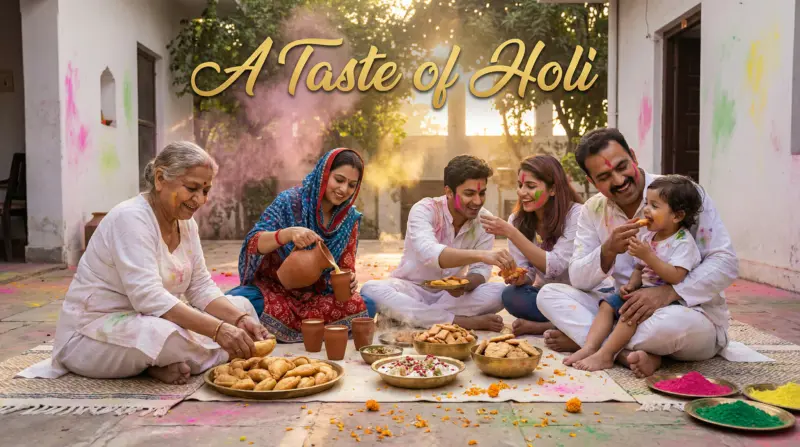

In India, food and festivals are inseparable. Every celebration whether it is the colour soaked streets of Holi, the lamp-lit homes of Diwali, the harvest feast of Onam, or the pre-dawn sehri of Ramzan - arrives with its own set of dishes, flavours, and cooking rituals.
These are not just recipes. They carry mythology, memory, seasonal wisdom, and centuries of regional identity. A Holi without gujiya feels incomplete. Diwali without kaju katli seems unimaginable. The Onam Sadhya, served on a banana leaf with over two dozen preparations, is a meal that defines Kerala's cultural identity once a year. This guide covers the most significant traditional Indian festival foods across major celebrations - what they are, why they are made, and what makes each one distinct to its time and place.
Why Food Is Central to Indian Festival Culture
The relationship between food and festivals in India goes far deeper than tradition for its own sake. It is rooted in seasonal cycles, Ayurvedic understanding, agricultural rhythms, and community bonding all woven together into a cultural fabric that has sustained itself across generations.
Many Indian festivals fall at seasonal transition points. Holi marks the end of winter. Makar Sankranti signals the shift of the sun northward. Onam coincides with the harvest in Kerala. Navratri falls twice a year, at the junctions of seasons. The foods prepared at these times are rarely accidental - they reflect what the body needs at that moment of the year, what the land is producing, and what ancient tradition prescribes as auspicious.
In Ayurvedic thinking, sesame seeds eaten at Makar Sankranti generate body heat suitable for winter. The cooling thandai of Holi prepares the body for the approaching summer. The fasting foods of Navratri - kuttu atta, sabudana, and rock salt - are lighter on digestion and give the body a seasonal reset.
Beyond the body, festival food serves a communal function. Preparing mithai (sweets) in large batches, distributing prasad at temples, exchanging dishes with neighbours, and cooking the elaborate Onam Sadhya together as a community, these acts create and reinforce social bonds in ways that everyday meals rarely do.
For the Indian diaspora, festival food carries a particular emotional weight. A Bengali in London making sandesh for Durga Puja, or a Punjabi family in Toronto preparing pinni for Lohri, is doing more than cooking - they are maintaining a thread of cultural continuity across distance and generations.
Holi Festival Foods: Gujiya, Thandai and More
Holi is perhaps the Indian festival most defined by a specific set of foods and those foods are deeply connected to the season, the mythology, and the spirit of communal celebration that the festival embodies.
Gujiya
Gujiya is the undisputed centrepiece of Holi food. This crescent-shaped fried pastry is filled with a mixture of khoya (reduced milk solids), grated coconut, chopped dry fruits, cashews, almonds, raisins, sugar, and cardamom. The outer shell is made from maida (refined flour) and fried in ghee until golden. In some North Indian households, the filling varies: some add semolina, some use desiccated coconut, and some bake rather than fry the gujiya as a lighter alternative. Making gujiya is itself a ritual - families gather days before Holi to prepare large batches, and the finished gujiyas are shared with neighbours, friends, and relatives as a mark of goodwill.
Thandai
Thandai is the signature Holi drink, a chilled, spiced milk preparation made by blending soaked almonds, pistachios, melon seeds, rose petals, fennel seeds, black pepper, cardamom, and saffron into a fine paste, which is then mixed with cold milk and sweetened with sugar or mishri (rock sugar). The name thandai literally means 'that which cools' - and it is specifically designed for the transitional Holi season when days are beginning to warm. In Varanasi, Mathura, and parts of Rajasthan, thandai is traditionally infused with bhang (cannabis leaves), giving the festival its famously exuberant character in those regions. Outside of these cultural contexts, thandai without bhang is equally popular and widely available.
Other Holi specials
Beyond gujiya and thandai, Holi food varies by region. Puran Poli - a sweet stuffed flatbread made with chana dal and jaggery is the Holi staple in Maharashtra and parts of Karnataka. Malpua, a sweet fried pancake soaked in sugar syrup flavoured with fennel and cardamom, is popular in Bihar, Rajasthan, and West Bengal. Dahi Vada - lentil dumplings soaked in spiced yogurt - is a North Indian Holi staple. In Rajasthan, Kanji Vada - lentil dumplings served in a tangy, fermented mustard-and-water drink - is a distinctly local addition to the Holi table.
Diwali Festival Foods: Mithai, Namkeen and Regional Sweets
If Holi has gujiya, Diwali has an entire universe of mithai. The festival of lights is India's single biggest occasion for the preparation and gifting of sweets and the variety across regions is staggering.
Kaju Katli
Kaju Katli, diamond-shaped fudge made from ground cashews and sugar syrup - is the most gifted Diwali sweet in urban India. Its neutral sweetness, long shelf life, and elegant silver-leaf (chandi ka vark) topping make it the default choice for corporate gifting and festive hampers. The market for packaged mithai during Diwali is estimated to be among the largest seasonal food retail peaks in India each year.
Besan Ladoo and Motichoor Ladoo
Ladoo in its many forms is synonymous with Indian festivity. Besan Ladoo made from roasted chickpea flour, ghee, and powdered sugar - is a home-prepared staple across North and West India. Motichoor Ladoo, made from tiny droplets of besan batter deep-fried and bound with sugar syrup, is more delicate and is often purchased from specialist halwais (sweet makers). Both are standard prasad at temple celebrations during Diwali.
Chakli and Namkeen
Diwali is not only about sweets. Savoury preparations - collectively called namkeen or farsan - are equally important, particularly in Maharashtra, Gujarat, and Rajasthan. Chakli is a spiral-shaped fried snack made from rice flour and spices, crisp and moreish. Shankarpali (sweet or savoury fried biscuits), chivda (spiced flattened rice), and mathri (flaky fried crackers) are staples across North and West Indian Diwali celebrations.
Regional Diwali sweets
Every region adds its own sweets to the Diwali table. In Bengal, sandesh - made from fresh chhena (cottage cheese) - and mishti doi (sweetened fermented yogurt) are essential. In Tamil Nadu, adhirasam (deep-fried rice and jaggery discs) and murukku are Diwali classics. In Andhra Pradesh, ariselu (a variant of adhirasam) and bobbatlu (sweet flatbread with lentil filling) are prepared at home and shared with families.
Traditional Indian Festival Foods: A Quick Reference by Festival
Festival | Region | Signature Food | Key Ingredients |
Holi | Pan-India (esp. North) | Gujiya | Khoya, maida, dry fruits, ghee |
Holi | North India / Rajasthan | Thandai | Milk, almonds, rose petals, spices, saffron |
Holi | Maharashtra | Puran Poli | Chana dal, jaggery, wheat flour, ghee |
Diwali | Pan-India | Kaju Katli | Cashews, sugar, silver leaf |
Diwali | North / West India | Besan Ladoo | Chickpea flour, ghee, sugar |
Diwali | Maharashtra / Gujarat | Chakli & Chivda | Rice flour, flattened rice, spices |
Eid ul-Fitr | Pan-India (Muslim communities) | Sheer Khurma | Vermicelli, milk, dates, dry fruits |
Onam | Kerala | Onam Sadhya (24+ dishes) | Rice, sambar, avial, payasam, banana |
Makar Sankranti | Pan-India | Tilgul / Til Ladoo | Sesame seeds, jaggery |
Navratri | Pan-India | Sabudana Khichdi | Tapioca pearls, peanuts, green chilli, ghee |
Ganesh Chaturthi | Maharashtra / South India | Modak | Rice flour, coconut, jaggery |
Pongal / Makar Sankranti | Tamil Nadu | Sakkarai Pongal | Rice, jaggery, moong dal, ghee |
Lohri | Punjab | Rewri and Gajak | Sesame seeds, jaggery, peanuts |
Christmas | Goa / Kerala / Northeast | Plum Cake / Rose Cookies | Dried fruit, rum, rice flour |
Onam Sadhya: South India's Most Spectacular Festival Meal
If any single Indian festival meal deserves to be called a culinary institution, it is the Onam Sadhya, the grand feast prepared for Kerala's harvest festival, Onam. Sadhya means 'banquet' in Malayalam, and that is precisely what it is: a multi-course vegetarian meal served on a fresh banana leaf, with anywhere from 24 to over 30 individual preparations arranged in a specific order around a central mound of steamed rice.
The Onam Sadhya is consumed seated on the floor in the traditional way, using only the right hand. Each preparation has its designated place on the banana leaf - pickles and pappadam on the left, curries arranged in a specific sequence moving toward the rice. The meal begins with the bitter (raw banana chips, papadum) and moves through the sour, the sweet, and the spiced, following an ancient understanding of how a meal should nourish the body.
Essential Onam Sadhya dishes
- Avial - a thick, semi-dry curry of mixed vegetables cooked in coconut and yogurt; considered the backbone of the Sadhya
- Olan - white pumpkin and cowpea cooked gently in coconut milk; a mild, cooling preparation
- Erissery - pumpkin and lentils cooked with coconut and tempered with curry leaves; a heartier preparation
- Sambar - lentil and vegetable stew, thinner than the North Indian version and spiced differently
- Rasam - a thin, peppery tamarind broth served toward the end of the meal to aid digestion
- Payasam - the dessert course, typically two or three varieties including ada pradhaman (rice flakes in coconut milk and jaggery) and palada payasam (rice paste in milk and sugar)
Preparing a full Onam Sadhya is a multi-day effort, particularly for families hosting large gatherings. The coconut-based preparations alone - freshly ground coconut goes into avial, olan, erissery, thoran, and more - require considerable time. The Sadhya is therefore also a celebration of collective labour, with family members contributing to different preparations.
Eid, Navratri and Other Festival Foods Across Communities
Eid ul-Fitr: Sheer Khurma and Sewaiyan
Eid ul-Fitr, which marks the end of Ramzan, is celebrated with a morning meal of particular significance. The most iconic Eid dish in India is Sheer Khurma - a rich, creamy vermicelli pudding made with whole milk, ghee-fried sewaiyan (thin vermicelli), dates, and an array of dry fruits including almonds, pistachios, and cashews. The name means 'milk with dates' in Persian, and the dish reflects the deep Persian and Mughal influences on Indian Muslim cuisine.
Sewaiyan - a simpler, drier version of the vermicelli preparation - is another Eid staple, made with roasted sewaiyan, sugar, and ghee. Biryani is the centrepiece of the Eid lunch table across communities from Hyderabad to Lucknow to Delhi, each city carrying its own distinct style and spice profile. Haleem, a slow-cooked dish of meat and lentils, is another significant Eid preparation particularly associated with Hyderabadi and Lucknowi cuisine.
Navratri: The Art of Fasting Food
Navratri - observed twice a year in spring and autumn is India's most widely followed fasting period outside of Ramzan, with millions abstaining from grains, non-vegetarian food, onion, and garlic for nine days. What makes Navratri food interesting is how it has developed its own complete cuisine within these constraints.
Sabudana Khichdi - made from soaked tapioca pearls tossed with ghee, peanuts, green chilli, and lemon - is the most popular Navratri dish across Maharashtra and North India. Kuttu ki Puri (buckwheat flour flatbread fried in ghee), Singhare ki Barfi (water chestnut flour fudge), Sama ke Chawal (barnyard millet cooked like rice), and Aloo ki Sabzi (potato curry seasoned with rock salt and cumin) are all Navratri staples. This fasting cuisine is now widely available in restaurants during Navratri, and several packaged food brands specifically market Navratri products in the weeks preceding the festival.
Ganesh Chaturthi: Modak
Modak is the festival food of Ganesh Chaturthi - a steamed or fried dumpling made from a rice flour shell filled with a mixture of freshly grated coconut and jaggery, flavoured with cardamom and nutmeg. According to mythology, modak is the favourite sweet of Lord Ganesha. Maharashtra celebrates Ganesh Chaturthi with enormous public enthusiasm, and modak in its many forms - steamed ukadiche modak, fried talniche modak, chocolate modak, and mawa modak - fills sweet shops and home kitchens across the state in the days surrounding the festival.
Why Traditional Festival Foods Are Experiencing a Revival in India
In an era dominated by packaged foods, quick commerce, and international fast food, traditional Indian festival foods are not disappearing - they are experiencing a genuine revival, driven by a combination of nostalgia, health awareness, and cultural pride.
Urban consumers who grew up eating home-made gujiya or modak and then shifted to purchased alternatives are increasingly returning to home preparation. Cooking classes focused on traditional festival recipes have seen rising enrolment in cities like Mumbai, Delhi, and Bengaluru. Food content creators on YouTube and Instagram have found that festival recipe videos consistently outperform generic cooking content during the festive season.
The natural and organic food movement has also intersected meaningfully with festival food. Concerns about artificial colour in synthetic gulal were mirrored by concerns about adulteration in packaged mithai - prompting many urban families to either make sweets at home or seek out small artisan producers using traditional ingredients. The market for pure ghee, stone-ground flours, organic jaggery, and single-origin dry fruits spikes noticeably during the Diwali and Holi seasons, according to industry trends reported by retailers.
For the Indian food industry, festival seasons remain the most important commercial period of the year. The organised mithai and namkeen segment, the dairy industry, the dry fruits trade, and packaged food brands all orient significant portions of their annual marketing and production cycles around Diwali, Holi, Eid, and Navratri.
At a cultural level, the act of making and sharing traditional festival food carries a meaning that purchased alternatives cannot replicate. It connects the person cooking to a lineage of family recipes, regional traditions, and seasonal wisdom that has survived centuries of change. In a rapidly modernising India, that connection has become something people actively seek rather than take for granted.
Frequently Asked Questions About Traditional Indian Festival Foods
What is the most popular festival food in India?
Gujiya during Holi and ladoo across multiple festivals including Diwali, Ganesh Chaturthi, and Dussehra are among the most widely prepared and consumed festival foods in India. Kaju Katli is the most commonly gifted packaged sweet during Diwali. Regional preferences vary significantly across states.
What foods are eaten during Navratri fasting?
Navratri fasting foods exclude grains, non-vegetarian food, onion, and garlic. Permitted ingredients include buckwheat flour (kuttu), water chestnut flour (singhara), tapioca pearls (sabudana), barnyard millet (sama ke chawal), potatoes, dairy, and rock salt. Common dishes include sabudana khichdi, kuttu ki puri, and aloo ki sabzi.
What is the Onam Sadhya?
The Onam Sadhya is Kerala's traditional harvest feast, served on a banana leaf during the Onam festival. It consists of over two dozen vegetarian preparations including avial, olan, sambar, rasam, pickles, papadum, and multiple varieties of payasam (dessert), all arranged in a specific order around steamed rice.
Why do Indians make specific foods for each festival?
Festival foods in India are tied to seasonal cycles, Ayurvedic principles, agricultural traditions, and mythological associations. Many festival foods use ingredients that are seasonally available or nutritionally appropriate for that time of year. The preparation and sharing of these foods also serves an important social and cultural bonding function within families and communities.
Conclusion
Traditional Indian festival foods are not merely dishes they are edible expressions of mythology, season, community, and identity. Every gujiya shaped at a kitchen table in March carries the story of Holi's joy. Every modak offered at a Ganesh temple in August holds a devotional intention. Every banana leaf laid out for the Onam Sadhya is a declaration of Kerala's cultural pride and gratitude for the harvest.
What makes these foods endure is not just taste - it is meaning. In a country as diverse as India, with its dozens of languages, hundreds of regional cultures, and centuries of layered history, festival food is one of the clearest common threads. The specific dishes change from state to state, but the impulse is universal: to mark an important moment with something made with care, shared with community, and rooted in tradition.
As India modernises, the relationship with these foods is changing home kitchens are smaller, time is shorter, and packaged alternatives are more accessible than ever. But the demand for the real thing, the home-made gujiya, the freshly ground thandai, the hand-steamed modak - continues to be strong. If anything, the revival of interest in traditional Indian festival foods reflects a broader cultural hunger: for connection, for authenticity, and for the flavours that taste, unmistakably, like celebration.
Key Takeaways
- Traditional Indian festival foods are deeply connected to seasonal cycles, Ayurvedic principles, and agricultural traditions - they are rarely arbitrary.
- Gujiya and thandai define Holi; kaju katli, besan ladoo, and namkeen define Diwali; sheer khurma defines Eid; and modak defines Ganesh Chaturthi.
- The Onam Sadhya - Kerala's harvest feast served on a banana leaf - is one of the world's most elaborate single-meal culinary traditions, with over two dozen preparations.
- Navratri has developed its own complete cuisine within strict fasting constraints, centred on sabudana, buckwheat flour, and water chestnut flour preparations.
- Traditional Indian festival foods are experiencing a revival in urban India, driven by nostalgia, health awareness, and a growing demand for authentic, home-made preparations over packaged alternatives.
#holi #festival #traditonal #authentic #cuisine #sweets #indianfestival #india #food #culture