





Everyone is fond of moving and exploring different places around the world.
While exploring, we all have all seen many different and unique architectural works.
The architectural works have spanned from ancient times to modern day times, and there are many vast architectural works around in our society.
Among these unique artworks, there also exist of White City in the world, which is known for its unique architecture, and it is one of the largest concentrations of Bauhaus architecture.
But, the question arises here, which city is known as White City in the World?
So, let's dive into this article and explore the White City in more detail.
What is Architecture?
First of all, we are going to know about the Architecture. According to academia, it is an art form of designing, planning and constructing buildings or other structures.
While designing, many factors are included, such as its design form, its function, and its context.
Among the most unique architectural works, there is also one masterpiece was also architectured in 1909, which is "White City".
But which city is known as "White City"?
So, we will now explore the "White City" in detail.
Which city is known as the White City?
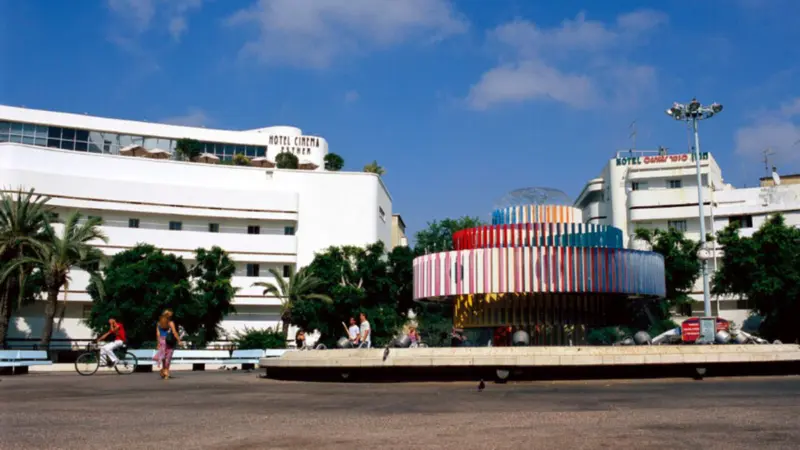
Tel Aviv, Israel, is known as the "White City" of the world. It is one of the largest accumulations of Bauhaus architecture, which is located on the Israeli coast of the Mediterranean Sea.

Source: WMF
Why is Tel Aviv called the White City?
The White City of Tel Aviv is a composition of remarkable importance of the different tendencies of the Modern Movement in the architectural design and town planning in the early 20th century.
These influences were customized to the local conditions of the place in terms of the cultural and climatic conditions, besides being merged with the local traditions.
9 Unknown Facts About the Tel-Aviv
Founded beside an ancient port: Tel Aviv was established in 1909 just north of the historic port of Jaffa, emerging on Mediterranean coastal dunes as a carefully planned urban settlement.
Rapid growth under British rule: During the British Mandate period (1917-1948), Tel Aviv expanded swiftly, developing strong infrastructure, housing, and trade networks that shaped it into the region's leading metropolitan center.
A city shaped by urban planning: Unlike many older cities, Tel Aviv grew according to structured planning principles, emphasizing order, livability, and long-term urban development from its earliest years.
Three zones form the White City: The White City of Tel Aviv consists of three main areas: the central White City, Lev Hair with Rothschild Avenue, and the Bialik Area, all protected within a shared buffer zone.
One of the world's largest Modernist ensembles: The White City is one of the largest architectural collections of the early 20th century consists of Modernist structures in the White City, which is a milestone in the world architectural history.
Based on the Modern Movement: Its architecture reflects the ideals of European Modernism including simplicity, functionality, and clean lines and unites them into a consistent urban environment instead of separated buildings.
Who was the urban master of the White City of Tel-Aviv?
The White City of Tel-Aviv was designed between 1925 and 1927 by Patrick Geddes, who was a revolutionary theorist in modern city planning.A city conceived as a living organism: Geddes viewed Tel Aviv as a dynamic system balancing environment, economy, society, and physical form, rejecting rigid models like the traditional garden city.
Designed by internationally trained architects: Many buildings were created by architects educated across Europe, resulting in a rich mix of Modernist styles unified by shared principles and local adaptation.
How perfectly White City of Tel Aviv was adapted for climate and culture?
Architectural features such as flat roofs, balconies, shaded windows, and light-colored façades were tailored to Mediterranean conditions, giving the city a character unmatched in Europe or North Africa.
In conclusion, the city of Tel Aviv, which is known worldwide as the White City, can be considered as a remarkable success in the sphere of modernism in architecture and city planning.
The design based on the Bauhaus architecture, the careful customization to the Mediterranean climatic environment, and the historical value of the architectural heritage combine to make it an outstanding and long-lasting architectural heritage site.