

India is home to more than 400 rivers and eight major river basins, all of which help shape its landscape.
The Ganga is the most well-known river in India and is both the longest and largest by length.
The Brahmaputra, on the other hand, carries the most water of any river in the country.
Many Indian rivers are known by different names along their journey. For example, the Brahmaputra is called the Tsangpo in Tibet, and the Ganga becomes the Padma in Bangladesh. Still, one river stands out in Indian culture.
Do you know which glacier is the source of the Bhagirathi River? In this article, we will explore where it begins, its geography, and why this icy starting point is important.
The Bhagirathi River Originates From Which Glacier?
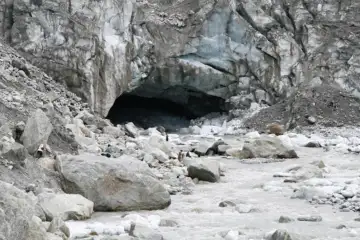
Caption: Gaumukh or Gomukh (Source: Wikipedia)
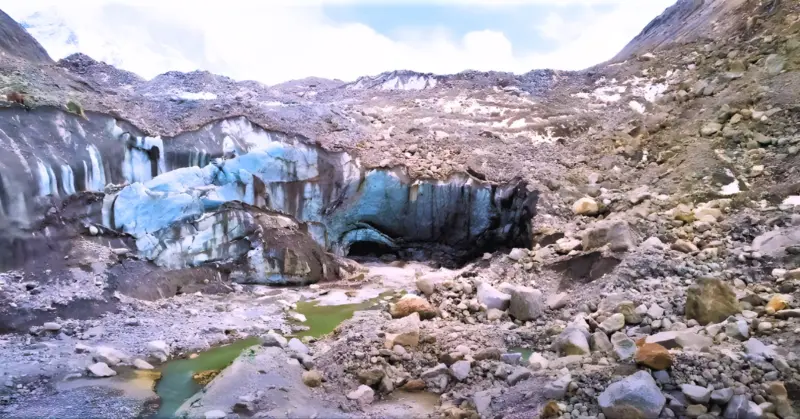
The Bhagirathi River begins at the Gangotri Glacier. The water comes out from a part of the glacier called Gaumukh, which means "Cow's Mouth" because of its shape.
This icy source sits at 13,200 feet in Uttarkashi district, Uttarakhand, and is the main source of the Bhagirathi River, a key headstream of the Ganges. As India's second-largest glacier, it measures 30 km long and 4 km wide.
The Bhagirathi river stays within Uttarakhand, moving through steep valleys and narrow gorges for about 205 kilometres. Its path as the "Bhagirathi" ends at Devprayag, where it joins the Alaknanda River.
At this famous confluence, the two rivers come together to form the Ganga. From there, the river flows across Northern India and finally empties into the Bay of Bengal.
Did You Know?
- The Bhagirathi is home to the Tehri Dam, which is the tallest dam in India and one of the highest in the world.
- Legend states the river is named after King Bhagiratha, who meditated for centuries to bring the celestial river down to Earth.
- The river drops over 3,000 metres in elevation from its source to its confluence, making its flow incredibly fast and powerful.
- Although the Alaknanda is longer, the Bhagirathi is traditionally and culturally considered the main source stream of the Ganga.
- The Gaumukh portal is not a fixed spot; because the glacier is receding, the physical "mouth" of the river actually moves slightly every year.
IN CASE YOU MISSED| Which Glacier is the Source of the Indus River?
What is the Difference Between Gangotri and Gaumukh?
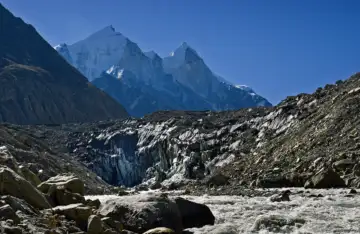
Caption: Gangotri Glacier (Source: Wikipedia)
The Gangotri Glacier is a large system made up of ice and snow, surrounded by well-known peaks such as Shivling and Bhagirathi. It acts as a storehouse of water. Gaumukh, on the other hand, is only the tip of the glacier.
This is the spot where the ice melts and forms the Bhagirathi River. The name Gaumukh comes from its appearance; it once closely resembled a cow's snout.
As the glacier keeps melting and shrinking, Gaumukh moves farther back into the mountains each year, and the Gangotri Glacier itself gets smaller over time.
Feature | Gangotri Glacier | Gaumukh |
Definition | A massive, 30-km-long body of moving ice. | The specific snout or "mouth" of the glacier. |
Function | It acts as a giant reservoir that stores water. | It is the actual exit point where the river emerges. |
Size | One of the largest glaciers in the Himalayas. | A small, cave-like opening at the glacier's end. |
Access | Requires a long trek to see its full scale. | The final destination for most trekkers and pilgrims |
What is the Difference between the Alaknanda and the Bhagirathi Rivers?
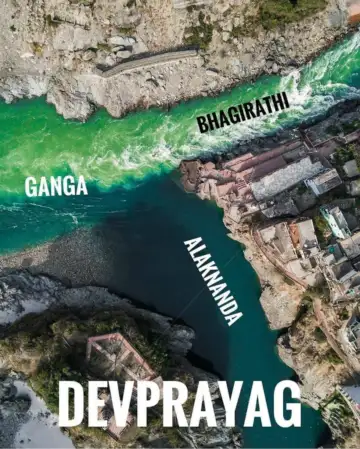
Source: Humans of Uttarkhand
The Alaknanda is shorter, but it carries more water than the Bhagirathi River. Still, in Indian culture and tradition, the Bhagirathi is respected as the "true" source of the Holy Ganga. When these two rivers meet at Devprayag, they join and flow as one.
| Feature | Bhagirathi River | Alaknanda River |
| Source | Gangotri Glacier (Gaumukh) | Satopanth Glacier |
| Length | Approximately 205 km | Approximately 190 km |
| Key Town | Uttarkashi | Badrinath |
| Significance | Considered the main source of the Ganga | Has more tributaries (the Panch Prayag) |
| Ending Point | Devprayag | Devprayag |
Which River Originates From The Gaumukh Glacier?
Caption: Bhagirathi River (Source: Britannica)
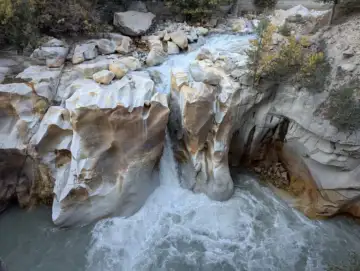
The Bhagirathi River begins at the Gaumukh glacier, which is found at the end of the Gangotri Glacier in Uttarakhand. The name "Gaumukh" means "mouth of a cow" because the ice used to look like one.
YOU MIGHT LIKE|
What Are The Tributaries Of The Bhagirathi River?
The Bhagirathi River is fed by several Himalayan streams before it flows into the plains. Its main tributaries are:
- Bhilangana River: This is the largest and most important tributary. It joins the Bhagirathi at Old Tehri, where the Tehri Dam is located.
- Jadh Ganga: Also called the Jahnavi River, it meets the Bhagirathi near Bhaironghati.
- Kedar Ganga: This small river is spiritually important and joins the Bhagirathi at Gangotri, a holy town.
- Asi Ganga: This stream runs through the Assi Ganga Valley and joins the main river near Uttarkashi.
- Jalandhari Gad & Kakora Gad: Meet the main river near Harsil.
- Siyan Gad: Joins near Jhala.
What Is The Major Tributary Of The Bhagirathi River?
The Bhilangana River is the main tributary of the Bhagirathi. It starts at the Khatling Glacier and joins the Bhagirathi at Old Tehri.
This meeting point is well known as the location of the Tehri Dam, which is the tallest dam in India. The Bhilangana supplies a lot of water, so it is important for hydroelectric power and irrigation in the area.
WHAT'S NEXT|