






Benefits of Kashmiri Kahwa: A Fragrant Tea Rooted in Warmth and Tradition: By Geetanjali Khangembam
Anyone who has tasted kahwa in Kashmir will tell you the same thing.
It never tastes quite the same anywhere elseMaybe it is the cold air outside, the warmth of the samovar or the way saffron and cardamom linger long after the first sip.
Served in small cups across homes, markets and winter gatherings, kahwa is less like an everyday beverage and more like a feeling attached to the valley itself.Believed to carry influences from Persian and Central Asian tea traditions that travelled through old trade routes into Kashmir, kahwa gradually became woven into the region's everyday life and hospitality culture.
For generations, it has been poured for guests arriving from the cold, served after rich wazwan meals and shared during long winter conversations that continue well after the cups are empty.Today, the benefits of Kashmiri kahwa tea are drawing attention far beyond the region, especially among people looking for something lighter, comforting and rooted in tradition.
From its antioxidant-rich ingredients to its calming warmth during winters, kahwa has become more than just a regional speciality.But reducing it to a wellness trend misses what makes it memorable in the first place.
The real magic lies in the experience of drinking it.
What Is Kashmiri Kahwa?
Often called the tea of Kashmir, traditional Kashmiri kahwa is a light green tea brewed with saffron, cardamom, cinnamon and other aromatic spices.
Depending on the region or household, ingredients such as almonds, cloves or dried rose petals may also be added.Unlike regular chai, kahwa is usually prepared without milk, giving it a lighter texture and cleaner finish.
The tea is brewed in a copper samovar, which allows the flavours to infuse slowly while keeping the drink hot for long periods during Kashmir's harsh winters.What makes Kashmiri kahwa tea distinctive is the balance between delicate green tea and warming spices.
Rather than tasting sharp or bitter like some green teas, kahwa comes across as smoother, fragrant and layered.Today, kahwa continues to be enjoyed both as a winter beverage and as a lighter alternative to heavily sweetened tea preparations.
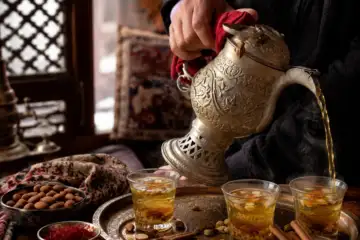
How Kashmiri Kahwa Supports Digestion After Meals
Kashmiri kahwa is commonly served after meals because the drink is noticeably lighter than milk-based tea after rich food.
A wazwan feast is known for slow-cooked meat dishes, layered spices and deeply savoury gravies, so ending the meal with something fragrant and delicate creates balance rather than adding more heaviness.Several ingredients used in kahwa have long been associated with digestive comfort in culinary and Ayurvedic traditions.
Cardamom is commonly linked to easing bloating and heaviness after meals, while cinnamon and cloves are often included in warming preparations during colder months.
Green tea itself contains catechins and polyphenols that are widely studied for their role in overall digestive wellness.The temperature of the drink may also contribute to that soothing feeling after eating.
Warm beverages are often perceived as gentler and more calming following heavy meals compared to iced or sugary drinks.The ritual surrounding the tea matters too.
Kahwa is usually sipped slowly while conversations continue after eating, extending the meal naturally instead of ending it abruptly.
That slower pace, combined with the light texture, is one reason many people continue to associate kahwa benefits with post-meal comfort.
Click to read more
www.justdial.com