




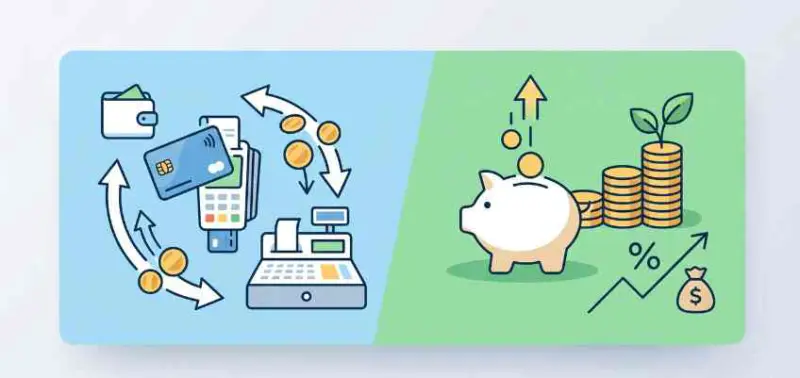

Current Account vs Savings Account: Which One Fits Your Lifestyle: By Aditya Migom Doley
Money sits differently depending on where it lives.
Some accounts quietly grow your balance, others keep things moving fast for business.
That's where the whole current account vs savings account debate starts to feel real, not just textbook.
Banks in India have shaped these accounts for very different habits, and choosing wrong can quietly cost you over time.
This breakdown keeps it simple, grounded, and actually useful.
Current Account vs Savings Account: Key Differences
At first glance, the difference between a current and savings account seems straightforward.
One saves, the other spends.
But the real gap shows up in how each account behaves day to day, especially once money starts moving regularly.Purpose and UsageA savings account is built for individuals who want to keep money safe while earning a small return.
It works best for salaries, personal expenses, and building a financial cushion over time.
In contrast, a current account is designed for businesses, freelancers, or anyone dealing with frequent, high-value transactions.This is where the current account vs savings account comparison starts to feel practical.
Savings accounts gently limit how often you transact, nudging you towards controlled spending.
Current accounts remove those limits completely.
You can deposit and withdraw as often as needed, without friction.Interest and EarningsOne of the clearest parts of the difference between a current and a savings account is how money grows.
Savings accounts earn interest on the balance.
It's not huge, but it adds up slowly without effort.
Current accounts don't offer any interest.
The focus there is on liquidity, not growth.Minimum Balance and RequirementsAnother layer in the difference between the savings and current account comes down to balance rules.
Savings accounts usually have lower minimum balance requirements, making them easier to maintain.
Current accounts often require a higher balance, mainly because they offer features such as overdraft protection and bulk transaction support.Speed and AccessibilityCurrent accounts are built for speed.
Payments, transfers, and cheque clearances are processed quickly because businesses depend on that pace.
Savings accounts feel more measured.
Transactions are still easy, but not designed for constant movement.Within the wider types of bank accounts, this contrast is intentional.
One account quietly protects and grows money.
The other keeps it moving without pause.Key Differences At a GlanceThis comparison also gives a clearer view of different types of bank accounts, helping users understand where each option fits.FeatureSavings AccountCurrent AccountPurposePersonal savings, salary useBusiness and frequent transactionsInterestEarns interest on the balanceNo interest offeredTransactionsLimited or controlledUnlimited transactionsMinimum BalanceLow to moderateHigher requirementOverdraft FacilityRarely availableCommonly availableSpeedStandard processingFaster, priority services
What Is a Savings Account?
A savings account is often the first step into formal banking.
It's simple, reliable, and quietly effective when used well.
The whole idea behind the current account vs savings account distinction becomes clearer here.
This account is not built for hustle.
It's built for stability.Earns Interest Without EffortSavings accounts offer interest on your balance, usually ranging between 2.5% to 7% in India, depending on the bank.
It's not massive, but it's consistent.
Over time, that matters.
This is one of the strongest points in the difference between current and savings accounts, because current accounts offer zero interest.Low Risk and Easy AccessFunds in savings accounts are highly liquid.
You can withdraw money anytime through ATMs, UPI, or net banking.
At the same time, your money stays relatively safe compared to holding cash.
Within types of bank accounts, this one strikes a balance between accessibility and security.Ideal for Personal FinanceFor salaried individuals, students, or anyone managing day-to-day expenses, savings accounts make sense.
They encourage discipline.
You're less likely to overspend when transactions are slightly controlled.
This reinforces the practical side of the current account vs savings account discussion.Extra Perks and FeaturesBanks often bundle savings accounts with debit cards, mobile banking, auto-debits, and sometimes even insurance benefits.
It's not just storage anymore.
It's a full ecosystem.
Compared to the difference between savings and current accounts, this is where savings accounts feel more lifestyle-focused.For younger users, a bank account for a minor can be a simple starting point to build early financial habits.
A savings account doesn't try to do too much.
That's exactly why it works.
Click to read more
www.justdial.com