





HDL vs LDL: Which Is Good Cholesterol? Key Differences Explained: By Siddharth Wadhwan
Which is good cholesterol, HDL or LDL, might seem unclear, particularly once terms like "good" and "bad" enter the conversation.
HDL is protective, and the body relies on this compound to construct cell walls and produce vital chemicals.
LDL, by contrast, tends to linger in circulation, possibly gathering within vessel walls over time.One type supports cleanup, whereas the other raises concerns under certain conditions.
Clarity around whether HDL or LDL holds benefit emerges through understanding function, not labels alone.
Decisions tied to daily habits may shift slightly when insight replaces uncertainty.
What Is HDL (High-Density Lipoprotein)?
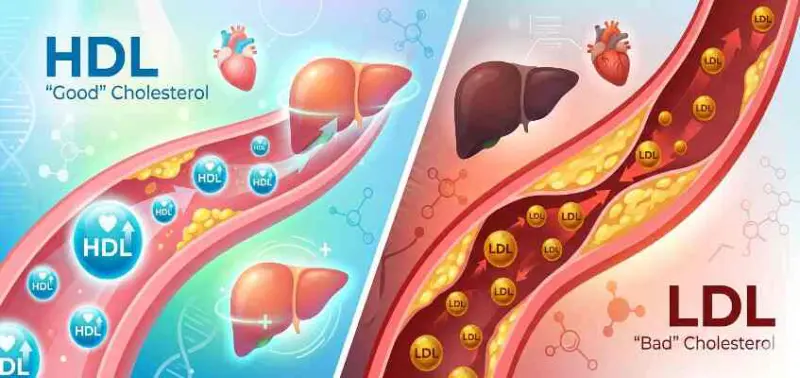
Good cholesterol, HDL, picks up extra cholesterol that's floating around where it shouldn't be and sends it straight back to the liver.
The liver then breaks it down and gets rid of it so it doesn't cause trouble.
Higher HDL levels help stop fatty plaque from building up and clogging your arteries, which is what sets the stage for heart attacks.Doctors want to see decent HDL in your blood test because it's protective.
The higher it is (within reason), the better your heart's health looks long term.
Simple as that, HDL's the compound you want on your side when it comes to keeping your heart healthy.
What Is LDL (Low-Density Lipoprotein)?
LDL, low-density lipoprotein, is the one most people call "bad cholesterol." Your body actually needs cholesterol to build cell walls, make hormones like testosterone and estrogen, and do a bunch of other essential jobs.
When LDL levels stay high for too long, the extra stuff starts sticking to the inside of your artery walls and over the years, it builds up into hard plaque, making the arteries narrower and stiffer.Blood can't flow as freely, your heart has to work harder to pump, and pieces of that plaque can break off and block things.
That's exactly why doctors want it low, ideally under 100 mg/dL if you're at higher risk, or at least under 130 if you're pretty healthy.
Keep it in check through diet, exercise, not smoking, and sometimes meds, and you're giving your heart some better treatment.Also Read: Good Cholesterol: Understanding HDL Levels, Benefits, and Balance
Click to read more
www.justdial.com