
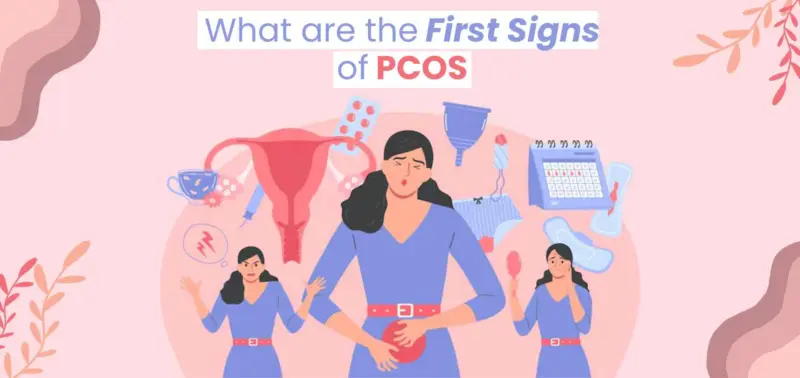

What Are the First Signs of PCOS: Early Symptoms Many Women Miss: By Ishita Gupta
Many health conditions begin with small changes in the body, and Polycystic Ovary Syndrome (PCOS) is no different.
In the early stages, the signs can be subtle and easy to overlook, often blending into everyday health concerns.Because these changes develop gradually, many people do not immediately recognise them as possible indicators of a hormonal imbalance.
This is why understanding what are the first signs of PCOS can help bring clarity to these subtle shifts and explain what the body may be trying to signal.
Most Common First Signs of PCOS
The most common early indicators of this condition involve visible disruptions to the body's hormonal and metabolic equilibrium.
These signs typically manifest as physical changes in the skin, hair, and menstrual regularity, often serving as the first clinical markers for diagnosis.
Recognising these patterns early is essential for implementing a successful long-term management strategy.Irregular PeriodsMenstrual irregularities are a primary indicator.
This disruption typically manifests as cycles exceeding 35 days or the complete absence of a period for several months.
And, delayed periods are frequently dismissed as temporary stress-related issues.
However, women must monitor their menstrual cycle, especially while trying to identify PCOS symptoms.Persistent AcneResearch published in the International Journal of Medical Pharmaceutical Research (IJMPR) shows that out of 62 women with PCOS, 49 women suffered from persistent breakouts.
This type of acne is driven by internal hormonal triggers, particularly elevated androgen levels, and often resists standard topical treatments.
Because the root cause is systemic, clinical specialists often require a comprehensive PCOS treatment plan to manage skin health effectively alongside metabolic factors.Excess Body and Facial Hair (Hirsutism)Hirsutism is the growth of coarse, dark hair on the face, chest, or abdomen due to excess male-pattern hormones.
Specialists use the Ferriman-Gallwey scoring system to quantify this hair growth, which serves as a direct physical signal of hormonal imbalance during early diagnosis. Doctors assess hair growth in nine body areas such as the upper lip, chin, chest, abdomen, back, arms, and thighs.
Each area is scored from 0 (no hair) to 4 (heavy hair growth).
The scores are then added together.Score below 8: Typically considered normal.Score 8 or higher: May indicate hirsutism, a condition often linked to hormonal imbalance in PCOS.Unexplained Weight GainAccording to PubMed Central, about 40% to 80% women with PCOS suffer with extreme weight gain.
This weight gain is often concentrated around the midsection and is closely linked to insulin resistance, a condition where the body does not process glucose efficiently.
The World Health Organization (WHO) emphasises that early management and modest weight reduction can significantly improve hormonal stability and overall metabolic health.
Subtle Symptoms Many Women Miss
Beyond the more obvious physical changes, certain subtle indicators often go unnoticed or are attributed to general lifestyle stress.
Identifying these less prominent signals is crucial for a comprehensive understanding of hormonal health and early clinical intervention.Darkened Skin Patches (Acanthosis Nigricans)Acanthosis nigricans causes velvety, dark patches on the neck or armpits.
In PCOS, it signals insulin resistance, where high insulin levels trigger excess skin pigment and texture changes.
It often fades with treatments that improve insulin sensitivity, like diet and medication.Scalp Hair ThinningAndrogenetic alopecia leads to thinning hair at the crown and a wider part line.
Excess androgens in PCOS shrink hair follicles over time, causing gradual loss.
Treatments target hormone balance to slow progression and support regrowth.Skin TagsSkin tags are small, soft growths in skin folds like the neck or armpits.
They arise from high insulin levels in PCOS, irritating skin and promoting overgrowth.
Reducing insulin through lifestyle changes often prevents new tags from forming.Chronic FatigueChronic fatigue in PCOS stems from poor sleep, blood sugar swings, and hormone imbalances.
It leaves women feeling drained despite rest.
Managing PCOS with balanced meals, exercise, and sleep hygiene helps restore energy levels.Mood DisruptionsAnxiety and depression are common due to androgen fluctuations, insulin issues, and symptom-related stress.
These create emotional ups and downs that affect daily life.
PCOS care now includes therapy and screening to address mental health alongside physical symptoms.
Click to read more
www.justdial.com