




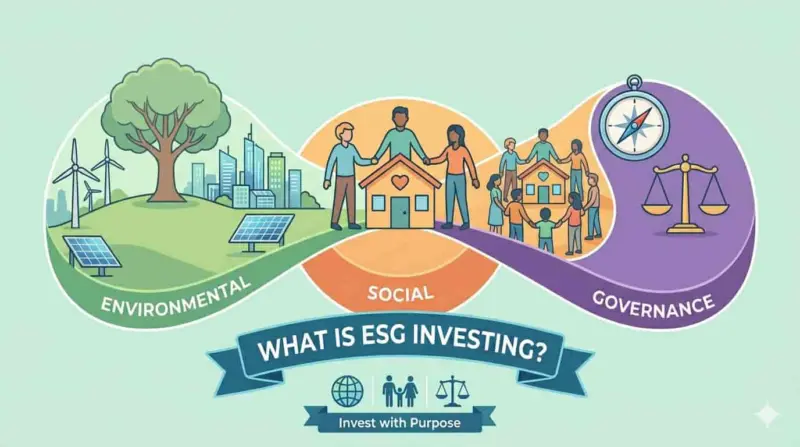

What Is ESG Investing and Is It Worth It?: By Ritika Tyagi
Investing is no longer just about returns.
Today, many investors want their money to reflect their values as well as their financial goals.
That's where ESG investing makes sense.
It has quickly moved from a niche idea to a mainstream strategy adopted by individuals, institutions, and even governments.
But beyond the buzz, what does it actually mean? And more importantly, does it deliver real results or is it just good marketing?This guide breaks down environmental social and governance investing in simple terms, explores how it works, and helps you decide whether it deserves a place in your portfolio.
The Three Pillars of ESG
Representational ImageIf you're wondering what is ESG, it's simply a way to judge companies based on their impact on the planet, society, and their overall behaviour.
However, to really understand it's core, you need to look at its three core components.
These pillars help investors evaluate companies beyond financial statements.EnvironmentalThis focuses on how a company impacts the planet and manages natural resources.
In ESG investing, this is a key factor for assessing long-term sustainability.
Investors look at:Carbon emissions and climate policiesEnergy efficiency and renewable energy useWaste management and recycling practicesWater usage and conservationCompanies that reduce pollution and invest in cleaner practices usually score higher.
For example, a business lowering its carbon footprint is seen as more environmentally responsible.SocialThis pillar looks at how a business treats people; employees, customers, and communities.
It reflects the human side of environmental social and governance investing.Workplace conditions and employee welfareDiversity, equity, and inclusion policiesData privacy and customer protectionCommunity engagementCompanies with fair practices and inclusive policies tend to build stronger trust and reputation over time.GovernanceGovernance focuses on how a company is run and whether it follows ethical and transparent practices.
It is essential in evaluating risk in an ESG investment.Board structure and independenceExecutive pay transparencyShareholder rightsEthical business practicesStrong governance often means better decision-making, fewer risks, and more stable long-term performance.Together, these three pillars form the foundation of environmental social and governance investing, helping investors assess risks and opportunities that traditional analysis might miss.
Types of ESG Investment Strategies
When it comes to ESG investing, there isn't just one approach.
Investors use different strategies depending on their goals, values, and risk appetite.
Here are the most common ones explained in simple terms:Negative ScreeningThis strategy involves avoiding certain industries or companies that don't meet your ethical standards.It typically includes:Avoiding sectors like tobacco, weapons, or fossil fuelsHelping investors stay aligned with personal valuesBeing simple and widely used in environmental social and governance investingIn short, it's about choosing what not to invest in.Positive ScreeningInstead of excluding companies, this approach focuses on picking the best performers in ESG terms.Key elements involve:Investing in companies with strong sustainability practicesLooking for high ESG ratings and responsible policiesEncouraging businesses that are doing things the right wayHere, the focus is on rewarding good behaviour.Impact InvestingThis goes a step further by aiming to create real, measurable change alongside financial returns.The focus areas include:Targeting companies solving social or environmental problemsFocusing on sectors like clean energy, education, or healthcareMeasuring both financial performance and real-world impactIt's ideal for investors who want their ESG investment to make a visible difference.ESG IntegrationThis strategy blends ESG factors with traditional financial analysis.It generally involves:Considering ESG risks alongside profit potentialBeing used by many professional investorsOffering a balanced and practical approachRather than focusing only on ethics, it treats ESG as part of smart investing decisions.
Click to read more
www.justdial.com