
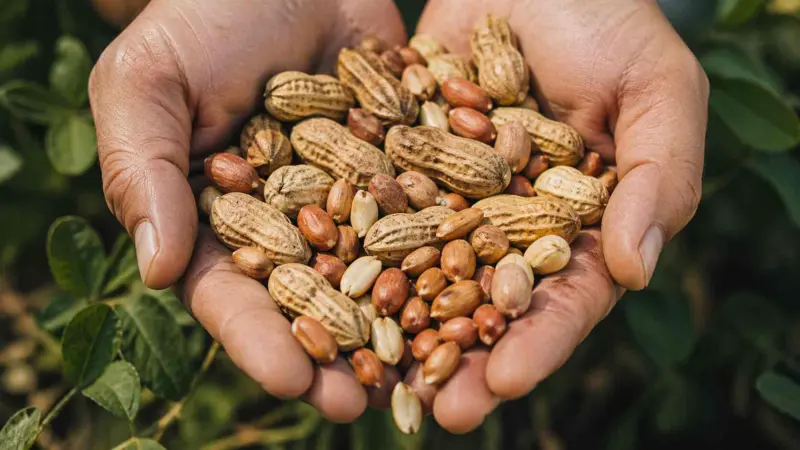

What Is Nutritional Value of Peanuts?: By Geetanjali Khangembam
Peanuts look like a simple, everyday snack.
Nutritionally, they are far more powerful than most people assume.
If you have ever questioned whether peanuts are actually healthy or just another high-calorie food, you are not alone.
There is a lot of confusion around fats, protein, and weight gain, and peanuts often get misunderstood in that conversation.The reality is that peanuts are one of the most affordable sources of plant-based protein and healthy fats compared to more expensive nuts like almonds and cashews.
At the same time, their calorie density raises a practical question.
Should you be eating them every day?In this guide, you will understand the nutritional value of peanuts per 100g, what makes them nutritionally significant and whether they deserve a place in your daily diet.
Nutritional Value of Peanuts Per 100g
So, what exactly do you get from 100 grams of peanuts? The table below gives you a clear, quick snapshot of their nutritional profile.NutrientValue per 100gCalories567 kcalProtein25-26 gTotal Fat49 gCarbohydrates16 gDietary Fibre8-9 gSugars4-5 gTakeaway: With around 25 g of protein per 100 g, peanuts offer a protein content comparable to many commercial protein bars, but at a significantly lower cost and with fewer additives.
Nutritional Composition of Peanuts (Macros and Micronutrients)
Peanuts are often evaluated based on calories alone, but their nutritional value depends on what those calories consist of.
A significant portion comes from protein, healthy fats, and essential micronutrients that actively support body functions, rather than just adding energy.Protein ContentPeanuts provide around 25 g of protein per 100 g, which makes them one of the more practical plant-based protein sources.
This is particularly useful in diets where protein intake is often lower than required.
Unlike many snacks that are mostly carbohydrates, peanuts contribute to daily protein needs, supporting muscle repair, satiety, and overall metabolic function. Healthy FatsPeanuts' composition is mainly fat, but the type of fat is what makes the difference.
Peanuts are rich in monounsaturated and polyunsaturated fats, which are also found in foods such as olive oil.
These fats are associated with improved heart health when they replace saturated fats in the diet.
Peanuts should be seen as a source of functional fats that provide sustained energy and aid in nutrient absorption, rather than just a high-fat food.Low Glycaemic IndexPeanuts have a low glycaemic index, which means they release energy slowly rather than causing rapid spikes in blood sugar levels.
This has two practical effects.
First, it helps maintain stable energy levels throughout the day.
Second, it reduces hunger spikes that are often triggered by high-sugar snacks.
Because of this, peanuts can be a more stable snacking option compared to processed foods that lead to quick energy crashes.Vitamins and MineralsPeanuts also provide a range of micronutrients that support different systems in the body:Vitamin B3 (Niacin): Plays a role in energy metabolism and supports brain function, particularly in maintaining nerve healthFolate (Vitamin B9): Essential for cell growth and repair, making it especially important during periods of rapid development and recoveryVitamin E: Acts as an antioxidant, helping protect cells from oxidative stress caused by everyday metabolic processesMagnesium: Supports muscle function, nerve signalling, and energy productionPhosphorus: Contributes to bone strength and plays a role in how the body uses energy Also Read: Peanut Oil Explained: Health Benefits, Smart Uses and Groundnut Varieties
Click to read more
www.justdial.com