




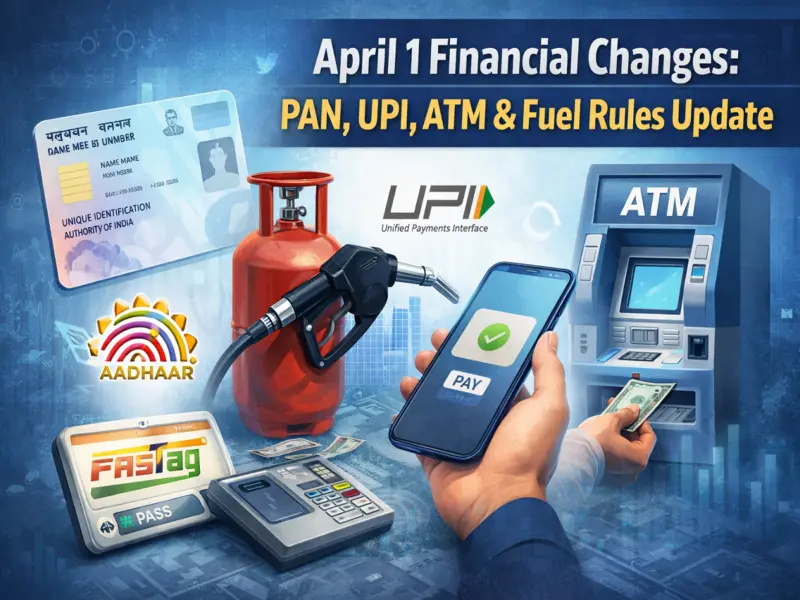

As India steps into the new financial year 2026-27, several important financial rule changes are set to come into effect from April 1. These updates, introduced by authorities like the Reserve Bank of India, are expected to influence everything from digital payments and banking to fuel costs and documentation processes.
Here's a detailed, easy-to-understand breakdown of what's changing and how it may impact your wallet.
Fuel Prices Likely to Change Again
The start of every month brings revised fuel prices, and April is no exception. Rates of LPG cylinders, CNG, PNG, and aviation turbine fuel (ATF) may be updated based on global market trends.
With ongoing geopolitical tensions and fluctuations in crude oil prices, transport and travel costs could see an increase. This means your monthly household budget—especially cooking gas and commuting expenses—might need adjustment.
PAN Card Rules Get More Strict
Applying for a PAN card is set to become more detailed. Earlier, Aadhaar-based instant PAN applications made the process quick and hassle-free. However, from April 1, additional documentation may be required.
This step aims to improve verification, reduce misuse, and strengthen financial compliance. While it may slow down the application process slightly, it enhances security in the long run.
FASTag Annual Pass Becomes Costlier
Frequent highway users will see a small increase in FASTag expenses. The annual FASTag pass fee is expected to rise from ₹3,000 to ₹3,075.
Though the increase is marginal, regular travelers and transport businesses should account for this change in their yearly travel budget.
Digital Payments to Become More Secure (2FA Mandatory)
One of the biggest changes comes in the digital payments space. As per new guidelines, two-factor authentication (2FA) will now be mandatory for all online transactions.
This means:
- OTP alone will not be enough
- Additional verification like PIN, password, or biometric authentication will be required
While this may slightly increase transaction time, it significantly boosts security and helps reduce fraud risks.
ATM Withdrawal Rules Updated
Banks across India are also revising ATM usage policies. Changes may include:
- Revised free transaction limits
- Updated charges after exceeding limits
- Inclusion of new transaction types in counting limits
Since these rules vary across banks, customers are advised to check with their respective banks to avoid unexpected fees.
Why These Changes Matter
April 1 is not just the beginning of a new financial year—it also marks a shift in how everyday financial activities are managed. From stricter documentation to enhanced digital security, these updates aim to:
- Improve financial transparency
- Strengthen user safety
- Streamline banking processes
Final Takeaway
These upcoming changes may seem small individually, but together they can have a noticeable impact on your daily expenses and financial habits. Whether it's paying for fuel, withdrawing cash, or making online payments, staying informed will help you avoid surprises and manage your money more efficiently.