
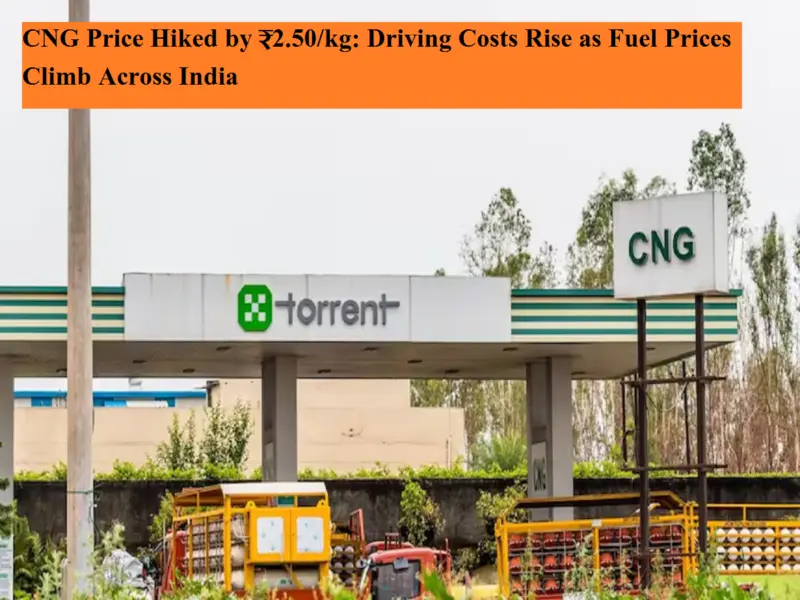

Compressed Natural Gas (CNG) has become more expensive in parts of India, adding fresh pressure on daily commuters and transport operators.
In a recent move, Torrent Gas has increased CNG prices by ₹2.50 per kilogram, making travel costlier—especially for those relying on gas-powered vehicles for daily commuting.
According to the report , the revised rates came into effect from April 3, 2026. In Jaipur, the price of CNG has now reached ₹93.41 per kg, while in some parts of Rajasthan, rates have touched as high as ₹95.50 per kg.
Why Are CNG Prices Increasing?
The recent hike in CNG prices is largely linked to global energy disruptions. Ongoing tensions in the Middle East—particularly the Iran-Israel conflict—have significantly impacted crude oil and natural gas supply chains worldwide.
Since late February 2026, disruptions in key shipping routes like the Strait of Hormuz have created supply bottlenecks. As a result, energy-importing countries like India are facing increased procurement costs, which are being passed on to consumers.
State-Wise CNG Price Snapshot
CNG prices now vary widely across states due to differences in taxes, transportation, and local policies:
- Uttar Pradesh: ₹93.50 to ₹96.25 per kg
- Punjab: ₹71.75 to ₹94.25 per kg
- Telangana: Around ₹99 per kg
- Gujarat: ₹85.17 per kg
- Maharashtra: ₹94.50 per kg
- Puducherry: ₹81.50 per kg
- Tamil Nadu: ₹81.50 to ₹94 per kg
This variation highlights how regional taxation and distribution costs influence final retail prices.
Impact on Daily Commuters and Transport Sector
The increase in CNG prices is expected to directly affect transportation costs. Auto-rickshaw drivers and cab operators have already expressed concerns over shrinking profit margins. Many drivers report that they now need to work longer hours just to maintain their daily earnings.
For passengers, even a small increase in fares can significantly impact monthly budgets, especially for those who rely on daily travel for work or education.
LPG and Other Fuel Prices Also Rising
The pressure is not limited to CNG. Prices of Liquefied Petroleum Gas have also surged recently. Commercial LPG cylinders have become costlier by up to ₹218 in some cities since April 1, 2026. These cylinders are widely used in hotels, restaurants, and small businesses.
However, domestic LPG cylinder prices (14.2 kg) have remained unchanged in April so far, with the last revision recorded on March 7, 2026.
Petrol and Diesel Prices See Selective Increase
Private fuel retailers such as Shell India and Nayara Energy have also revised petrol and diesel prices in select regions. For instance, petrol prices in Bengaluru saw an increase of up to ₹7.41 per litre, while diesel prices jumped by as much as ₹25.01 per litre in some cases.
Despite rising global crude oil prices, government-run oil companies—including Indian Oil Corporation, Hindustan Petroleum Corporation, and Bharat Petroleum Corporation—have not made major changes to regular petrol and diesel prices yet. However, certain premium and industrial fuel categories have seen price adjustments.
Government Measures to Control Fuel Inflation
To cushion consumers from rising fuel costs, the government has already reduced special additional excise duty on petrol and diesel. Petrol duty has been cut from ₹13 per litre to ₹3, while diesel duty has been reduced from ₹10 per litre to zero.
These steps aim to stabilize fuel prices, although global factors continue to exert upward pressure.
The ₹2.50/kg increase in CNG prices marks another step in the ongoing rise in fuel costs across India. With LPG, petrol, and diesel also witnessing upward trends, transportation and household expenses are likely to rise further.
For now, consumers and businesses alike will need to adapt to this changing energy landscape, keeping a close watch on global developments that continue to shape domestic fuel prices.