
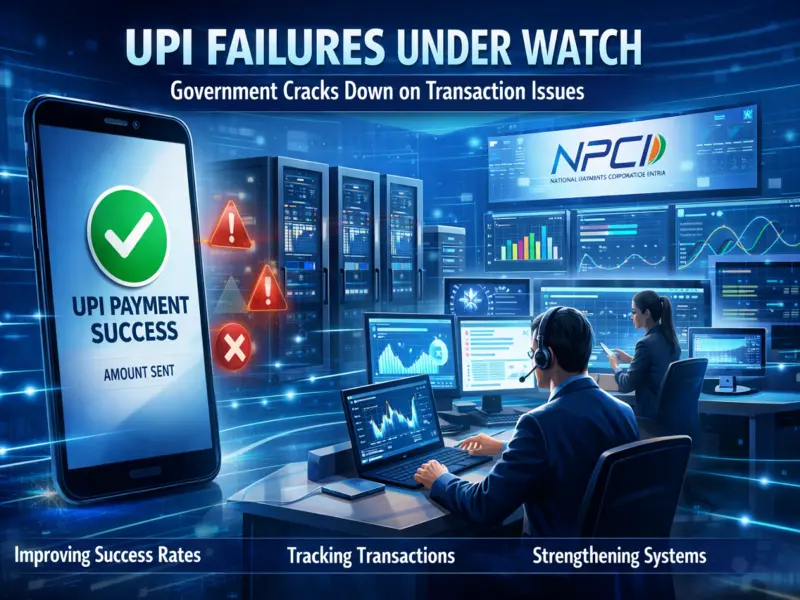

India's digital payment backbone is set for a major reliability upgrade as authorities step in to tackle rising complaints about failed transactions.
The government has instructed the National Payments Corporation of India (NPCI) to work closely with banks and tighten monitoring systems, aiming to make Unified Payments Interface (UPI) transactions faster, smoother, and more dependable.
UPI has become the preferred mode of payment for millions across India, enabling instant transfers with just a few taps. However, frequent transaction failures in recent months have begun to impact user confidence. Recognizing the urgency, regulators are now focusing on improving the system's performance and accountability.
Stronger Monitoring and Accountability
Under the new directive, NPCI will actively track how banks handle UPI transactions and identify weak points in their systems. Banks with higher failure rates may be asked to upgrade infrastructure, optimize server capacity, and improve backend processes.
The move comes after weeks of discussions between stakeholders, where the need for better coordination and real-time monitoring was emphasized. The primary goal is simple: reduce transaction failures and ensure a seamless experience for users.
Why UPI Transactions Fail
UPI failures can occur due to a mix of technical and user-related factors. Common reasons include:
- Temporary server downtime at banks or NPCI systems
- Poor or unstable internet connectivity
- Incorrect UPI PIN entered by users
- Weak or outdated banking infrastructure
While each issue may seem minor individually, their combined impact can disrupt millions of transactions daily, leading to frustration among users.
Smaller Banks Face Bigger Challenges
The issue is more pronounced among regional and smaller banks, where technological capabilities may not match those of larger institutions. Limited resources and lower system capacity often result in higher failure rates.
Recent data highlights the scale of the problem:
- Airtel Payments Bank recorded the highest business failure rate at 21.97% in February
- Baroda UP Bank reported a technical failure rate of 7.26%
- Nearly 11 banks experienced system outages, with Bank of India facing downtime of almost 14 hours
These figures underline the need for stronger infrastructure and better system management across the banking ecosystem.
Why Reliability Matters
UPI's success has been built on speed and convenience. However, repeated failures can erode trust and discourage users from relying on digital payments. Officials warn that if such issues persist, it could slow down India's rapidly growing digital economy.
Ensuring consistent performance is therefore critical not just for user satisfaction, but also for maintaining momentum in digital adoption.
UPI's Rapid Growth Story
Despite occasional glitches, UPI continues to dominate India's payment landscape. According to Finance Minister Nirmala Sitharaman, UPI is expected to account for nearly 81% of all digital transactions in FY 2025. This makes it the largest real-time payment system in the world.
From small street vendors to large businesses, UPI has transformed how money moves across the country, making transactions quicker and more accessible than ever before.
What Lies Ahead
The future of UPI extends far beyond payments. Authorities, including the Reserve Bank of India, are exploring ways to expand its capabilities into:
- Micro-credit and small-ticket lending
- Insurance services
- Loyalty and reward ecosystems
These additions could turn UPI into a comprehensive financial platform, offering multiple services within a single ecosystem.
The Bottom Line
UPI has revolutionized digital payments in India, but reliability remains the key to sustaining its success. With tighter monitoring, improved infrastructure, and stronger collaboration between banks and NPCI, users can expect fewer failures and a more seamless payment experience in the near future.
As the system evolves, these reforms are likely to strengthen trust and further accelerate India's journey toward a fully digital economy.