




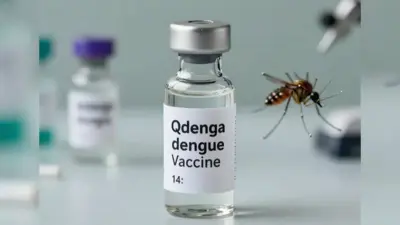

India has approved its first dengue vaccine, offering a new preventive tool as the country handles roughly a third of the world's caseload.
The Drugs Controller General of India cleared QDENGA for individuals aged four to 60 following three phases of clinical trials, with health authorities anticipating it will prevent severe illness and reduce hospitalizations.
Clinical data show protection begins within months of the first inoculation, with safety and efficacy maintained for up to seven years. Dengue can rapidly become life-threatening, causing plummeting blood counts, heart complications, and dangerously high blood pressure. The virus is transmitted by Aedes mosquitoes, which breed in clean water and primarily bite during daylight hours, with symptoms appearing three to 14 days after infection.
The disease remains a persistent public health challenge. Thousands of cases were reported in Kerala this year, building on state death tolls of 153 in 2023, 128 in 2024, and 56 in 2025. Nationally, over 100,000 people were hospitalized during the last monsoon season alone, with a similar volume of patients seeking care in the private sector.
Manufactured in Germany and imported by Bio Pharmaceuticals India Private Limited, the vaccine is administered in a two-dose series separated by three months. Although the Central Drugs Standard Control Organization has cleared the vaccine, additional regulatory and market procedures mean it will likely not reach consumers until after April 2027.
QDENGA already holds approvals from the World Health Organization and 42 countries, including EU members, Indonesia, Thailand, Malaysia, and Brazil. Officials note that age limits could be expanded past 60 if further safety data emerge, though current guidelines strictly bar its use for breastfeeding mothers, immunocompromised individuals, and patients undergoing chemotherapy.
With an expected price tag of Rs. 3,000 to Rs. 6,000 per dose-bringing total costs to Rs. 6,000 to Rs. 12,000-the vaccine will likely remain out of reach for lower-income households. It remains undetermined whether the government will introduce subsidies or financial assistance akin to the free distribution seen during the COVID-19 pandemic.