




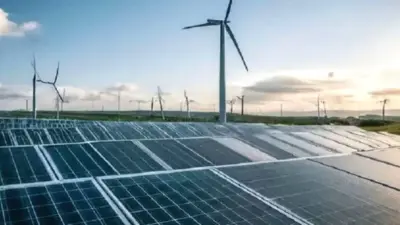

In 2014, India had about 2.8 gigawatts of installed solar power. By July 2026, that figure had risen to 164.59 gigawatts. Total installed electricity capacity, meanwhile, grew from roughly 249 gigawatts to 552 gigawatts.
Numbers of this magnitude describe more than an expansion of power plants. They show how decisively India has changed the place of energy in its development strategy over the last decade.
The Union Government's initiatives deserve clear credit for that change. The National Solar Mission helped turn solar power into an investable industry. Large projects created scale, while the Green Energy Corridor addressed the equally important task of carrying renewable electricity through the transmission network. PM Surya Ghar: Muft Bijli Yojana has brought the transition to household rooftops: by August 2026, more than 50 lakh households were reported to be benefiting from installations under the programme. An energy policy that once spoke chiefly to generating companies now also speaks to the family paying an electricity bill.
India has begun to build the industry behind those panels as well. The Production Linked Incentive scheme for high-efficiency solar modules encourages manufacturing at home rather than permanent dependence on imported equipment. Reported solar module manufacturing capacity has grown from 2.3 gigawatts in 2014 to about 172 gigawatts by March 2026. Manufacturing capacity is not the same as domestic production of every component, but the direction is unmistakable. Energy security requires India to make more of the technology it deploys.
For farmers, PM-KUSUM has given this transition a practical meaning. Solar irrigation can reduce diesel use and the cost of pumping water; different components of the scheme also permit decentralised generation and the sale of power under the applicable arrangements. Government reporting in March 2026 said that the programme had reached more than 21 lakh farmers. Its significance is that a farmer need no longer be seen only as a consumer waiting for power. With the right equipment and grid connection, agriculture can also contribute to its production.
The change in the kitchen has been just as consequential. Pradhan Mantri Ujjwala Yojana has provided more than 10.5 crore LPG connections to women from poorer households. India's total LPG connections rose from about 14.5 crore in 2014 to over 33 crore in 2026. A connection is not, by itself, proof that every family can afford every refill. Yet extending access on this scale is an achievement that should be recognised plainly. The next measure of success is sustained use, particularly when household budgets are strained.
India's dependence on imported crude oil remains a formidable challenge. The country imports close to 88.5 per cent of the crude it consumes. The response has therefore had several parts. The Hydrocarbon Exploration and Licensing Policy and the Open Acreage Licensing Programme seek to attract exploration and increase domestic production, although a new block can take years to yield commercial output. Alongside exploration, the Ethanol Blended Petrol Programme has raised blending from about 1.5 per cent in 2014-15 to 20 per cent in 2025-26. Domestic ethanol substitutes for a portion of petrol while creating demand linked to Indian agriculture.
Other fuels and vehicles are being drawn into the same effort. SATAT promotes compressed biogas made from agricultural residue, cattle waste and other organic material. More than 130 compressed biogas plants had been commissioned under the initiative by November 2025. FAME India and the subsequent PM E-DRIVE scheme have supported electric mobility; more than 18 lakh electric vehicles had received incentives under PM E-DRIVE by March 2026. These are distinct routes towards reducing petroleum use. Their contribution should be measured by fuel displaced and reliable services delivered, not simply by the number of projects announced.
The National Green Hydrogen Mission extends the strategy into industries that cannot easily run on ordinary electricity alone, including fertilisers, refining and steel. By May 2026, incentives had been awarded for 8.62 lakh tonnes a year of proposed green hydrogen production capacity and 3,000 megawatts a year of electrolyser manufacturing capacity. These are awards for future capacity, not proof that this volume is already being produced. Even so, they show that India is attempting to build a new industrial supply chain before global markets are settled.
Nuclear power has also returned to the centre of India's energy planning. The SHANTI Act, 2025 opens a regulated path for private participation, while the Nuclear Energy Mission has set aside ₹20,000 crore for the development of small modular reactors. The aim is to make at least five indigenous SMRs operational by 2033. Unlike solar and wind, nuclear plants can provide steady low-carbon power; the immediate achievement is the policy and research commitment, while safe, economical deployment remains the test ahead.
Generating power is only half the task; delivering it dependably is the other half. The Green Energy Corridor strengthens transmission for renewable power. The Revamped Distribution Sector Scheme addresses the networks and utilities that deliver electricity to consumers. National aggregate technical and commercial losses fell from 21.91 per cent in 2020-21 to 15.04 per cent in 2024-25, according to government reporting. That improvement reflects work by the Centre, states and distribution companies together. Lower losses and financially sound utilities make every investment in generation more valuable.
These gains also define the work ahead. India has crossed 300 gigawatts of installed non-fossil capacity, but coal still supplies a large share of electricity actually delivered. Solar and wind require storage, flexible generation and stronger grids to serve consumers at every hour. Batteries and other clean-energy technologies bring exposure to imported critical minerals. None of this diminishes the progress of the last decade. It tells us what the next decade's initiatives must accomplish.
Viksit Bharat will require far more energy than India used in 2014. In terms of achievement, the country has expanded supply, brought cleaner energy into homes and farms, and begun building the industries needed to sustain that expansion. The test now is to make this larger system affordable and dependable while steadily reducing its exposure to imported fuels and technologies. India has already changed the scale of its energy ambition. The task is to turn that ambition into lasting security for every consumer.
(views are personal)