
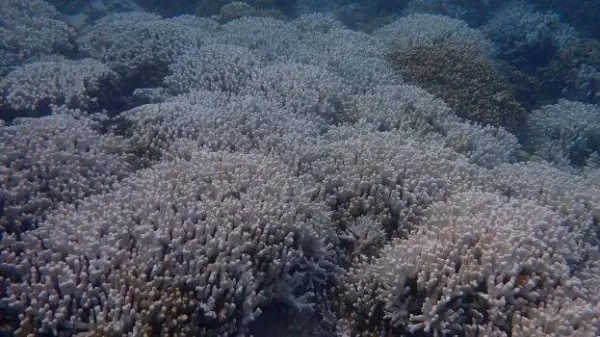

KOCHI: The vibrant underwater cathedrals of Lakshadweep are facing a silent crisis. As rising ocean temperatures grip the region, scientists fear a repeat of the devastating coral bleaching events seen during the El Niño peak of 2023-2024.
To assess the health of these fragile ecosystems, a specialised four-member team from the Central Marine Fisheries Research Institute (CMFRI)-comprising Dr. Mariam Paul Sreeram, Dr. Divya Viswambharan, Alvin Anto, and Aju K. Raju-is set to arrive in the archipelago on May 4th.
Fever in water
In 2024, sea surface temperatures soared to 32.2°C, leading to the destruction of nearly 60% of the coral cover in certain areas. For these organisms to thrive, they require a stable environment with temperatures ideally remaining below 29°C. This year's mission is twofold: to monitor current bleaching threats and to document how much of the reef managed to recover during the milder temperatures of the previous year.
Nature's living art: Role of algae
The breathtaking hues of a coral reef aren't actually from the coral itself, but from a microscopic partner called Zooxanthellae.
- Partnership: These algae live within the coral tissues, providing them with food through photosynthesis and gifting them their brilliant colours.
- Breakup: When the water gets too hot, the corals become stressed and expel the algae.
- The Result: Without their colourful partners, the corals turn ghostly white-a phenomenon known as bleaching. This is the final warning stage before the reef dies.
Why reefs matter to us
Lakshadweep is home to over 78 species of coral, forming a vital part of India's marine heritage alongside the Andaman Islands, the Gulf of Kutch, and the Gulf of Mannar. Their disappearance would be felt far beyond the shoreline:
- Natural Fortress: Coral reefs act as living breakwaters, shielding coastal communities from the raw power of massive ocean waves.
- Ocean's Nursery: These intricate structures are safe havens where rare fish, crabs, and shrimp breed and raise their young, protected from larger predators.
- Tourism & Economy: The mesmerising beauty of these "underwater rainforests" is the backbone of the local tourism industry.
"The destruction of coral reefs-the primary sanctuary for countless fish and microorganisms-will have far-reaching ecological consequences." - Dr. Ratheesh Kumar Raveendran, Senior Scientist, CMFRI.