


The data revolution has transformed industries worldwide, and sports is no exception. Sports analytics has emerged as a high-growth sector, leveraging data to gain a competitive edge.
The integration of advanced technologies like AI, machine learning, and IoT has further fueled the growth of sports analytics. As data becomes increasingly vital in sports, its applications continue to expand, transforming the way teams compete, coaches strategize, and players perform, ultimately redefining the future of sports. Data-driven insights are now a game-changer.
Sports Analytics: What Is It?
 Image: X
Sports analytics is the sports statistics or data that includes relevant business operations, scouting, recruitment, and athletes' performance.
The adaptation of statistical and mathematical concepts to sports is called sports analytics. However, sports analytics involves two major aspects:
On-field analytics:
This region includes tracking major on-field data metrics to impact approaches that may be used to enhance in-game tactics, nutrition planning, and other important regions that could morally boost the athlete's performance.
Off-field analytics:
Here, the commercial side of sports is the major focus. Off-field data analytics is the inspection of data that is indirectly linked to the game. It involves data associated with businesses such as ticket sales, financial records, merchandise sales, and so on.
 Also Read | Top 11 best Running shoes under 5000: High-Performance shoes for you
Importance of Analytics in Sports:
 Image: X
Professional and college sports depend purely on data and statistics. From past data and basic scorekeeping to algorithmic performance prediction and especially particular player statistics, big data has become the industry's most precious player.
Sports companies use data analytics to inspect their athletes' performance and evaluate the recruitment required to enhance the performance of the team. This can be performed by monitoring different things, including the time spent by the players on the court, the number of shots taken by them, and where those shots were taken.
Sports analytics can forecast the results of matches or games by evaluating team performance. It also points out how well a specific team is doing when compared to other teams. Although the fundamental goal of sports data analytics is common-to gain a competitive advantage through data analysis and statistics-various sports use various approaches to perfectly collect and examine data for their sport.
How can sports analytics be beneficial to players and coaches?
 Image: X
Teams use complicated analytics to evaluate and increase their performance by using data signals, video footage, forecasted goals and assists, match-player performance statistics and match-player performance statistics. 7
Sports teams can pinpoint regions for growth, point out the best or underperforming players, and select the top players for a particular play style or game plan. Teams can examine the performance of their opponents and find problems using identical methods to evaluate player and match performance.
 Read More | The Evolution of Athletics: From Ancient Times to Modern Competitions
Where can data-driven sports analytics be used?
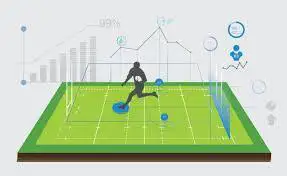 Image: Wikipedia
Collected data is analyzed through the application of suitable analytical techniques in data analytics, where players’ fitness levels are tracked and assessed using wearable technology, and their performance is evaluated through data integration, utilizing real-time data from wearable sensors embedded in players’ jerseys for analytics and decision-making enhancement, with comprehensive results from any data model being extracted and presented through information systems in real-time sports data analytics that are distributed over cloud-based platforms or network clusters.
A solid understanding of object-oriented programming and database management is necessary for sports data analysts to effectively utilize these systems with relevant sports data. Several areas are witnessing rapid adoption of data-driven sports analytics, including:
Forecasting and handling player injuries:
Any sports discipline will include player injuries. Sports analytics, along with wearable devices, allow teams to forecast and handle player injuries by monitoring metrics such as their present mechanical load and body mass index (BMI). With suitable data-enabled assessments, team management can spot players who are prone to injuries and take action by lowering their workload or by putting them in a player conditioning camp to increase their level of fitness.
Valuation of the player:
Big sports teams are spending enough money on the best and most talented players. Considering the spending, they must have the data of relevant players to support their payout. Not only richer sports teams, but even upcoming and smaller teams are using analytics in sports to invest in the correct players.
Game Strategies:
Modern on-field sports analytics aim to enhance the performance of players, teams, and game strategies. A notable example is the Japanese artistic gymnastics team, which used real-time analytics to win the Olympic gold medal in 2020.
Decoding the numbers:
At the heart of sports analytics is the process of decoding the numbers-transforming raw data into actionable insights. This process encompasses the collection, analysis, and interpretation of data, which can range from player biometrics to team performance statistics.
The goal is to optimize performance, whether by enhancing an athlete's physical condition, refining tactical approaches, or preventing injuries (mitigating injuries-more on that soon). This journey begins with the meticulous collection of data through various means such as wearable technology, video analysis, and performance tracking systems.
The analysis then dives deep into this data, employing statistical models, machine learning algorithms, and predictive analytics to uncover patterns and trends that may not be immediately apparent. Finally, the interpretation of this data translates complex metrics into straightforward, actionable strategies that coaches, players, and other stakeholders can leverage.
Sports analytics thus serves as a bridge between the raw potential of data and the tangible improvement of sports performance. For individual sports, such as athletics or swimming, metrics might focus on time, biomechanical efficiency, and technical precision. In cricket, bowling speed, batting averages, and fielding efficiency are critical, while in rugby tackle success rates, ruck contributions, and meters gained are pivotal.
Differences in sports also necessitate unique metrics; for motorsport, data points like lap times, tire degradation, and fuel efficiency are vital. In contrast, ice hockey analytics may focus on puck possession, shot blocking, and goalie save percentages.
 Also Read | Top 10 Nike Sports Shoes for Superior Performance and Comfort
Injury Prevention and Sports Analytics:
 Image: Wikipedia
In the competitive sports arena, injury prevention is a critical concern, as the fine line between peak performance and overexertion often leads to physical setbacks.
While no data or technology can completely prevent injuries, sports analytics plays a crucial role in reducing the risks associated with athletic activities. By leveraging data, coaches and medical teams can implement strategies that protect athletes' well-being without compromising their performance.
The Role of Data in Mitigating Injury Risks:
 Image: Wikipedia
The core of sports analytics in injury prevention is its ability to identify patterns, stressors, and risk factors in athletes' training and competition. Through detailed analysis of workload, movement mechanics, and physiological responses, sports analytics provides a proactive framework for managing athletes' health. This strategic use of data helps tailor recovery protocols, adjust training intensities, and ultimately reduce the occurrence of injuries.
Protecting athlete performance:
 Image: Wikipedia
The strategic use of data to protect athlete performance goes beyond the identification of injury patterns; it encompasses the holistic management of workload and the enhancement of athlete recovery processes.
Through the meticulous analysis of performance data, sports analytics tools enable the early detection of potential overuse injuries, allowing for timely intervention. This approach aids in balancing training intensity with adequate recovery time, ensuring athletes maintain optimal health and performance levels.
The ability to quantify and analyze workload and recovery metrics provides a clear framework for developing individualized training and recovery plans. By prioritizing athlete health through data-driven insights, sports organizations can foster a culture of sustainable performance and long-term athlete development.
While technology cannot eliminate the inherent risks of sports, the application of sports analytics in injury prevention represents a significant advancement in managing these challenges. It epitomizes the synergy between data science and sports medicine, opening new avenues for enhancing athlete care and performance sustainability.
 Read More | Exploring the Top 10 Best MMA Gloves: Gear Up and Get Ready