

14 April 2026, AU: Managing volunteer growth and stubble, and being aware of soil health and pathogen loads, helps growers maximise returns on sowing opportunities.
Breaking the green bridge is a critical step in reducing pest and disease risk before sowing begins. Green bridge control protects crops by removing the plants that allow pests and diseases to survive, multiply and carry over between cropping seasons. If left unmanaged, volunteer plants and weeds not only increase disease and insect pressure but also compete for soil moisture and nutrients needed to establish crops.
Stubble management plays an equally important role in balancing productivity and biosecurity. While retained stubble delivers significant soil health benefits, including improved moisture retention and reduced erosion, it can also harbour pests and stubble-borne diseases if not carefully managed.
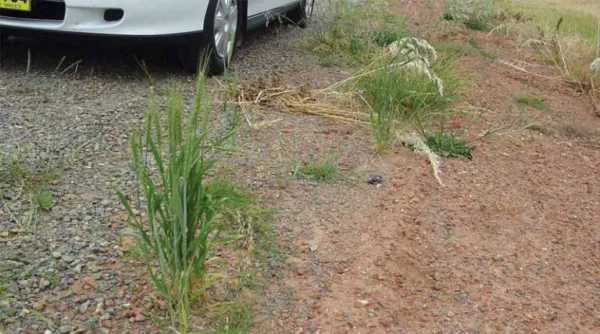
A green bridge refers to any plant material that grows between cropping seasons and acts as a habitat for pests and diseases during the fallow period. These include volunteer crops (plants that germinate unintentionally) and weeds that allow pathogens and insects to survive and multiply until the next crop is sown. Green bridges can occur within cropping paddocks, along fencelines and roadsides and beyond paddock boundaries.
Controlling the green bridge removes the green host plants that allow pests and diseases to carry over from one season to the next. Diseases such as stem, stripe and leaf rust and a range of viruses can persist, while insect pests such as aphids, slugs and snails are provided with a food source and shelter during the fallow period.
The green bridge also removes valuable soil moisture and nutrients that would otherwise be available to the next crop. Research has identified that yield losses between 0.5 to 1.0 t/ha occur in cereals where the green bridge remains uncontrolled ahead of sowing. Researchers in Western Australia and New South Wales have also identified that removing weeds early preserves between 50 to 75 mm of soil moisture.
Effective green bridge control requires all volunteer plants to be completely dead at least 4 weeks before sowing. Control methods include herbicide application, ensuring products are used according to label directions and only within property boundaries, or tillage, noting that cultivation may also reduce stored soil moisture. Green bridge management is most effective when approached as a community effort.
Even if the green bridge is not present within your own paddocks, pests and diseases can still build up nearby and pose a risk to your crop. Coordinating control efforts with neighbours can significantly reduce regional pest and disease pressure.
Unlike the green bridge, crop stubble left standing in the field after harvest can provide valuable benefits. Retaining crop stubble improves soil moisture retention, increases build-up of organic carbon, reduces topsoil erosion, and is particularly useful in dry regions or during dry seasons.
However, stubble retention requires careful management to ensure these benefits are realised. Decisions around how much stubble to retain, which crop or variety to plant next, and potential impacts on sowing and harvest efficiency all need to be considered. Understanding the pest and pathogen load carried in stubble and crop crowns is also critical for effective planning.
Retained stubble can increase shelter for pests like snails, slugs and earwigs. It can also be a host of stubble-borne diseases.
In cereals, crown rot survives in crop residues and stubble and can be redistributed across paddocks during harvest, particularly when followed by a low-harvested break crop such as chickpeas. While traditionally considered a northern issue, crown rot is recognised for causing yield loss nationally. Field trials are currently underway in each of the state nodes of the GRDC 'Soilborne Disease Initiative'.
Stubble-borne foliar diseases also remain a concern. In wheat, Septoria tritici blotch continues to pose a risk. In barley, scald (Rhynchosporium secalis) increased in prevalence across Western Australia in 2025, including in varieties previously considered resistant. Net form and spot form net blotch (NFNB, SFNB) can survive on infected barley seed and stubble, as well as on volunteer plants within green bridges. Researchers detected NFNB samples resistant to all 3 major fungicide groups in 2025.
Sowing canola back into canola stubble also increases blackleg.
Active green bridge control combined with proactive stubble management helps reduce the risk of both endemic and exotic pests and diseases. Managing retained stubble can reduce shelter for slugs and snails, while breaking the green bridge disrupts disease survival between seasons, strengthening on-farm biosecurity preparedness.
Accurate, paddock-specific information on soil and stubble-borne pathogens can be obtained through the PREDICTA® B DNA-based soil testing service, available through the South Australian Research and Development Institute.
Accredited agronomists can collect and submit soil samples for testing. The lab processes soil samples weekly during the critical period from February to June and less regularly the rest of the year. A range of pathogens are tested for, including nematodes, crown rot, Rhizoctonia and more, and the results provide information on the soil's pathogen composition and load ahead of crop selection and sowing. For more information, visit the Department of Primary Industries and Regions of South Australia website.
Stubble testing is also available through 2 GRDC investments led by the NSW Department of Primary Industries and Regional Development 'Disease surveillance and related diagnostics for the Australian grains industry' and 'NSW seasonal status of pests and diseases delivered to growers'.
Mulching, baling or grazing reduces heavy stubble loads after harvest, which also helps reduce spore load by bringing the stubble into greater contact with the soil. Burning can also be used as a last resort since it reduces soil carbon, water and nutrient capacity years after occurrence.
Crop rotation also plays a key role in reducing inoculum levels over time while delivering broader soil health benefits. The presence of SFNB in barley stubble can decline by 60 to 80% over the 2 years following the harvest when host plants are effectively managed. Further, selecting resistant varieties not only limits yield loss and disease impact, but also results in stubble with lower infection potential.
Soil health data across your property can help make informed decisions around green bridge control, stubble management, crop rotation and variety selection, helping ensure the best possible start to the sowing season.
If you or your agronomist notice anything unusual, such as a new pest or disease on varieties thought to be resistant, contact your state agriculture department or call the Exotic Plant Pest Hotline on 1800 084 881.
Isoxalanam: New Isoxazoline Insecticide Gets Provisional ISO Common Name Approval
Global Agriculture is an independent international media platform covering agri-business, policy, technology, and sustainability. For editorial collaborations, thought leadership, and strategic communications, write to [email protected]
09 April 2026, Mumbai: Leading tractor manufacturers, including Mahindra Tractors and Swaraj Tractors, have announced price increases across their domestic tractor ranges in April
15 April 2026, Africa: Across the Global South, agriculture is emerging as a shared challenge that demands scalable solutions, stronger partnerships,
10 April 2026, Belgium: The Gates Foundation has awarded a $7 million grant to Rainbow Crops to support the development of crop varieties that can