




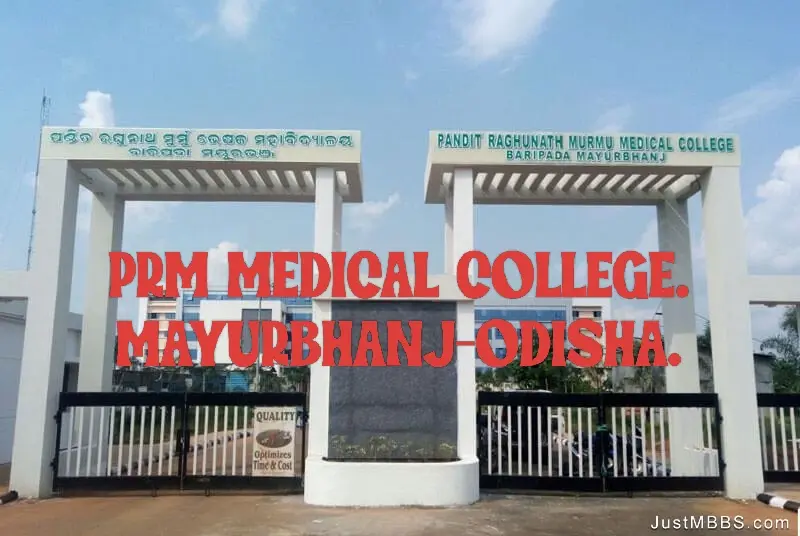

Death Zone’: Mayurbhanj’s PRM Medical College & DHH paralyzed by doctor, staff crunch; three-state lifeline now a healthcare crisis hotspot.
Mayurbhanj, Odisha: Additional District Medical Officer Bijay Kumar Das says, "1,024 doctor posts are sanctioned for the entire district, around 490 doctors are currently posted, and nearly 500 posts are vacant... Over 200 nursing posts, 40 pharmacy officer positions, and approximately 20 laboratory technician slots are lying empty.

Rasgobindapur block in Mayurbhanj district, Odisha, witnessed a major health emergency on Monday when nearly 150 tribal students from Kakabandha Ashram School hostel were rushed to hospital after consuming substandard food.
The children suffered severe diarrhoea and vomiting, forcing their admission to the local Community Health Centre (CHC). What began as a case of suspected food poisoning quickly escalated into a serious situation due to acute shortages of medical staff.
According to eyewitnesses and local officials, the Rasgobindapur CHC lacked sufficient doctors and paramedical personnel to handle the sudden influx of patients. Many positions sanctioned for the centre remain vacant, leaving the admitted students without timely treatment. *The Additional District Medical Officer* (ADMO) of Mayurbhanj confirmed that the district is grappling with a massive manpower crisis in its health infrastructure. While 1,024 doctor posts are sanctioned for the entire district, only around 490 doctors are currently posted, leaving nearly 500 vacancies. The situation is equally grim in support services: over 200 nursing posts, 40 pharmacy officer positions, and approximately 20 laboratory technician slots are lying empty. These chronic shortages have repeatedly hampered emergency care across the district.
The problem extends beyond the CHC level to the district’s only tertiary care facility, Pandit Raghunath Murmu (PRM) Medical College and Hospital. Despite being a key referral centre, PRM continues to suffer from severe staff deficiencies. Several critical departments, including cardiology, neurology, gastroenterology, and others, are functioning without adequate professors, assistant professors, and specialist doctors. Paramedical staff and even mechanical technicians required for equipment maintenance are also in short supply. As a result, many serious cases are routinely referred to SCB Medical College in Cuttack, causing delays that often prove fatal for patients from remote tribal areas.
Local residents and affected families have openly criticised the state government, stating that only full filling of all vacant posts can bring meaningful improvement in healthcare delivery. “If the government does not fill these vacancies soon, people here will continue to suffer”
The crisis has been compounded by a series of recent tragic incidents that highlight the deteriorating condition of the district’s health system. In one such case reported recently, a pregnant woman died during surgery at a government facility. Shockingly, the baby also succumbed despite medical intervention; stitches had reportedly been placed on the infant’s neck during the procedure. Health activists point out that the death ratio in Mayurbhanj is steadily rising, with many preventable deaths occurring due to delayed or inadequate treatment.
Tribal-dominated Mayurbhanj, home to large populations of indigenous communities, relies heavily on government health services. The repeated failure to address staffing gaps has left thousands of patients, especially women, children, and the elderly, vulnerable. Officials have promised to look into the latest food-poisoning incident and provide necessary support, but locals remain sceptical without concrete action on recruitment.
This incident has once again spotlighted the urgent need for the Odisha government to prioritise filling doctor, nursing, and paramedical vacancies in backward districts. Until then, stories of suffering like the one unfolding in Rasgobindapur’s Ashram school hostel are likely to continue.