
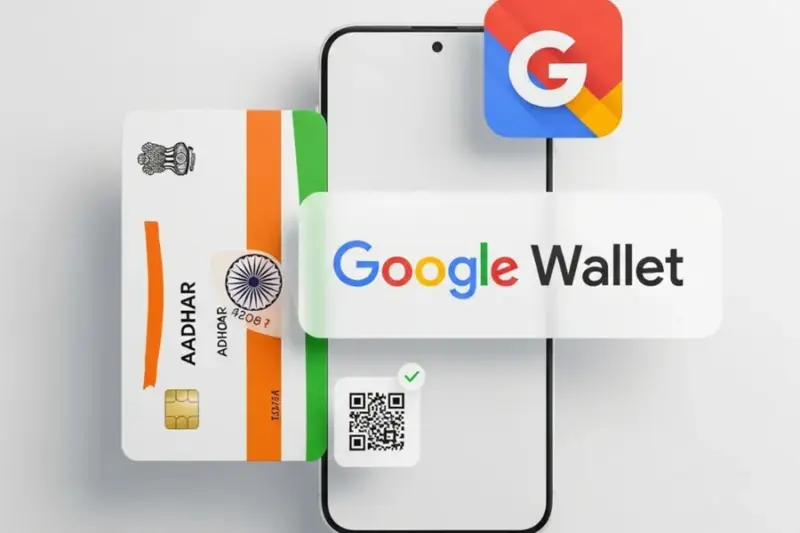

Google has introduced a major update for users in India, allowing Aadhaar Verifiable Credentials to be stored directly within Google Wallet.
The move signals a clear shift towards digital-first identity verification, reducing reliance on physical documents.
How the Aadhaar integration works
Developed in partnership with the Unique Identification Authority of India (UIDAI), the feature enables users to store a digitally signed version of their Aadhaar credentials securely on their devices.
Unlike simply uploading a photo of an Aadhaar card, this system is built on global standards such as ISO/IEC 18013-5 and the W3C Digital Credentials API, ensuring authenticity and security.
Selective disclosure: A privacy-focused feature
A key highlight of the rollout is "selective disclosure". This allows users to share only the exact information needed for a specific transaction.
For instance, someone buying a cinema ticket can confirm their age without revealing their Aadhaar number or other personal details. This approach directly addresses concerns around excessive data sharing and privacy risks.
Early partners join the rollout
Google has confirmed its first set of Indian partners supporting Aadhaar verification through Wallet. These include:
- PVR INOX for cinema-based age checks and rewards
- BharatMatrimony for verified user profiles
- Atlys for visa application auto-fill services
- Mygate for visitor and staff verification
- Snabbit for service provider authentication
This partner ecosystem suggests that Aadhaar-based digital verification could soon expand across multiple everyday services.
Built on recent Aadhaar upgrades
The development builds on earlier updates from UIDAI. In January, the Aadhaar mobile app was redesigned with features such as face authentication, biometric lock controls, and QR-based credential sharing.
At that stage, UIDAI had already indicated plans to integrate Aadhaar with major digital wallets, signalling this rollout well in advance.
Policy backdrop and industry response
The timing is notable. The update comes shortly after India's Ministry of Electronics and Information Technology withdrew a proposal that would have required smartphone manufacturers to pre-install the Aadhaar app.
The proposal faced pushback from global tech companies over concerns about user choice and platform neutrality, making wallet-based integration a more flexible alternative.
What this means for digital identity in India
This integration positions Aadhaar as a more privacy-conscious and adaptable digital identity tool. By reducing the need to share full identity details, it helps address long-standing concerns around data misuse while improving convenience.
Google's move is also part of a wider global push, with similar digital ID features being expanded to countries like Singapore, Taiwan and Brazil.
For India, the shift points towards a future where secure, device-based credentials could gradually replace physical ID documents in everyday scenarios such as travel, financial services, and access control.