




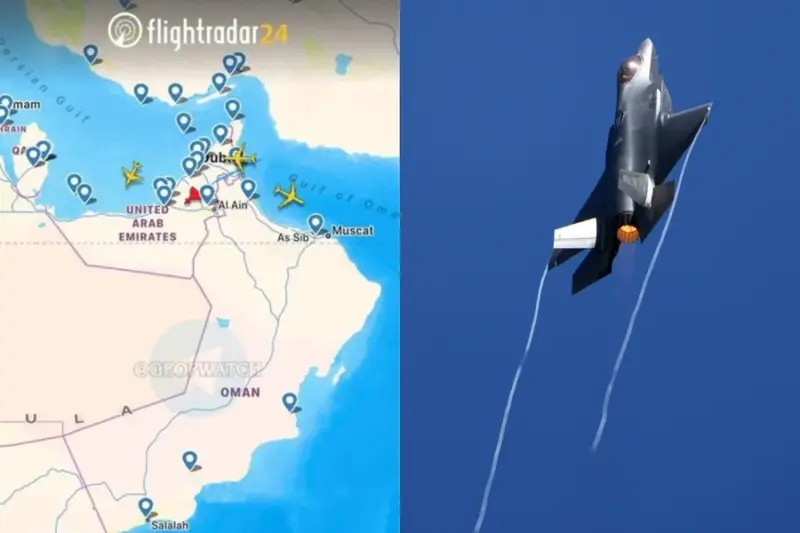

A Lockheed Martin Lockheed Martin F-35 Lightning II operated by the United States Air Force reportedly declared an in-flight emergency while flying near the Strait of Hormuz during heightened regional tensions linked to the ongoing Iran conflict.
Flight tracking data showed the aircraft transmitting squawk code 7700, the internationally recognised emergency signal used by pilots to indicate a serious onboard issue. The code itself does not specify the nature of the emergency and can be triggered by mechanical failures, system malfunctions, medical incidents or other operational problems.
The fighter jet was reportedly flying from the Gulf of Oman area before altering its course toward the United Arab Emirates.
Iranian media claims jet was shot down
Iranian state-linked and semi-official media outlets quickly claimed the American stealth fighter had been shot down during combat operations linked to the ongoing regional conflict.
However, no wreckage, satellite imagery, pilot details or independent confirmation has emerged to support those claims.
Neither the United States Air Force nor US Central Command has issued any official statement confirming hostile action against the aircraft.
Military observers noted that the aircraft continuing toward UAE airspace after declaring the emergency could suggest a technical or operational issue rather than combat damage, although the exact cause remains unknown.
Flight tracking shows diversion toward UAE
According to publicly available flight-tracking information, the aircraft lost transponder visibility after transmitting the emergency signal and reportedly changed direction toward the UAE while descending.
The aircraft's original departure location and intended destination have not been officially disclosed.
The incident comes amid rapidly escalating military and maritime tensions around the Strait of Hormuz, one of the world's most strategically important oil shipping routes.
The reported emergency follows days of heightened confrontation involving the United States, Iran and Gulf states.
Recent reports said American forces targeted Iranian-linked oil tankers accused of violating naval restrictions, while Iran warned that attacks on its commercial vessels would trigger retaliation against US military assets in the region.
At the same time, multiple drone incidents and maritime attacks have been reported near Gulf shipping lanes, increasing fears of wider instability across West Asia.
Iran has also pushed for greater control and economic leverage over shipping routes through the Strait of Hormuz, which handles a significant portion of global oil exports.
Iran submits response to US peace proposal
The military incident also unfolded as Iran reportedly submitted its latest response to a United States-backed peace proposal through Pakistani mediators.
According to Iranian state media, the proposed framework focuses on ending regional hostilities, reopening shipping routes and discussing sanctions relief.
Reports indicate Tehran's draft proposal includes demands for the lifting of sanctions, withdrawal of US military forces from parts of the region and an end to hostilities involving Iranian-backed groups and allies.
The United States has not publicly responded to the reported proposal details.
Why squawk 7700 matters
In aviation, squawk code 7700 is a universal emergency transponder signal used by civilian and military aircraft worldwide.
The code alerts air traffic control and nearby aircraft that the flight is facing a serious situation requiring immediate attention.
Experts caution that the signal alone does not confirm combat activity or hostile engagement, despite widespread speculation online following the incident.
With no official confirmation from Washington and no independently verified evidence of a shoot-down, the exact circumstances surrounding the F-35 emergency remain unclear.