
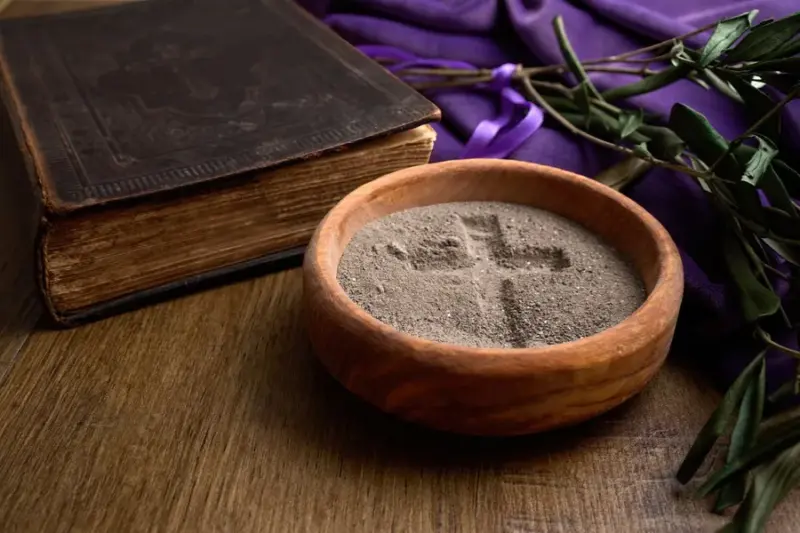

Ash Wednesday in 2026 will fall on 18 February, marking the start of Lent for millions of Christians around the world. The date shifts each year because it is tied to Easter, which moves according to the lunar calendar.
In 2026, Easter Sunday will be observed on 5 April, placing Ash Wednesday earlier in February.
Ash Wednesday begins a 40-day period of prayer, fasting and reflection leading up to Easter. Although the season spans 46 calendar days, only 40 are counted as fasting days, with Sundays excluded as traditional feast days. The day is known for the ritual marking of ashes on the forehead, accompanied by the words: "Remember that you are dust, and to dust you shall return," or "Repent and believe the Gospel."
Key dates for Lent and Easter 2026
- Ash Wednesday: 18 February 2026
- Good Friday: 3 April 2026
- Easter Sunday: 5 April 2026
Easter arrives earlier than usual in 2026 because it is set according to an ancient rule: the feast falls on the first Sunday after the first full moon occurring on or after 21 March. The timing of the Paschal Full Moon next year places Easter on the first weekend of April, pushing Lent's start into mid-February.
Why Ash Wednesday matters
Ash Wednesday opens the Lenten season, a time set aside for repentance, spiritual renewal and preparation for Easter. During services, worshippers receive a cross of ash on their forehead as a sign of humility and an invitation to reflect on human frailty.
The ashes symbolise:
- the reality of mortality,
- repentance for wrongdoings, and
- a renewed commitment to spiritual growth.
In Catholic tradition, the day carries particular emphasis on fasting and abstinence, though the meaning resonates across many Christian groups.
Who can receive Ashes?
While commonly associated with the Roman Catholic Church, Ash Wednesday is observed in various Christian denominations, including Anglican, Lutheran and Methodist communities.
Receiving ashes is not restricted to Catholics; anyone-even those who are not baptised-may usually come forward as an act of reflection. It is not considered a sacrament, but a devotional practice.
The origins of Lent
The 40-day period has deep historical roots. The Council of Nicaea in A.D. 325 formalised the timeframe, drawing on the biblical significance of the number 40, particularly Jesus's 40 days of fasting in the wilderness. Centuries later, Pope Gregory I set the official beginning of Lent as 46 days before Easter, establishing Ash Wednesday as the starting point.
Lenten customs vary, but many Catholics fast by eating one full meal and two smaller meals, avoiding meat on Fridays, and practising forms of self-denial. Other Christians may choose to "give something up" or take on acts of service or prayer. The intention, as Pope Benedict XVI once described, is "interior renewal" through "prayer, fasting and almsgiving."
Lent in a wider context
Not all Christian groups observe Lent, and some view it through different theological lenses. Baptists and many Evangelicals, for example, do not adhere to Lenten rituals as the season itself is not mentioned in Scripture.
Other faiths also observe fasting traditions around this time of year. Muslims participate in Ramadan, Jews observe dietary restrictions during Passover, and many people, religious or not, use early spring as a time to reset habits.
Health experts advise staying hydrated while fasting and preparing with foods rich in fibre, protein and healthy fats. Anyone uncertain about fasting is encouraged to consult a doctor and consider alternative spiritual practices if needed.
Earliest and latest possible dates
Ash Wednesday can occur as early as 4 February or as late as 10 March, depending entirely on the date of Easter. In 2026, its placement on 18 February falls toward the earlier side of the spectrum.
What is the Holy Week?
Holy Week, observed in the week leading up to Easter, is considered the most sacred period of the Christian liturgical calendar. It is a time for prayer, reflection and recommitment to faith, marked by solemn observances across the globe.
- Palm Sunday (March 29): Palm Sunday commemorates Jesus' triumphant entry into Jerusalem and is celebrated worldwide. Many churches hold processions and distribute blessed palm leaves, which symbolise goodness and victory. These palms are often crafted into crosses and kept as sacramentals by the faithful.
- Holy Thursday (April 2): Holy Thursday marks the Last Supper, when Jesus offered himself as the Passover sacrifice. The day is observed with a Mass that includes Communion, the blessing of the Oil of Chrism, the stripping of the altar, and the washing of feet, in remembrance of Jesus' act of humility towards his disciples. It also honours the institution of the priesthood and the central role of the Eucharist in Christian worship.
- Good Friday (April 3): Good Friday is a solemn day of fasting and abstinence, commemorating the crucifixion of Jesus. Christians observe the day through prayer, reflection, and often by refraining from eating meat, meditating on the significance of his sacrifice.
- Holy Saturday (April 4): Holy Saturday marks the conclusion of Lent and is a time of mourning for Jesus' death while preparing for his resurrection. Many communities celebrate the Easter Vigil after sunset, a liturgical tradition that symbolises the anticipation and celebration of Christ's rising.
- Easter Sunday (April 5): Easter Sunday continues the celebration of Jesus' resurrection and is a central event in the Christian calendar. Traditions include early morning and late-night services, baking hot cross buns, and decorating or filling eggs, all symbolic of Christ's crucifixion and resurrection. Easter is determined by the lunar calendar, occurring on the first Sunday after the Paschal Full Moon, which falls on or after the Spring equinox. In 2026, the equinox occurs on March 20, setting Easter Sunday on April 5.