

Islamabad: A recent analysis published by The Times of Israel has scrutinised Pakistan's positioning in current global tensions, particularly involving the United States, Israel and Iran.
The report suggests that Pakistan's military establishment has historically operated in ways that extend beyond the role of a traditional national army.
Journalist Hasan Mujtaba, cited in the report, described the military as often functioning with significant autonomy, referencing a widely used remark that in Pakistan, the military holds dominant influence over state affairs.
'Mercenary force' comparison and dual strategy
The report argues that Pakistan's military has frequently adopted a "double player" approach in global geopolitics, shifting alliances based on strategic interests. It characterises this behaviour as resembling that of a "mercenary force", suggesting that its actions have not always aligned with consistent national policy.
This assessment comes as Pakistan reportedly attempts to position itself as a mediator in tensions involving the United States, Israel and Iran.
Mediation role under scrutiny
According to the report, Pakistan's claim to act as a mediator is complicated by its historical actions. It references allegations from past decades, including claims that under General Mirza Aslam Baig, Pakistan shared nuclear-related knowledge with Iran.
The analysis also points to Pakistan's complex relationship with Iran, noting its interactions with both Sunni groups in Iran's Balochistan region and the Shia-led government in Tehran.
Internal tensions and security concerns
The report highlights internal dynamics within Pakistan, including sectarian tensions and reactions to international developments. It notes that some Shia organisations have been linked to protests in response to US-Israel tensions involving Iran.
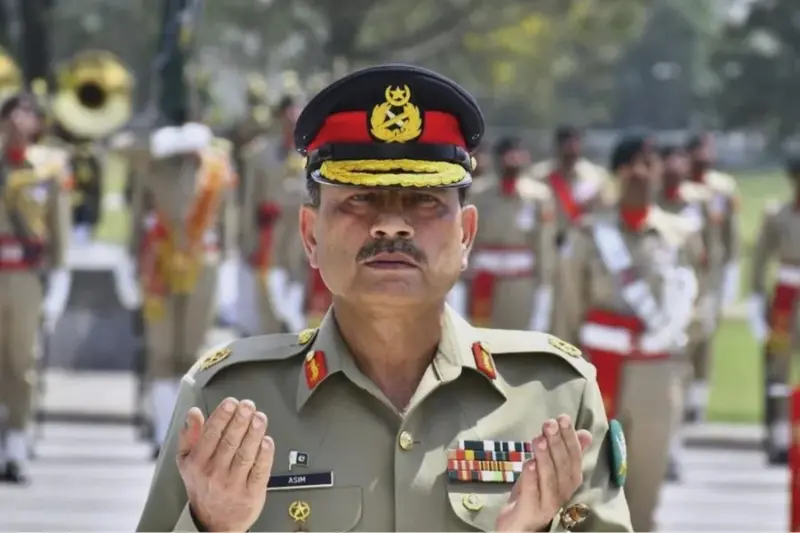
Asim Munir, Pakistan's Army chief, is cited as warning against violent responses and urging restraint among religious groups.
The analysis also raises concerns about representation within the military, suggesting that perceived imbalances have contributed to underlying dissatisfaction.
Historical context and global alliances
The article places Pakistan's current stance within a broader historical framework, referencing events such as the Korean War and the Bangladesh Liberation War. It argues that Pakistan has historically leveraged global conflicts while maintaining strategic ties with major powers, including the United States and China.
The report also highlights Pakistan's long-standing relationship with China, describing it as a key pillar of its foreign policy and defence cooperation.
Past controversies and credibility questions
Further, the analysis revisits controversies involving Pakistan's role in global security issues, including the presence of Osama bin Laden in Abbottabad and allegations of a "double game" during the War on Terror under former President Pervez Musharraf.
It also references incidents such as the killing of journalist Daniel Pearl and the attack on activist Malala Yousafzai, citing them as factors that have influenced global perceptions of Pakistan's internal security environment.
Broader geopolitical implications
The report concludes that Pakistan's attempt to present itself as a neutral mediator may face credibility challenges unless it addresses these historical and strategic contradictions. It also warns that any instability in Iran could have spillover effects in Pakistan's Balochistan region, which has long experienced security challenges.
Overall, the analysis presents Pakistan's geopolitical stance as complex and evolving, shaped by a mix of historical alliances, internal dynamics and shifting regional priorities.
(With IANS inputs)