

It is said that Left parties in India are nurtured and more popular among Malayalis and Bengalis. One can find these two ethnic community members in leadership of the Left politics in India even today.
The Film Society movement which spread the new film culture of India has also a deep imprint of these two ethnic communities, going by their leadership role in the film society movement across the metros of India. Even today, in Kolkata, Raman Raju, former Secretary of Federation of Film Societies of India (FFSI) and film writer leads the pack heading the Chidanada Dasgupta foundation. Curiously enough, Bengali presence is not that visible in cities other than Kolkata in film society movement, barring some rare exceptions, though they held onto FFSI leadership for three decades.
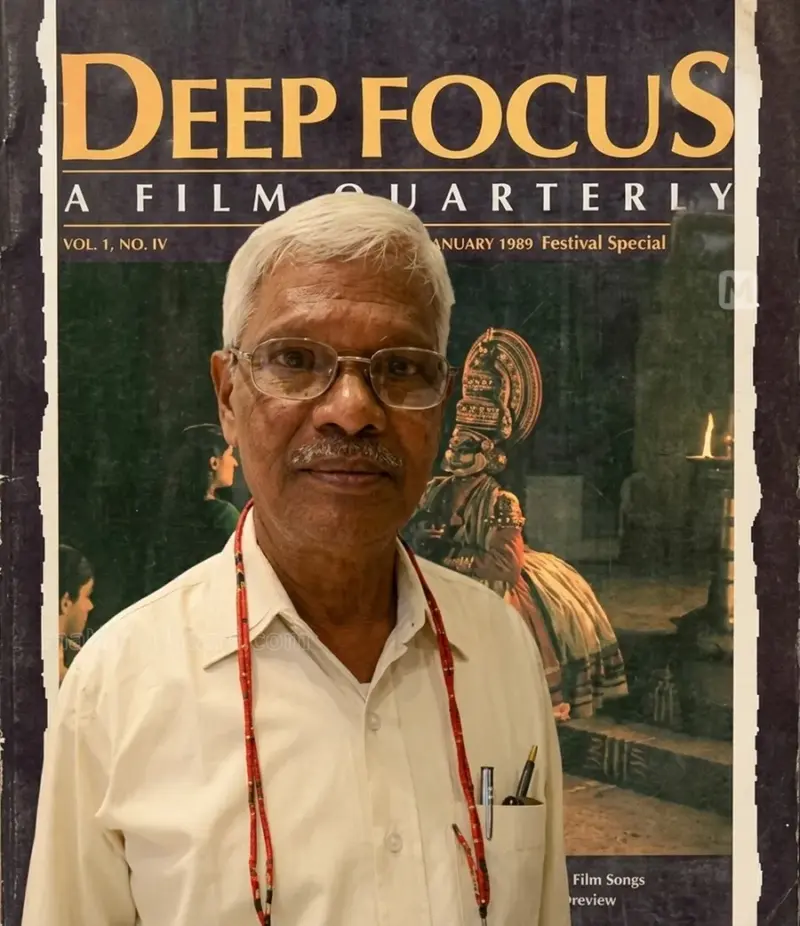
The recent death of George Kutty, long time secretary of Bangalore film society and founding Editor of one of the highly rated film magazines, Deep Focus, brought forth the leadership role of a generation of Malayalis across Indian metros in the new film culture.
The Malayalis who held their leadership role in film society movement across India, included late Ammu Swaminathan, one of the founding President of Madras film Society, late John Joshua, Secretary of Delhi Film Society, George Kutty AL, Secretary of Bangalore Film Society and Raman Raju , who was Secretary of FFSI in Kolkata. Raju traces his family roots to Kerala, apart from his ancestral family in Kallidaikuruchi, Tamil Nadu.
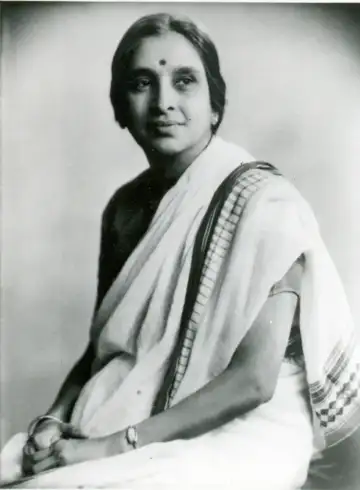
While searching for history of Indian film society movement and formation of new film culture in India for my book, I came across Ammu Swaminathan, who was one of the founders of Madras Film Society and a Rajya Sabha member from Tamil Nadu in 1950s. She is the grandmother of Mallika Sarabahai and mother of Mrinalini Sarabhai, two of the nationally and internationally known danseuse. Ammu Swaminathan is of Palakkad origin and sister of Captain Lakshmi Sahgal of Indian National Army of Subash Chandra Bose, the freedom fighter. Ammu Swamianthan was the Vice President of FFSI along with Indira Gandhi in 1959 when it was formed. She oversaw the growth of film societies in South India, which was rooted in Kerala, Andhra, Karnataka and Tamil Nadu.
George Kutty, who died last week, was also among the leaders of the film society movement in Bangalore from the 1970s. He was working with the NGO called SIEDS - Society for Informal Education and Development Studies. Suchitra film society of the city pioneered by engineers of public sector organisation of the city became an elite club and Kutty and friends steered the film society movement in a Leftist way showcasing films of Latin American from early 80s. Kutty's high as Secretary of Bangalore Film Society was a retrospective of Andrei Tarkovsky in 1986, before the Soviet filmmaker became a cult figure in India. "It was held in Chowdiah Memorial Hall to a packed audience. He had enormous energy to contact companies and collect advertisements which helped in raising the funds for the retrospective," Babu Subramaniam, his colleague and fellow founding editor of magazine Deep Focus, with Kutty recollected.
"MK Raghavendra, film writer, late MU Jayadev and I used to meet George Kutty in Bangalore Film Society (BFS) and Max Mueller Bhavan screenings in the mid-80s. MK Raghavendra was working in State Bank of Mysore. MU Jayadev was teaching at the English dept of Bangalore University. I was with BEL R&D. Kutty was the secretary of BFS," Subramaniam described the origins of Deep Focus magazine which ran up to 2013.
Raghavendra recollected that he indeed suggested the name Deep Focus and they all contributed to the magazine. Though Kutty was not much of a writer, as an Editor he managed the organization and ensured a high production quality of the quarterly magazine. Kutty, being a radical, was always more keen on Latin American films than the normal fare of European films, Raghavendra remembered. They had an office in the by lanes of city's MG road.
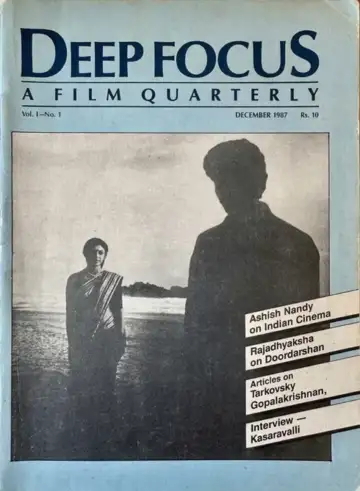
"Sometime in late 1987 Kutty told us that he wanted to start a quarterly film journal. We were delighted as it'll give a platform for film critics including us. Our first meeting was at the open air restaurant attached to the erstwhile Hotel Shyamprakash at the Infantry road. MK Raghavendra coined the title Deep Focus. The first issue came out in December 1987 with George Kutty AL as the editor. MK Raghavendra, MU Jayadev and I were the co-founders of the journal along with Kutty.The inaugural issue had a still from Adoor's 'Anantaram' (1987) on the cover. MK Raghavendra wrote an article on Adoor's films titled "Urbanization and Rootlessness: Adoor's Drifters in perspective". I wrote an article on Tarkovsky titled 'Filmmaker as Prophet: The Cinema of Andrei Tarkovsky". MU Jayadev and I published a long and comprehensive interview with Girish Kasaravalli. Raghavendra and I also wrote film reviews and book reviews. What immediately stood out was Kutty's penchant for design; from the beginning he was determined to ensure the journal was as visually sophisticated as it was intellectually rigorous. Lloyd Robert and Gerard Sequeira did the design and layout. Later Sequeira took charge of the design and layout fully", Babu Subramaniam recounted the initial days of Deep Focus magazine.
Raghavendra remembers a thirty odd page interview of filmmaker late G Aravindan, published by Deep Focus. "It may be the longest interview of Aravindan, known for his economy of spoken words", he quipped.
Although it was called a film quarterly, Deep Focus had only 2 or 3 issues per year due to funding constraints. During IFFI '92, Bangalore, Deep Focus brought out supplements: "Festival Focus" which previewed the festival. "Festival Flash" reviewed the films at the IFFI '92. By 2008 "Deep Focus" stopped coming out due to the difficulty in raising funds. Later in 2012 it was launched as "Deep Focus Cinema" but even that closed down eventually. Kutty was a Regional council member of the Federation of Film Societies of India for several years. Being an old school person of print media, Kutty never opted for a digital edition of Deep Focus, in a city which is the digital capital of India.
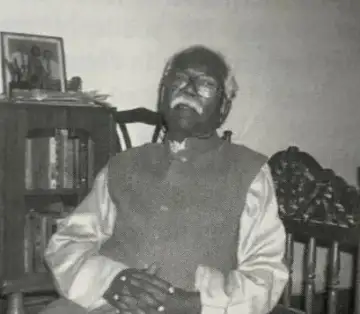
Late John Joshua, who used to work in Delhi in the Ministry of Education, joined Delhi Film Society (DFS) from its inception in the mid-1950s and rose to become its Secretary and also Joint Secretary of Northern region FFSI. "Joshua is the one who gave me membership of DFS when I became a resident of Delhi in early 1970s and my introduction to serious films is through DFS", writer Paul Zachariah recalled.
Delhi Malayali Film Society, Secretary of 1980s, U Radhakrishnan who interacted with Joshua those days said he was a confidant of Vijaya Mulay, the leading lady of Indian Film Society movement. In an interview to Radhakrishnan on the occasion of 50 years of FFSI in 2009, Joshua recalled DFS had to impose a limit of 250 members to limit the rush of new members. Even Prime Minister Indira Gandhi's son Rajiv Gandhi (then a pilot) had to wait for his membership through a screening and interview. Criticism of the limit forced DFS to increase the membership to 500, but it led to the crowd of uncensored film fans crowding the society changing its character from film connoisseurs to a motley group of voyeurs.
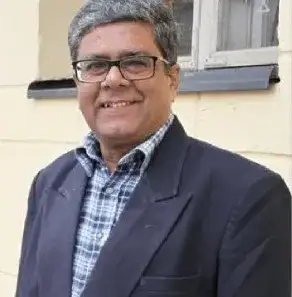
Raman Raju, was an Indian programming staffer of Max Mueller Bhavan of Kolkata, which screened the best of German films in 80s and 90s. He was also considered close to FFSI life long President Satyajit Ray, the pioneer of Indian film society movement and meaningful films. For a brief period, Raju was the Secretary of FFSI central office based in Kolkata. He now runs the Chidanda Dasgupta foundation and along with Aparna Sen, the daughter and filmmaker of the veteran film writer. He is active with the Kolkata International Film Festival as a film expert in various selection committees and also in the conduct of the annual festival which is one of the best organised in India now.
(VK Cherian is author of the book on history of Indian film society movement, "Celluloid to Digital: India's Film Society Movement")