
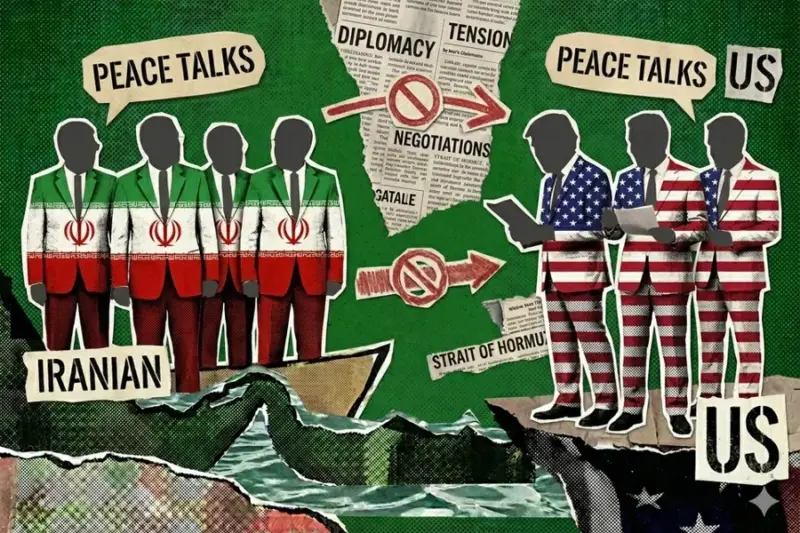

Tehran: Iranian Deputy Foreign Minister Saeed Khatibzadeh stated on Saturday that no schedule has been established for a subsequent round of diplomatic negotiations with the United States, citing the necessity of first establishing a mutual "framework" for the talks.
The announcement came during the Antalya Diplomacy Forum, where Khatibzadeh informed reporters that a definitive date remains elusive while both nations struggle to reach a consensus on the scope of the discussions.
"Until we agree on the framework, we cannot set a date," Khatibzadeh said. He noted that the primary focus of the current diplomatic effort is "finalising a framework of understanding" to ensure future sessions are productive.
Obstacles to Direct Dialogue
The deputy minister emphasised that Tehran is currently unprepared to engage in face-to-face meetings due to what he described as Washington's "maximalist" stance on critical issues, including Iran's nuclear program and the transfer of enriched materials.
"We are still not there yet to move on to an actual meeting because there are issues that the Americans have not yet abandoned their maximalist position," he explained.
Khatibzadeh warned that the Iranian government is wary of entering negotiations that lack a solid foundation, stating, "We don't want to enter into any negotiation or meeting that is destined to fail and could serve as a pretext for another round of escalation."
The $100 billion key: Will America unlock Iran's stolen wealth?
Regional Tensions and Mediation
The diplomatic stalemate follows an initial round of talks in Islamabad, Pakistan, which concluded without a formal agreement. While the White House has suggested that a second round in the Pakistani capital is likely, Khatibzadeh noted that communication is currently limited to the exchange of messages and regional mediation efforts.
The deputy minister reiterated Iran's commitment to diplomacy but maintained that any eventual agreement must respect international law and Tehran's national rights. He also dismissed the consistency of President Donald Trump's public statements regarding the conflict, characterising them as "sometimes confusing" and "contradictory."
Despite the lack of a formal timeline for resumed talks, mediators from Pakistan, Egypt, and Turkey are reportedly continuing their efforts to bridge the gap between the two adversaries and secure a lasting ceasefire.