

Elections are around the corner, with Assembly polls scheduled across several key states. As parties gear up for the contests, attention is also on how leaders can assume power after the results-especially under the Constitution's "six-month rule," which allows non-legislators to briefly serve as Chief Ministers or Ministers, shaping government formation and political strategy.
The six-month countdown
Under Article 164(4) of the Indian Constitution, an individual can be appointed as a Chief Minister or Minister even if they do not hold a seat in the state legislature. This provision acts as a temporary grace period. The appointee has exactly 180 days to secure a seat, or they must step down.
While this sounds like a "backdoor entry," the Supreme Court has set strict boundaries. In the 1995 case of SR Choudhary v. State of Punjab, the court ruled that a non-member cannot be reappointed repeatedly to bypass elections. This means a leader gets only one six-month window during the lifetime of a five-year Assembly to prove their mandate.
Two paths to power
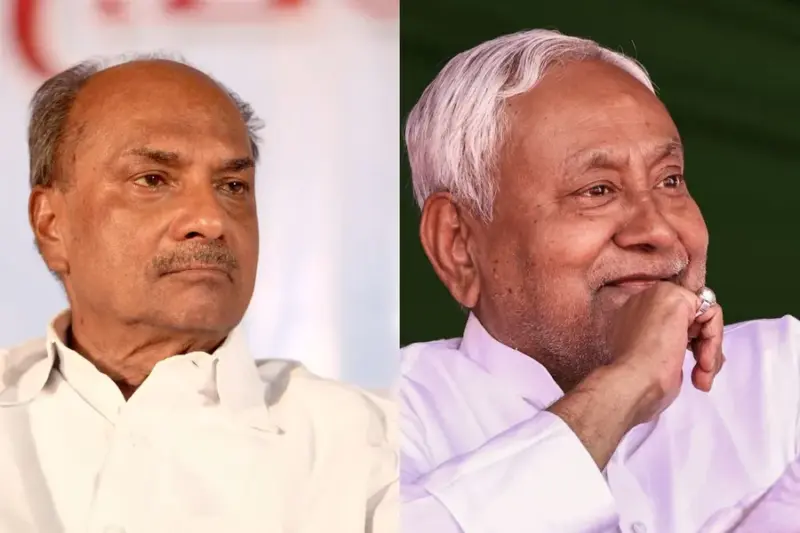
In states with two houses-the Legislative Assembly (elected by the public) and the Legislative Council (the "Upper House")-becoming a Chief Minister is often simpler. Leaders like Bihar's Nitish Kumar have famously preferred this route. Since 2005, Kumar has largely avoided public Assembly elections, choosing instead to remain a member of the Legislative Council, which he describes as a "respectable institution".
However, in states with only one house, a leader must win a by-election. This is where things get risky. In 1971, Uttar Pradesh's Tribhuvan Narain Singh became the first non-member CM to lose his required by-election, forcing his immediate resignation. Similarly, Uttarakhand's Tirath Singh Rawat had to quit in 2021. His path was blocked because the law does not require by-elections if the Assembly's term has less than a year remaining.
From accidental picks to strategic moves
History is full of these "accidental" leaders. In 1977, A.K. Antony became India's youngest Chief Minister at age 36 when he was plucked from his role as party president to lead Kerala. He was not an MLA at the time and had to rely on a colleague resigning to create a vacancy for him. He repeated this feat decades later in 1995 while serving as a national MP.
In other instances, the transition is even more clinical. In 1968, Bihar saw a "proxy" Chief Minister, Satish Prasad Singh, who held the office for just five days. His sole purpose was to facilitate the nomination of Bindeshwari Prasad Mandal to the legislature so Mandal could take over the top job himself. Whether used for stability or strategy, these scenarios prove that in Indian politics, you do not always need a seat to start leading.