

Imagine a bomb so powerful that when it hits the ground, it does not just explode - it breaks apart into hundreds of sharp fragments flying at tremendous speed, while also sending out a massive pressure wave that collapses walls, destroys vehicles, and flattens enemy positions within seconds.
That bomb has a name. It is called the MK-84. And right now, India is working hard to build its own version of it.
So what exactly is the MK-84?
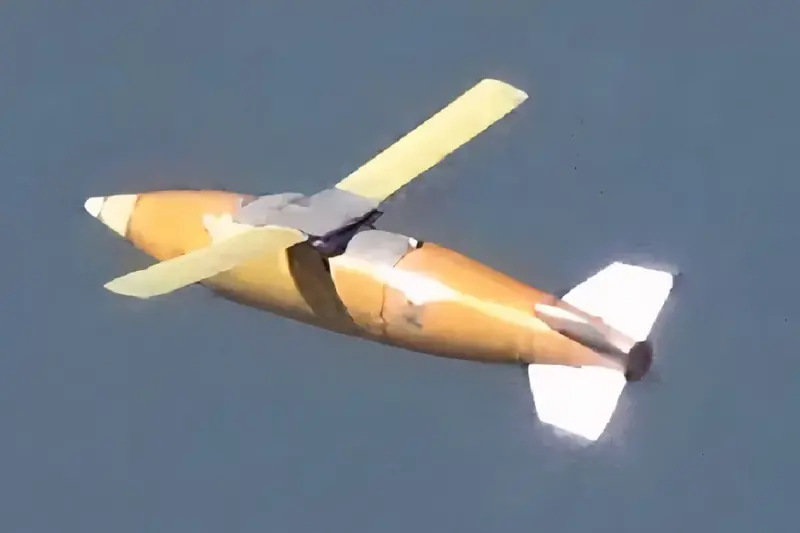
The MK-84 is a general-purpose aerial bomb weighing around 1,000 kilograms - roughly the weight of a small car. It is one of the most widely used bombs in the world, originally developed by the United States. When dropped from a fighter jet flying at high speed, it free-falls toward the target and detonates on impact. What makes it destructive is a combination of three things happening at once - the blast wave (a sudden violent rush of air pressure), the fragmentation (the bomb casing breaking into thousands of jagged metal pieces), and the heat from the explosion. Together, these three effects can destroy a reinforced bunker, a large building, a bridge, or a group of armoured vehicles in a single strike.
Now, the raw MK-84 is what experts call an "unguided" or "dumb bomb." It falls wherever physics takes it. But in modern warfare, accuracy matters enormously. Hitting the wrong target can cause civilian casualties and international embarrassment. So over the years, militaries began attaching smart guidance kits to bombs like the MK-84, turning them into precision-guided munitions. These kits use GPS, laser targeting, or electro-optical systems to steer the bomb precisely to its intended target - sometimes within a few metres of accuracy from several kilometres away.
What are the equivalents India currently uses?
Right now, the Indian Air Force depends on imported precision-guided weapons for heavy strikes. Two major ones are the HAMMER (also called AASM), which is a 500 kg precision bomb from France, and the SPICE-1000, a 1,000 kg precision bomb from Israel. These weapons are excellent - accurate, reliable, and combat-proven. But here is the problem. Every time India needs more of them, it has to go back to France or Israel, negotiate prices, wait for delivery timelines, and hope that the foreign government does not put any political conditions or restrictions. In a real war, that kind of dependence can be a serious vulnerability.
Why is India building its own now?
This is exactly why the Ministry of Defence has taken a major step. They have issued what is called an Expression of Interest - essentially a formal invitation to Indian companies saying, "We want you to design, develop, and manufacture a 1,000 kg aerial bomb right here in India." The programme falls under the Make-II category, which means the industry funds the development themselves, and the government later buys the final product if it meets requirements.
The plan has two clear stages. In the first stage, selected companies will develop six prototypes - both live bombs and dummy versions used for testing - along with tail units, which are the guidance fins attached to the rear of the bomb that control its flight direction. In the second stage, once prototypes are tested and approved by the Indian Air Force, the government will place an order for 600 bombs under the Buy (Indian-IDDM) category. IDDM stands for Indigenously Designed, Developed, and Manufactured - meaning the whole thing must be built in India, by Indian hands, using Indian engineering.
What makes this technically challenging?
Building a bomb like the MK-84 equivalent is not as simple as it sounds. The casing must be made from special high-strength steel that fragments in a predictable pattern on explosion - too weak and it will not fragment properly, too thick and it will not achieve maximum blast. The explosives inside must be stable enough to survive being dropped, vibrated, heated, and jostled during aircraft operations, yet detonate with tremendous force on command. The tail unit is an engineering challenge by itself - it must deploy reliably at high speeds, maintain aerodynamic stability, and respond accurately to guidance signals.
The Indian Air Force has specified that this new bomb must work on both Russian-origin aircraft, like the Su-30MKI and Western-origin aircraft - meaning the electrical interfaces, mounting systems, and communication protocols must be compatible across completely different platforms. That is a serious engineering task.
Companies participating must prove that at least 50% of the system is made in India, even if they collaborate with foreign partners through joint ventures or technology transfer agreements. The entire journey from Expression of Interest to final contract signing is expected to take about 2.5 years.
India is not just buying weapons anymore. It is learning to build them. And that changes everything.
The author is an science communicator and a defence, aerospace & geopolitical analyst.