




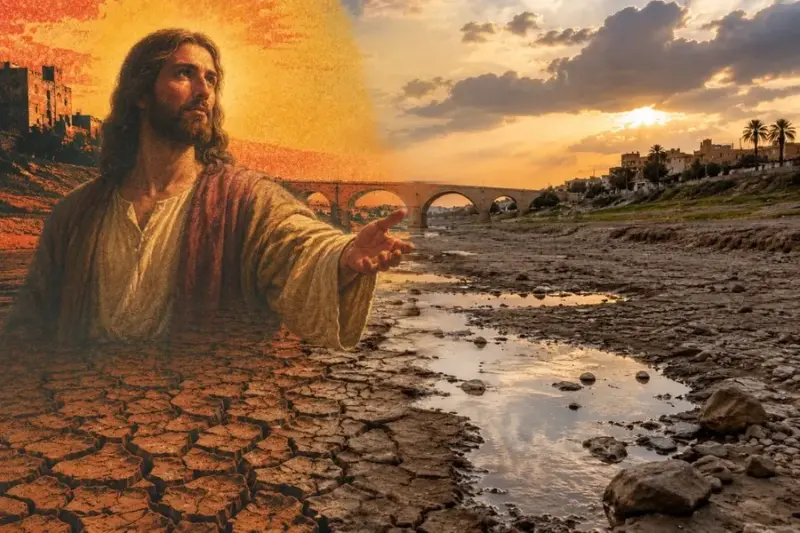

The Euphrates River, one of the world's most historically significant waterways, is shrinking and it is triggering more than just environmental alarm bells.
Across parts of the Middle East, falling water levels are devastating farming communities and worsening water shortages. At the same time, the river's decline is also fuelling renewed discussion among some Christian groups who believe ancient biblical prophecies may be unfolding in real time.
The conversation picked up after a report by the The New York Post highlighted how some believers are revisiting passages from the Book of Revelation that mention the Euphrates River drying up before major end-times events.
The Euphrates is not just any river. Stretching nearly 1,800 miles, it begins in eastern Turkey, flows through Syria and Iraq, and eventually joins the Tigris River before emptying into the Persian Gulf.
For centuries, the river has been closely associated with the ancient Fertile Crescent, often described as the birthplace of civilisation itself. Some of the earliest human settlements, farming systems and cities emerged around this region.
That historical and religious significance is one reason why news about the river's shrinking water levels has captured so much global attention.
Why some Christians are talking about prophecy
Among certain Christian communities, the drying river has revived interest in Revelation 16:12, a verse in the Bible that refers to the Euphrates drying up to prepare the way for "the kings from the East".
Others have pointed to Old Testament passages that speak about drought, drying rivers and environmental collapse.
For some believers, images of the shrinking river appear eerily similar to those biblical descriptions. Videos and photographs circulating online showing cracked riverbeds and dramatically reduced water flow have only intensified those discussions.
Still, biblical scholars and historians caution that such interpretations vary widely and are often debated even within religious communities themselves.
Scientists say the crisis has clear real-world causes
While online conversations have focused heavily on prophecy, environmental experts say the reasons behind the crisis are far more grounded in climate and water management issues.
Researchers have long warned that climate change, severe droughts, dam projects and excessive groundwater extraction are placing enormous pressure on the Tigris-Euphrates river system.
A 2013 NASA study found that the river basins of the Tigris and Euphrates lost around 117 million acre-feet of freshwater between 2003 and 2009. Scientists linked the decline to unsustainable water use combined with worsening climate conditions.
In practical terms, that loss has had serious consequences for people living in Iraq and Syria. Farmers in several regions have struggled with failed crops, declining irrigation supplies and contaminated drinking water. Health concerns linked to poor water quality have also been rising.
Another theory adds to the mystery
The New York Post report also touched on a separate and highly speculative theory about the biblical Garden of Eden.
In a paper published in the journal Archaeological Discovery, computer engineer Dr Konstantin Borisov suggested that the Garden of Eden may actually have been located near Egypt rather than Mesopotamia, which is the region traditionally associated with the biblical story.
The theory has drawn attention online, although mainstream historians and archaeologists have not accepted it.
Even so, the combination of environmental crisis, ancient history and biblical references has turned the shrinking Euphrates into more than just a climate story. For many people, it has become a strange intersection of science, faith and speculation.